
 •
Rating:
•
Rating:
THE REVIEW
Thomas Morgan Robertson soon earned the nickname "Dolby" due to his passion for recording techniques.
Currently, Dolby is the owner of Beatnik, a company that deals with audio techniques and has recently signed prestigious collaborations with major international giants.
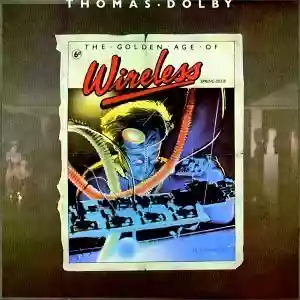
But this ingenious Englishman also had a past as a synth-pop composer. He debuted in 1982 with this album featuring an unusual cover, which looks like a sci-fi movie poster (even the graphics of his future works will pick up this penchant).
Dolby shuts himself at home with his arsenal of synthesizers and forges a danceable electronic-funk, with a taste for hyper-careful arrangements, and with a distinctive flavor due to a melodicism that is sometimes epic, sometimes futuristic. In particular, Dolby seems to draw from the tradition of B-movie soundtracks and TV cartoon themes. In short, a "mad scientist" flavor that is immediately savored once the record starts spinning.
"She Blinded Me With Science" was the single that earned him a fair amount of popularity, with its funk spiced with electronic orientalisms. But already the power-pop of "Radio Silence" highlights the playful aspect of his work, complete with short-circuiting robot voices. The slow "Airwaves" sees him instead in the role of the atmospheric singer-songwriter, while the following "Flying North" rises on a frenetic beat of drum-machine that accompanies Dolby's echo-laden voice, engaged in a duet with an immediately catchy keyboard riff. Undoubtedly, this is well-architected dance music, meticulously polished and refined, with a "plastic" sound typical of many '80s productions.
The irresistible dance of "Europa And The Pirate Twins" seems like a less serious version of John Foxx's Metamatic, while the highly filtered distant voice introducing "One Of Our Submarines" welcomes a crepuscular and oblique melody, always driven by a techno-pop rhythm.
Surrounded by esteemed collaborators like Lene Lovich and Andy Partridge of XTC, Dolby managed with "The Golden Age Of Wireless" to free synth-pop from the glossy groups often created at the desk, reviving the figure of the "at home" composer that would find great fortune in the nineties, both in the house scene (think of Homework by Daft Punk) and in the American low-fi scene.
Loading comments slowly
Summary by Bot
Thomas Dolby's debut album 'The Golden Age Of Wireless' showcases his talent for creating meticulously crafted synth-pop and electronic-funk. The album features a distinctive blend of futuristic and cinematic influences, highlighted by the hit single 'She Blinded Me With Science.' With well-known collaborators and a polished 1980s production style, Dolby revitalizes the synth-pop genre with a playful yet sophisticated approach.Tracklist Lyrics Videos
Thomas Dolby
English musician Thomas Dolby (born Thomas Morgan Robertson) is best known for early-1980s synth-pop, including the single "She Blinded Me With Science" and the album The Golden Age Of Wireless. He later founded the audio/technology company Beatnik.01 Reviews
