
 •
Rating:
•
Rating:
THE REVIEW
Glen Sweeney, drummer and percussionist, is the founder of the English group Third Ear Band; in the line-up are Paul Minns, oboist and flautist, Richard Coff, violinist, and Mel Davis, cellist.
The formation seems to lead to the review of a contemporary classical music record, but nothing could be more misleading. An original line-up, especially considering that this is their first release, dated 1969. An interesting and courageous work for them but also for EMI Harvest who published this LP which, frankly, I find difficult to classify.
In total, there are eight instrumental tracks whose underlying psychedelic vein is always immersed in free atmospheres, very close to the jazz area, accompanied by the hypnotic and oriental crescendo of the percussive rhythm.
It is the structure of the individual pieces that justifies the reference to free and jazz: despite the starting sounds sometimes seeming rooted in English and Celtic folk, all of them have much to do with free improvisations around a tone, but with a clear resort also to arabesque scales and frequent use of quarter tones, easily obtainable with string instruments.
I find that the definition Rolf-Ulrich Kaiser gives in his now forgotten "Guide to Pop Music" of 1969 of psychedelic music fits this record perfectly: "The musicians who give this name to their music mean by psychedelic something that expands consciousness and that is at the same time expanded consciousness. That is, according to them, the new music cannot be interpreted but only understood, and even this only if the listener has a certain predisposition to comprehend it".
In short, if we listened to this record, perhaps live, at the UFO Club in London in the early '70s on a full LSD trip, amidst a light show, we would definitely enjoy it more fully than we can today from the comfort of our home armchairs, even if, to immerse ourselves better, we sip peaty whiskey.
The Third Ear Band have taken to the UFO stage several times alongside illustrious colleagues such as Soft Machine, the Move or Pink Floyd.
But let's get back to the music, which, I repeat, is not easy to define: the record is elusive but at the same time it fascinates me greatly; the sounds follow each other ungraspable yet concrete at the same time; the boundaries of the various instrumental textures disappear, but simultaneously the rhythm brings our feet firmly back to the ground.
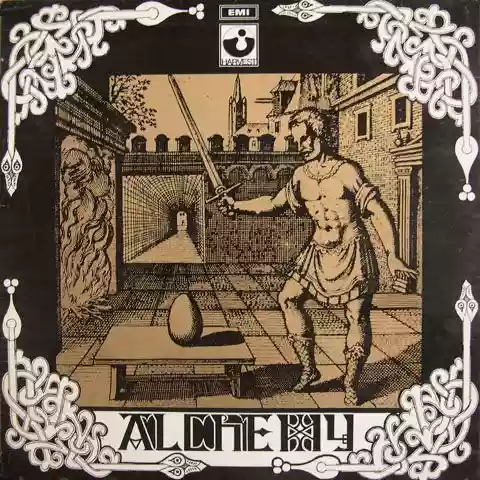
In reality, the group's name unveils the mystery by suggesting the best condition in the use of the third ear, that of inner perception, in the context evoked by the cover of Western medieval alchemy and esotericism, with oriental frames.
Certainly, the group's initial idea was to create music much more liberating and expressively creative compared to what their contemporary psychedelic groups were doing.
This album is followed by a second, certainly better and well-reviewed on the pages of DeBaser, then two soundtracks, one of which for Roman Polansky, and then, again, the end of the adventure.
Going through the listening of this record is certainly an experience to have for those who want to immerse themselves in the atmospheres of those years, with all due respect to Paul Minns, who committed suicide in 2000.
Loading comments slowly
Summary by Bot
The 1969 album 'Alchemy' by Third Ear Band offers a daring and hard-to-classify fusion of psychedelic, jazz, and free improvisation. Featuring an original lineup with unique instrumentation, the music evokes hypnotic, oriental, and folk elements wrapped in experimental textures. The review highlights the album's immersive quality, especially in a live setting, and its contribution to the psychedelic era's creative liberation. Despite its elusive structure, the record fascinates and holds historical significance within the experimental music scene.Tracklist Videos
Third Ear Band
English experimental group led by percussionist Glen Sweeney, noted for oboe, violin/viola, cello and tablas. Debuted with Alchemy (1969, Harvest), followed by the self‑titled “Elements” (1970) and the Macbeth soundtrack for Roman Polanski. Their instrumental music fuses psychedelia, folk, raga, minimalism and free improvisation; they were active in the late 60s–early 70s and again in the late 80s–early 90s, and played London’s UFO Club.05 Reviews
