
 •
Rating:
•
Rating:
THE REVIEW
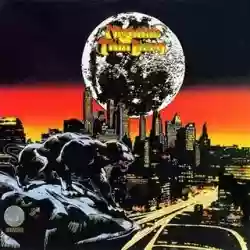
The black panther threatens the city under a huge and bright moon, pierced by a Roger Dean lettering. The black panther would be Phil Lynott, as already mentioned in all the other reviews on this site, half Brazilian and half Irish. He was part of Skid Row, was expelled from them and formed the Orphanage, where he met drummer Brian Downey, who then became Thin Lizzy with guitarist Eric Bell. And up to this point, we knew that.
1973: Thin Lizzy, with three albums to their name, were almost at breaking point (or rather "disbanded"): dropped by Decca, coming off more than modest record sales and tours that saw disastrous public attendance, they were on the brink of financial ruin, despite the success of the recent hit "Whisky In The Jar". They were left without the first guitarist Eric Bell at first, and his occasional replacement Gary Moore after, and even the two guitarists hired on a temporary basis, Andy Gee and John Cann (from Andromeda). Drummer Brian Downey, frustrated with the situation, was on the verge of leaving.
Thanks to a stroke of genius by manager Chris O'Donnel, Thin Lizzy managed to sign a contract with Vertigo, playing the "enfant prodige" card again, saying that the band included an eighteen-year-old guitarist (presumably Gary Moore, as he had been five years earlier in Skid Row...) and they were immediately signed by the record label.
For many, this is where the "real" Thin Lizzy starts, the one with the two guitarists Scott Gorham and Brian "Robbo" Robertson. I prefer to say that the so-called "classic" lineup was inaugurated, no longer a power trio, but a perfect quartet. Scott Gorham, born and raised in California, had moved to London with the aim of joining Supertramp, his favorite band. Disappointed, he formed a band named Fastbuck, with very little success, but thanks to it, he attended (not very convinced) an audition for Thin Lizzy ("The first thing I thought was that this had one of the ugliest names I'd ever heard"). Robbo was much more enthusiastic, pressing Lynott and Downey not to change the band's name, which had always been one of his favorites. Thus, both were hired.
So begins the first studio adventure of the new lineup, "Nightlife": certainly not yet at the peak, here and there some weak spots (Showdown, especially in the chorus) but from here onwards it's all a climb to the top. The orchestration is perhaps a bit too intrusive and pompous, as in the funky Night Life and the piano ballad Frankie Carroll, one of the many melancholic sketches of Dublin life, not to mention the closing ballad Dear Heart. But when we hear the sound attack of It's Only Money, rather than the battering drums of an explosive Brian Downey in Sha-la-la, where he rolls and rumbas like a four-stroke engine, with a double pedal used tastefully, we understand the greatness of this album. The great ballad Still In Love With You, featuring Gary Moore and Frankie Miller, will become a showpiece for the band, and then Philomena, dedicated to Lynott's mother. Great splendor from here on, there's no doubt about it.
A small note: issue #29 of January of the good magazine Classix is dedicated to Thin Lizzy. "Some still delude themselves today having seen Thin Lizzy returning from the performance of a handful of mercenaries playing the songs of a man who has not been with us for almost 25 years". Well, I was there on February 2nd in Trezzo d'Adda, and frankly, the presence of Scott Gorham, Brian Downey, and keyboardist Wharton (already a keyboardist in Chinatown, Renegade, and Thunder And Lightning) changed my mind: also because Vivian Campbell (Dio) and Marco Mendoza (Whitesnake) are not the first idiots to walk by. Sure, good Ricky Warwick will NEVER be Phil Lynott, obviously, but I think they truly pay a very special tribute to the great genius of Dublin's "panther".
Loading comments slowly
Summary by Bot
This review covers Thin Lizzy's pivotal Nightlife album, which introduces their classic two-guitarist lineup. Despite minor flaws, the album showcases standout tracks like 'Still In Love With You' and signals the band's rise. The reviewer praises the band's evolving sound and pays tribute to Phil Lynott's legacy, reflecting on the significance of this period in the band's history.
Thin Lizzy
Thin Lizzy are an Irish hard rock band formed in Dublin in 1969 by Phil Lynott (bass, vocals), Brian Downey (drums) and Eric Bell (guitar). With the classic twin-guitar lineup of Scott Gorham and Brian Robertson, they scored hits like The Boys Are Back in Town and crafted acclaimed albums including Jailbreak and Black Rose. The group disbanded in 1983; Lynott died in 1986.14 Reviews
