
 •
Rating:
•
Rating:
THE REVIEW
Led by the charismatic Phil Lynott, the Irish Thin Lizzy embodied a "third way" to hard rock, which went beyond the domination of British and American giants. Thanks to a very personal approach, which combined electric guitars and Celtic rhythms with substantial lyrics, far from the banalities that often plague the genre, they managed to build, for a short period, a great following, cemented by incendiary concerts and a repertoire without weak points.
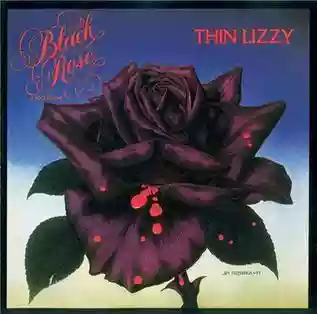
This Black Rose: A Rock Legend, from '79, is seen by many as the swan song, the last noteworthy one before the personal problems of the individual musicians engulfed everything. The success of Live and Dangerous, released the previous year and today considered one of the best live rock albums ever, doesn't seem to contribute to bringing harmony within the group, which is increasingly torn and difficult to manage. After various in-and-outs, in fact, the historical guitarist Brian Robertson unceremoniously says goodbye to his former bandmates, effectively opening the doors to the returning Gary Moore, who had already been with Lynott in the past for brief episodes.
Despite the ominous omens, the LP is fresh and enjoyable, well-written and played by inspired musicians. Do Anything You Want To, with its rhythmic pace, opens the dance, while Toughest Street in Town is the tight soundtrack of gritty tales from the suburbs. It continues with the seedy motel atmosphere of S&M, which then gives way to Waiting for an Alibi and its chorus, seemingly written to be sung at the top of one's lungs in concert. The register changes completely with the delicate Sarah, dedicated by Lynott to his little daughter, infused with affection and love. Reading the lyrics of many Lizzy songs, it’s clear that Lynott's poetry has always been populated by marginal characters: hooligans, outcasts, alcoholics, people overwhelmed by failed romances, all individuals whose stories are always narrated with an almost pitying gaze, almost as if the rocker himself didn't feel so far removed from that condition and, by telling stories of those more or less fictional characters, he was also talking about himself. And Got to Give It Up, in fact, seems almost like an exhortation by the author, directed at himself, to fight his own demons, demons that would ultimately prevail, overwhelming both him and the rest of the group. I used to be a dreamer / But I realize that it's not my style at all / In fact it becomes clearer that a dreamer / Doesn't stand a chance at all. The verses of Get out of here reaffirm the concept: the world of Thin Lizzy is not for dreamers, but that doesn't mean there's no room for feelings. With Love, in fact, demonstrates how to make hard rock without the necessity to always be aggressive, besides being a great "excuse" to highlight the blues roots of Moore and company. Phil never abandons his role as a storyteller and Róisín Dubh (Black Rose): A Rock Legend is the best way to close the second side of the LP, with a song that reprises an Irish traditional, embellishing it with legends of kings and queens, evoking an Ireland perhaps more mythical than real, complete with Celtic dance party atmospheres: a heartfelt tribute to his homeland.
In conclusion, Black Rose is one of Thin Lizzy's most successful albums, created just before the quartet was overwhelmed. Gary Moore would slam the door in the middle of the tour, disgusted by all the drugs he saw around him, triggering a carousel of musicians that would continue until the group's dissolution years later. Lynott would pursue a solo career alongside the Lizzy, but the feeling is that from here on, the compass would be lost, until the tragic end in 1986, with Phil departing after an overdose. While his Dublin has dedicated a statue to him, highlighting an enormous artistic legacy, it's evident that Thin Lizzy never ranked among the "greats" of the genre in terms of popularity, despite the depth of their offering. And in hindsight, many must have been those who, teenagers in the late nineties, got to know about these "western vagabonds" thanks to the Metallica tribute in Garage Inc., not to mention the various tribute tours organized in the 2000s by Scott Gorham and John Sykes, ensuring that Phil Lynott's work would not be forgotten with his passing. A great album to rediscover, to then trace back through their discography.
Thin Lizzy:
- Phil Lynott, vocals and bass
- Scott Gorham, guitar
- Gary Moore, guitar
- Brian Downey, drums
"Black Rose: A Rock Legend":
- Do Anything You Want To
- Toughest Street in Town
- S&M
- Waiting for an Alibi
- Sarah
- Got to Give It Up
- Get Out of Here
- With Love
- Róisín Dubh (Black Rose): A Rock Legend
Loading comments slowly
Summary by Bot
Black Rose: A Rock Legend showcases Thin Lizzy's unique fusion of hard rock and Celtic rhythms, driven by Phil Lynott’s poetic storytelling. Despite internal band struggles and lineup changes, the 1979 album remains fresh, inspired, and memorable. With highlights like 'Waiting for an Alibi' and the heartfelt 'Sarah,' the album balances gritty tales and emotional depth. It stands as one of Thin Lizzy’s most successful and artistically rich works, cementing their legacy in rock history.Tracklist Lyrics Videos
Thin Lizzy
Thin Lizzy are an Irish hard rock band formed in Dublin in 1969 by Phil Lynott (bass, vocals), Brian Downey (drums) and Eric Bell (guitar). With the classic twin-guitar lineup of Scott Gorham and Brian Robertson, they scored hits like The Boys Are Back in Town and crafted acclaimed albums including Jailbreak and Black Rose. The group disbanded in 1983; Lynott died in 1986.14 Reviews
Other reviews
By Blackmore
"Lynott is more inspired than ever, and the arrival of the great Gary Moore adds a touch of class to the record."
"'Waiting For An Alibi' is an authentic 3-minute masterpiece—listen to believe!"
