 •
Rating:
•
Rating:
THE REVIEW
Scott Gorham, guitarist of Thin Lizzy, in a recent interview described Philip Lynott, the group's leader, as: "The man who screw more chicks, took more drugs and swallowed more drinks than everyone". Philip was a party animal, a sacrificial victim of rock, and much more. He grew up in the ghettos of Dublin alongside his beloved Irish mother, Philomena; his father was a black English worker, although Philip always described him as a Brazilian sailor. The fact is that he abandoned the boy and his mother to their fate. Philip experienced the harsh street life in suburban Dublin, developing a difficult character and a strong aggressiveness; about that period he said: "It's hard to be an Irish but being a black Irish is a nightmare".
But Lynott wasn't just a brawling thug; he was also a very sensitive and intelligent boy. In Dublin, he developed a passion for Celtic mythology by attending Irish literature courses and simultaneously developed a visceral love for music; from rock to folk, from jazz to punk, the multifaceted musical influences contributed to shaping his diverse personality.
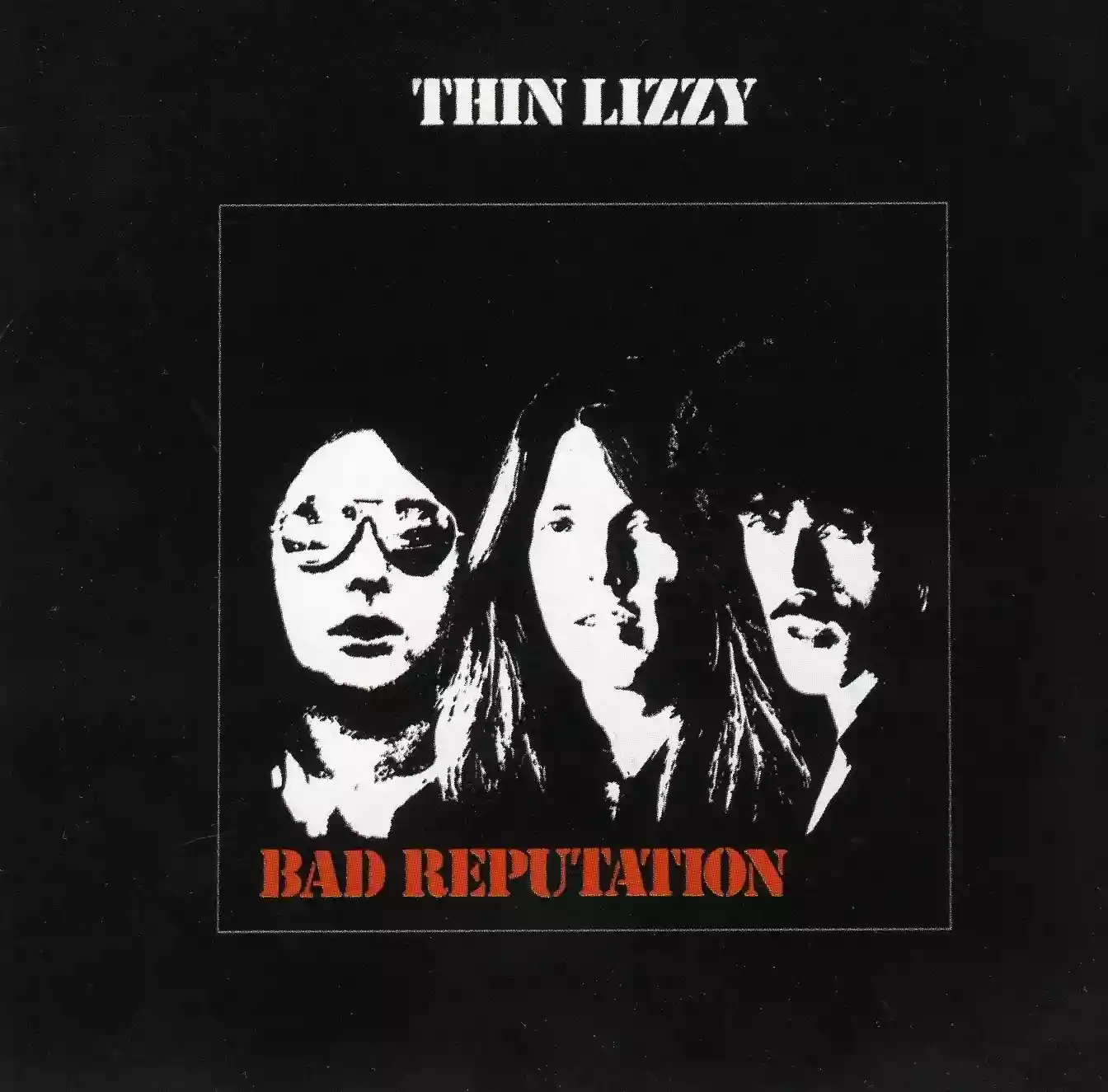
Thin Lizzy was born in 1969. The album "Bad Reputation" was released in 1977, when the band had achieved international success in the hard rock scene after releasing works like "Johnny the fox" and "Jailbreak," both from '76. The work was recorded in June of that year in Toronto and marks the reintegration into the group of guitarist Brian "Robbo" Robertson, who was forced into a long period of rest after damaging several tendons and arteries in his hand by breaking a glass in a brawl. Robertson, who only recorded the tracks "Opium Trail," "Killer Without A Cause" and "That woman's gonna break your heart," doesn't appear in the cover figure but is relegated to a photo on the last page of the booklet enclosed with the CD.
While retaining the rock soul of previous albums, characterized in some cases by the "crossed guitars" of Robertson and Gorham, "Bad Reputation" is an album imbued with a melancholic aura that includes rather different pieces due to various contaminations. "Soldier Of Fortune," the opening song, presents the traits of a Celtic anthem, reprising the Irish national anthem "The Soldier's Song"; the mercenary soldier character spoken of in the song metaphorically represents the tenacity in pursuing a goal. Elvis Costello will also dedicate his famous song "Oliver's Army" to this figure.
The second track, which gives the album its name, presents a decidedly more pressing rhythm and a nice guitar riff. The swaggering theme of gang fights, the reputation to uphold, comes back to mind pieces like "The boys are back In town" or "Jailbreak" but in this lyric, it is described by Lynott in a dimension of regret, aware of the relentless passage of time ("That bad reputation ha made you so old"). "Opium Trail," the third song, inspired by the opium trade by the Triad, stands out for excellent synchronization of bass and drums and the guitar sound that perfectly accompanies Lynott's voice, a suffering and fascinated lament; the singer's relationship with heroin will also be suffering and fascinated, beginning only two years later in conjunction with the recording of the album "Black Rose." Lynott will always be attracted to the figure of the artist devoted to self-destruction, in whom he will come to identify himself in the last years of his career.
The subsequent song, "Southbound," lights up in contrast to the dark context of the two previous pieces, outlining through positive sounds a departure from gray and corrupt ports towards a hopeful future. Then comes "Dancing In The Moonlight", the peak of the album, in my opinion a timeless classic song. A song that might jar the ears of the purist hard rocker for its velvet melody, it is actually an extraordinary reconciliation of different but contiguous realms: the sax piloted by John Helliwell of Supertramp blends with Lynott's exceptional bass line until culminating in Gorham's guitar solo, giving light to an ecstatic musical parabola. It is above all a tribute to "Moonlight" by Lynott's compatriot, the great blues man Van Morrison, from which is borrowed the scene of dancing under the moon with a sensual and unknown woman. The suggestive verse "I always get chocolate stains on my pants", in the song's lyrics, was justified by Lynott saying he stained his jeans by spilling a box of Maltesers while watching Martin Scorsese's film "Mean Streets."
"Killer Without A Cause", the sixth track, highlights abundant contaminations from punk sounds due to Thin Lizzy's friendship with the Sex Pistols and the favorable situation punk was experiencing in those years. The following "Downtown Sundown" returns to the tones we had already glimpsed in "Southbound": simple and contemplative melodic lines, nostalgic aspirations and mystical tensions.
"That Woman's Gonna Break Your Heart" warms the listeners' spirits again with an aggressively melodic and vaguely intimidating tune, enhanced by the crossed guitars of the Gorham-Robertson duo that dispense clean and cascading notes like a waterfall. The album closes with "Dear Lord", another muffled and melodic piece where the music serves as a backdrop to Lynott's voice, very dark, bowed in a prayer to the Lord; a sort of perfect testament to close the work.
"Bad Reputation" is, in my opinion, one of Thin Lizzy's most representative albums, being the valid realization of the different tendencies, of the different influences that the band assumed in its approach to rock music. In particular, it is the mirror of the band's leader, of his life split between the desire to pursue the myth of the brilliantly dissolute musician and a naturally fragile and poetic soul destined to shipwreck in dependencies.
Loading comments slowly
Summary by Bot
This review covers Thin Lizzy’s 1977 album Bad Reputation, highlighting Philip Lynott’s complex personality and the band’s blend of hard rock with Celtic and punk influences. It emphasizes the album’s melancholic aura and diverse musical styles. Key tracks like "Dancing In The Moonlight" and "Opium Trail" receive special attention. The album is praised as a representative and emotionally rich work in Thin Lizzy’s discography.Tracklist Lyrics Videos
Thin Lizzy
Thin Lizzy are an Irish hard rock band formed in Dublin in 1969 by Phil Lynott (bass, vocals), Brian Downey (drums) and Eric Bell (guitar). With the classic twin-guitar lineup of Scott Gorham and Brian Robertson, they scored hits like The Boys Are Back in Town and crafted acclaimed albums including Jailbreak and Black Rose. The group disbanded in 1983; Lynott died in 1986.14 Reviews
