
 •
Rating:
•
Rating:
THE REVIEW
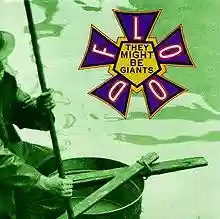
The creativity of this brilliant duo from NY is inexhaustible. No one has made pop music like them. No one has mocked with such meticulousness the clichéd rhythms and manners inherited from idols, minstrels, and singers of every era. No one has produced so much intelligence from such stupid means: crude low-cost analog gadgets popular at the end of the '80s, Bontempi keyboards responsible for the most anti-aesthetic sounds and rhythms of all time. Inspired masters of home music, carefree and detached heirs of the greatest parodists of modern popular music, from Zappa to the Residents, merry provocateurs of the most incongruous paradoxes, TMBG create with "Flood" (1990), their third endeavor, an inexhaustible marathon of tunes so disarming in their overt kitsch that it’s impossible to reach the end of the album without a goofy smile plastered on your lips.
They scour every musical code, peel it like vegetables, set it aside, then find a dish that couldn't possibly match worse, grind it and make a delicious roll. Particularly targeted is country'n'western, from which the Flansburgh/Linnell duo destroys every romantic aura, delivering to the listener the bleak, disorienting, "Brechtian" nursery rhyme of "Dead." Group dances in a frontier campfire animate the party of "Particle Man," while the carefree rural melody of "We Want A Rock" recycles endlessly as their fellow adventurers Camper Van Beethoven, Young Fresh Fellows, and Dead Milkmen often loved to do.
Showy arena rock and mournful accordions meet in the most improbable embrace, like a stallion full of Viagra pretends to get it on with a decent damsel, until a trumpet bursts in on a comical salsa rhythm, just to ruin the party: here comes "Your Racist Friend"! And if "Twisting" is nothing but a vivid flashback to the magical sixties' garages, "Hot Cha" is the swing of the Martians: big band winds ruthlessly synthesized by extraterrestrials with no blood in their veins. There is no mercy even for reggae, desecrated in the narcoleptic and absent-minded "Hearing Aid."
It's difficult to isolate a masterpiece in this gallery of marred hits: more than the spring-like "Birdhouse in Your Soul," the palm for the most memorable moment goes to "Istanbul (Not Constantinople)," a frenzied Turkish dance, capable of evoking cinematic-literary scenarios from "One Thousand and One Nights" (enhanced by the Looney Tunes style video clip), while the singer notes that once New York was called New Amsterdam. The shameless nonsense of this album becomes particularly overwhelming in the latter part of the work, when the silliest melodies are sung with the most cartoonish registers (in addition to the proverbial nasal voice present almost everywhere, highlights of craziness come from the deep voice in "Whistling in the dark" and the tongue twister of "Letterbox"), Hollywoodian imaginaries overlap in a suggestive syncretism ("Minimum wage," a sonata for whips and spacecraft) and the naive absurdism of art-wave bands like B52s and Monochrome Set is invigorated by further doses of fantasy in "Sapphire Bullets of Pure Love," a trance of astonished xylophones.
Intelligence disguised as idiocy is perhaps the best quality of the Giants, unrecognized giants of pop music as well as its negation, jesters of an all-encompassing musical cauldron, devoured by decades of record production and media serializations. The bulimic effect resulting from this disorienting zapping is the emblem of an encyclopedic approach to the history of popular music, where it is increasingly difficult to grasp the boundary between homage and mockery, portrait and caricature: the song, especially the ballad, ceases to be a vehicle for a more or less serious message, becoming a tamed animal featured in a circus amid the smirks of a voracious audience.
And we laugh heartily...
Loading comments slowly
Summary by Bot
Flood by They Might Be Giants is a creative and humorous pop album that parodies musical clichés using quirky instrumentation. Its eclectic mix spans country, reggae, garage rock, and more, delivered with smart irony. Standout tracks like "Istanbul (Not Constantinople)" and "Particle Man" showcase their playful genius. The album balances homage and mockery, evoking both smiles and thoughtful appreciation.Tracklist Lyrics Videos
They Might Be Giants
They Might Be Giants are an American alternative rock duo formed in 1982 by John Flansburgh and John Linnell in Brooklyn, New York. Known for witty, eclectic songs that fuse pop hooks with absurdist humor, they broke through with Flood (1990) and signature tracks like Birdhouse in Your Soul and Istanbul (Not Constantinople). They also composed the TV theme Boss of Me and have continued releasing albums for adults and children.04 Reviews
