
 •
Rating:
•
Rating:
THE REVIEW
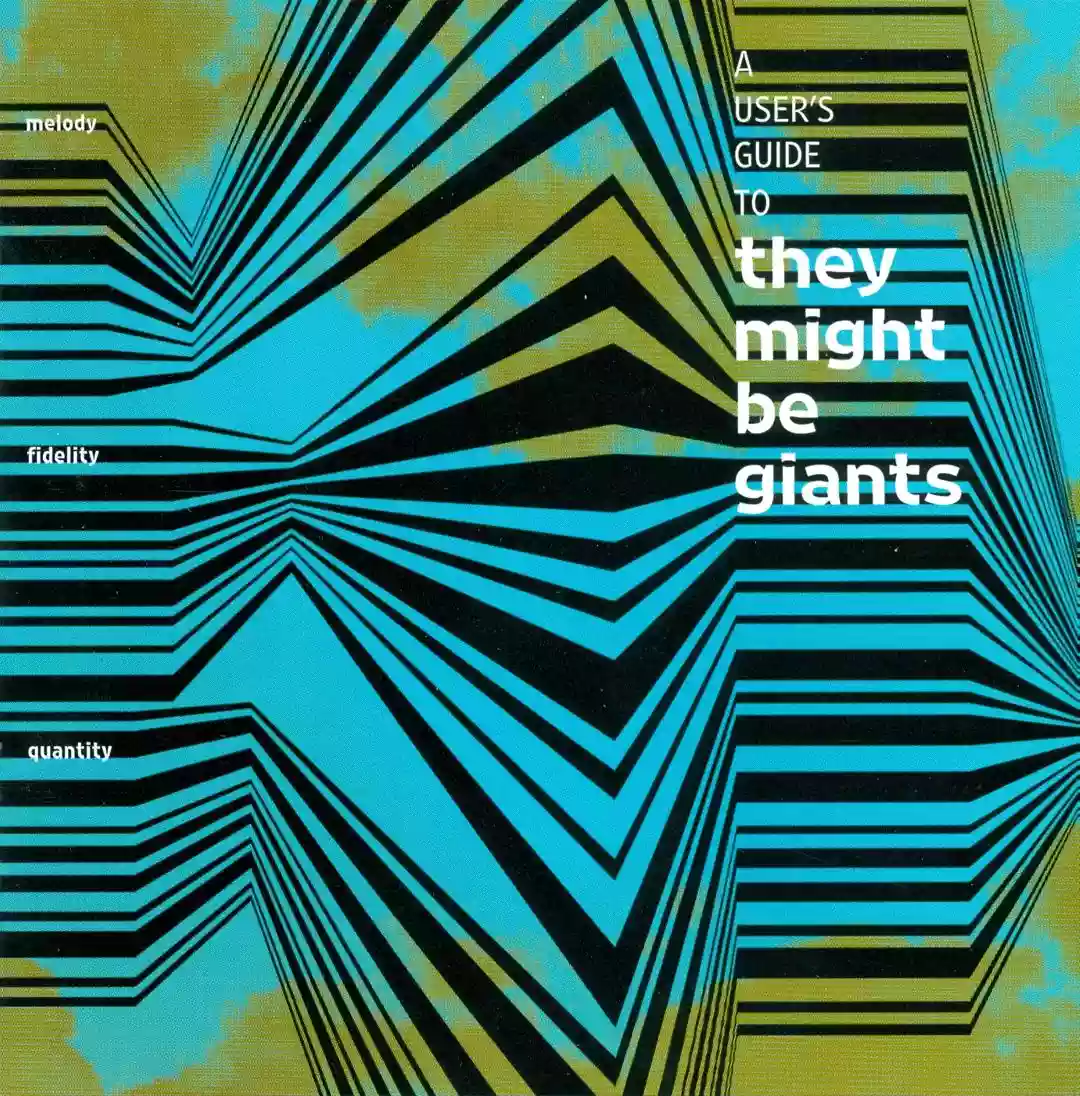
They Might Be Giants – A User’s Guide To They Might Be Giants (Rhino/Elektra, 2005)
The luckiest among us, if I point to a "mysterious instrumentolo," if I sketch a "ballettopolo," if I say "Tisca Tusca Topolino," know what I'm talking about. The theme song of the not-unfortunate (the soothsayers say) 3D series "La casa di Topolino," if I read the end credits correctly (speaking of mice), is their work. They Might Be Giants. Who? Regarding The Who, the declaration of intent, by virtue of the hard, distorted, and hiccuping sound of the epochal "My Generation," "Hope I die before I get old," the TMBG, in their 1986 programmatic debut album, transformed it into a quadrille titled "I Hope that I Get Old Before I Die." The clue has already begun. The beginning is already implicated. In that LP, there were also "Youth Culture Killed My Dog" and "Nothing gonna change my clothes." Here, instead, we are faced with a collection. A "user's guide." As the sticker on the CD says, "29 Must-Have They Might Be Giants Classic Tracks on 1 Disk From 9 albums, 17 years, 2 Johns." The "Johns" are John Flansburg and John Linnell. One on guitar, the other on accordion, keyboards, and sax. They both sing. OK. Why reject compilations? Or at least not this one! Here we meander, between homemade sounds and silky work, between famous songs and "offbeat" but representative ones. Songs that rarely exceed two minutes but are packed with ideas. Ridiculous and irreverent. Ironic. Suitable for new weavers who even mock themselves. And they sound just like when your wife catches you snacking between meals!
Heirs of Zappa's parody style, at least in their early works, and the pastiches of the Residents, but as much as they were devoted to avant-garde, TMBG are children of the most commercial and consumable Pop. They have something of Elvis Costello. Like the Bonzo Dog Doh Dah Band, they collect nonsense. They mask intelligence with idiocy and vice versa. They have an encyclopedic and irreverent approach to the history of popular music. With the urgency of Rock, but entirely playful. Surreal paintings, Monty Python humor, jesters worthy of the best party of the foolish walkers! They depict the (im)morality and (mis)parade of the American "Great Society." Then they portray the human condition with a comic, cosmicomic, and cartoonish effect.
Their parodic sketches are frantic, arranged paradoxically, orchestrated crudely but not clumsily. Blinding Stop and Go. Interruptions that seem boastful. Swift restarts. Without reason. Melodies without reason. Enlightening for this.
They chloroform the Music Hall and Pop, they lyophilize Rock and Folk, and they preserve Country long-term. Inside their closets, "where men are empty overcoats," there are Beat, Ragtime, Doo-Wop, Polka, Hard Rock, Vaudeville, Soul ballads, Country 'n' Western, Blues, Hip Hop, Easy Listening. Stationed in Brooklyn, "the rubber of the bridge," but originally from Massachusetts, known for the vulcanization of rubber and, more recently, for studies on the production processes of butadiene from renewable sources. Here, continuous and justified, the interest in Bubblegum refrains!
Nasal voices, never clear, go mad with guilty sarcasm and never with innocent melancholy. They always seem on the verge of singing a Yodel, which punctually never comes.
With Boss of me, from the sitcom soundtrack "Malcolm in the middle," they create the perfect, catchy, pissed-off, captivating, maximalist chorus.
You’re Not The Boss Of Me
You’re Not The Boss Of Me
You’re Not The Boss Of Me
And You’re Not So Big.
They repeat it twice. What more could you want? It's so nice that you learn it immediately. You sing it with immediacy. Except there's a small problem; bummmm! After verse "no. 2," you start singing tightly, and you even have a target in mind, but…
You’re Not The Boss Of Me
And You’re Not So Big.
They remove two lines!!! They anticipate the epilogue, working by subtraction. The ground falls from under your feet, and you sink. Pop is a big sham, you thought it added something to your life, and it takes it away immediately. A jest. A mockery. A trifle? A joke so stupid it's genius. It makes me laugh like few other things. They break the impeccability they had just created, as if Shakespeare removed two lines from a sonnet. Exactly the same thing. And off we go!
“Don’t let’s Start”. A melodic Funky in the style of Talking Heads. Complete with an inexplicable completeness. Suitable for suppressing the most pressing urges to company with the beaver.
“Istanbul Not Constantinople”. They pick it up from the Four Lads, a Canadian vocal group from the '50s. The authors, Jimmy Kennedy and Nat Simon, had blatantly drawn from "Putting On The Ritz" by the ingenious Irving Berlin (1929). They throw in Balkan rhythms, Gypsy violins, accordion, brass, idiotic choruses. All in a total greatness for (suc)cess.
“We’re The Replacements”, a bubblegum chorus to mock the band (often emblazoned on Winona Ryder's T-shirts), its status, and its parties. The whim to ridicule Rock stardom.
Palindromes are fun. "O mordo tua nuora o aro un autodromo." "Recai piacer." "E Nilla gelava nuda, ratta radunava le galline." But the best they've grasped: "I Palindrome I." And, of course, they've made it a song. "You, Son of a Bitch, I Palindrome I!"
“Birdhouse in Your Soul”, an epic surf, is very funny despite the keyboard having the best lines…
“Your Racist Friend” is tex-mex, very current in its implications. “Practicle Man” is a song played with the Cajon. The philosophical skit of “Older” is metatheatrical and metacognitive.
Their poetic niche, ultimately, they've carved out in American popular music. Here, they haven't caught on. Still subservient to the American lifestyle model, we don't appreciate enough the corrosion these two Johns enact.
"They might be giants," yet they are a rock band of dwarfs. Easy! Like a Sunday morning. But that name, which echoes a 1971 film, refers to Cervantes' "Don Quixote," one of the few novels that has grasped the meaning of various things, including existence. It is Quixote who sees the windmills and says «they might be giants». If he could have heard TMBG, he would have said: «Better shame on the face than a stain on the heart», or «the lineage is inherited, the virtue is acquired; and the virtue alone is worth what lineage is not». In short, he would have glimpsed a "virtuous" duo.
Loading comments slowly
Summary by Bot
This review praises 'A User’s Guide to They Might Be Giants' as a rich and playful compilation of 29 tracks spanning 17 years. The duo's ironic and irreverent style blends genres from pop and rock to country and hip hop, with short, idea-packed songs. Their quirky humor, parody, and musical intelligence make the album an entertaining and approachable introduction for new listeners. Standout tracks like 'Boss of Me' and 'Istanbul Not Constantinople' showcase their cleverness and musical diversity.Tracklist Lyrics
They Might Be Giants
They Might Be Giants are an American alternative rock duo formed in 1982 by John Flansburgh and John Linnell in Brooklyn, New York. Known for witty, eclectic songs that fuse pop hooks with absurdist humor, they broke through with Flood (1990) and signature tracks like Birdhouse in Your Soul and Istanbul (Not Constantinople). They also composed the TV theme Boss of Me and have continued releasing albums for adults and children.04 Reviews
