
 •
Rating:
•
Rating:
THE REVIEW
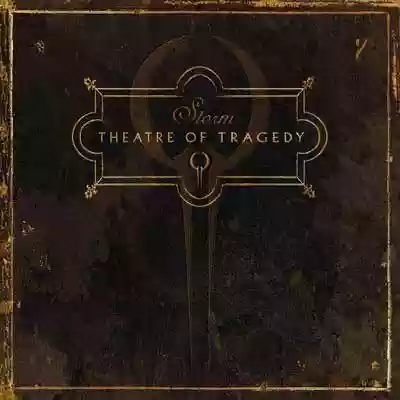
The return of Theatre Of Tragedy is celebrated with this "Storm" (2006), which brings the band back to us after four years of silence and a significant lineup change, with the departure of the famous Liv-Kristine Espenaes in favor of newcomer Nell.
Expected at the turn by former fans disappointed by the previous "Assembly," the six-piece from Stavanger offers a platter that represents the ideal continuation of the artistic path begun with "Musique" in 2000, while partially abandoning the strong doses of electronics that were well present in the recent past, subject to fierce and sometimes incomprehensible criticism from the metal public.
Dreamlike atmospheres and visions of ethereal sweetness accompany us in the twelve compositions offered here, where the leading role is played by Nell's splendid vocals and Lorentz Aspen's soft keyboard chords in a perpetual encounter and clash between vibes full of modernism and easily engaging pop-metal textures. Raymond does not change his vocal style one iota, yet it reveals itself to be warmer and more sinuous, leaving behind the cybernetic adjustments we had become accustomed to in the two previous efforts. The rhythmic aspect settles on robust, distorted mid-tempos in an industrial-metal manner but also capable of being delicate and enveloping in the softer passages while the guitar crunch reveals "muscles" reminiscent of the Norwegians’ distinctly hard attitude. In terms of influences, there's an air of dark-pop atmosphere in the dual vocals, where dance-based loops entirely disappear, giving the group the opportunity to explore new paths filled with emotion and abandoning one of the characteristics that made them detested by the narrow-mindedness of many former admirers.
Regarding the tracks, I would focus on the compositional skill in crafting effective songs, devoid of embellishments or convolutions of any sort, ready to explode in refrains that are hardly banal, enriched by a vocal emphasis of great talent. Adorable "Storm," splendidly opened by simple ivory chords and very effective in the chorus sweetened by crystalline female vocals, while "Begin And End" is less melancholic, offering us pop-rock settings veiled by a lively attitude in Claussen's granite riffs. The ballad "Fade" stands out where Nell's vocal work is prominent, dragging us into a sweet hurricane of summer and sunny dreams but also frescoed with very deep nostalgic tones. A different approach is found in "Exile" and "Disintegration" where some of the sound architectures already used in "Assembly" are revisited, between electronic breaks, expanded guitars, and rhythms now charged with cold solidity, now velvety and subtle. The exchange of emotions behind the microphone is excellent, a peculiar characteristic of ours that expresses itself differently nowadays but always proves unique and fitting.
The closure entrusted to the little gem of "Debris" perfectly aligns with the new course, flooding us with velvety emotions intensely paired with a gruff riffing of clear doom-metal derivation, which, although not as prominent as in the times of the eponymous debut album, remains well present in the structure of the individual tracks, never disappearing even in the most fragile and melodious episodes presented here.
In short, a mature, coherent work undoubtedly endowed with the essentiality that was missing in the experiments of the last six years, capable of maintaining the artistic value of the Norwegians intact, giving them the opportunity to continue a sonic exploration that seems to have no limits or fears of any kind. The skepticism that accompanies them will not be dispelled by this "Storm," but even those who have mocked them might find interesting points. A very welcome comeback.
Loading comments slowly
Summary by Bot
Theatre Of Tragedy's 2006 album Storm marks a powerful return after lineup changes and a four-year silence. Moving away from heavy electronics, the album embraces refined dark-pop metal with strong vocal performances by newcomer Nell and consistent warmth from Raymond. The band delivers mature, emotional songs balancing industrial rhythms and melodic softness. Highlights include tracks like Storm, Fade, and Debris, showcasing effective songwriting and atmospheric depth. Overall, Storm is praised as a coherent, mature work reestablishing the band’s artistic value.Tracklist Lyrics
Theatre of Tragedy
Theatre of Tragedy were a Norwegian band formed in Stavanger in 1994, widely associated with early gothic/doom metal and the “beauty and the beast” vocal contrast. Their catalogue is frequently discussed for its major stylistic shifts, from doom-tinged gothic metal into more electronic and industrial/pop-leaning territory, and later releases featuring a new female vocalist after Liv Kristine’s departure.13 Reviews
Other reviews
By DarKNight
This 'Storm' left me very disappointed, turning out to be notably more fake than the previous 'Assembly.'
It’s a shame to see her made up in a horrendous way in the 'Storm' video, while she tries to be sensual (not succeeding at all) moving like a drunk on the verge of a breakdown.
