
 •
Rating:
•
Rating:
THE REVIEW
That poetry that stabs you in the back.
Daily, passing rains. Drops that cling to you like mononucleosis. In the mouth a damp taste of moss in the morning. Mountain pastures that end in steep cliffs overlooking the sea.
It’s not lofty, it’s not epic, it’s folksy, damnably true, visionary, intuitive, and noetic. Gripping the soul. Curling up. Like those damn brooding fossils in museums.
But here the music is woman, immense, and her eyes glance at us fleetingly.
Why don’t the Waterboys fade away? Once and for all. Two masterpieces like “This is the Sea” and “Fisherman Blues”; what else is there to do, today? Recycle, regret? Fall ill over them? Or the honest way of doing your everyday work with damn seriousness and respect. Every day you strum the piano, sling that guitar, because it’s the trade that fate and necessity have rained down on you. With those damn eyes looking at the sea, searching for the mermaids.
He who touches the sky too often risks getting burned, like he who wears himself out listening too much to those calls between the waves.
Today the publications of the Waterboys, since far back as ’83, are fifteen. And, strangely, as many as nine since 2000. An album was even released this year (“Where the Action is”)! “Modern Blues” is the one released in 2015, printed through the intercession of Harlequin and Clown.
Behold. I had gotten the box set “This is the Sea/Fisherman Blues”, a double used CD, from the UK before Brexit, when the stamp cost less than half. Great deal. Only then the Blues was not that of the old Fisherman, it was Modern Blues. Damn! The guys from the store, not tightfisted, to unburden themselves of the spurious relic, proposed to refund 75% of the sum paid, including transport. And so placet was given.
Surely; the dreamy poetry that kisses you on the mouth, with storm and fury, and you maybe call it Celtic Rock or Folk Rock or hypertrophic Big Music, is something else.
But what the heck! Damned god!
There is immediately some good news. The singer is still the same. Mike Scott, yes. The brilliant, archaic, timeless spirit is there. Hopping, galvanized, appeased, wise. What music would Job make after all those misfortunes? Easy. This. Classic Rock and Blues. A warm, tamed sound, with shuffling keyboards, swirling (and vintage, the Hammond!), a piercing electric (rich with seventies solos), sustained percussion. There’s even Jack Kerouac reading a passage from “On the Road” (in “Long Strange Golden Road”). But Scott’s voice guides us, full of surges, whirlpools, and harsh, untouched beaches, where a robust mother embraces and accompanies her little one to dip his intact little feet in the Ocean.
Because Mike Scott is Job, he is Sal Paradise, he is somewhat maternal. And his modern-played Blues is fine just as it is.
But what the hell does it take for people to always test you? Always on the hunt for your missteps.
Then Scott still sings really well. And writes well:
“I’m still a freak/ … Don’t sing my praises now, darling/ Do it when I’m dead/ I’m not bitter, but I'm not hopeful/ … I haven’t been gagged yet/ I’m still waving the flag”.
“She embarked on a bitter journey to the border/ Where I courted and won her./ She was Aphrodite, Helen, Thetis,/ Eve among the satyrs/ She was Venus in a V-neck sweater/ She was all that mattered”.
“I had breakfast with the gods/ On a blushing summer morning/ Until a wind swept them all away”.
“The new land lay like Eden/ Under my hungry feet/ … Its people were so noble in defeat/ … I took a spade and volunteered”,
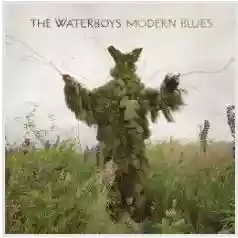
He writes well, yes. Without that damned bitterness of divas, plagued by machismo and narcissism, who whine because they’ve lost the hole in their ass. Hold on to your insoles and your package. I follow the “creature of the road/ the son of dust and toil.” Scott is great. Scott is a bard. You notice with time or when you see the scarecrow, on the cover, in the middle of the lavender.
So “Still a Freak” (a boogie), “I Can See Elvis” (a Blues and a vision: “I see Elvis talking philosophy and law with Joan of Arc and Plato”), “Destinies Entwined” (a rock cavalcade) have that roaring, skewed, looming, defeated but after a long struggle, grip that makes you still throb with anger and love. Survivor of a world of avalanches of crap. Or you find a bit of Soul, almost Dylan-esque folk, violins, and that clear little ballad, “The Girl Who Slept For Scotland”, that leaves you stunned.
There were the boys who loved the wind in those parts (Shelley, Keats and Byron); look at those beautiful names: Percy, John and George. They sang “the dead leaves”, they sang “bands struck by pestilence”.
But how can one not be moved by the boys of the water? They couldn’t care less if the waves are made for the wind or, worse, for surfing (see the uses in the USA of the sand boys). They age whiskey in oak barrels, with tireless spirit and sometimes obtuse heart; their nose lifts on invisible paths, only lowered when they smell the ripe barley. As always. Just like after the incomparable vintages of ’85 and ’88.
And Scott, in the end, still sings music in his music: evokes Elvis, Keith Moon, Charlie Parker, the Crazy Horse (a real paradigm of reference for this LP), Marvin Gaye and John Lennon, all smitten by the same muse. Thus names Sun Ra, Miles, and Coltrane like when he sang “The Return of Jimi Hendrix” or pointed out the Great Music. You are not alone. Not even for 1000 nautical miles or 870 on land.
So much, with the corner of the eye, that girl still glances at you. And you are to her what she is to you.
Loading comments slowly
Summary by Bot
Modern Blues by The Waterboys showcases Mike Scott's enduring talent and poetic vision. The album blends classic rock, blues, and Celtic folk with soulful instrumentation. Despite facing comparisons to past masterpieces, it stands as a sincere and mature work. The music evokes deep emotions with evocative lyrics and rich arrangements. Scott remains a compelling bard, delivering songs full of passion and wisdom.Tracklist Videos
The Waterboys
The Waterboys are a rock band formed by Scottish musician Mike Scott in 1983, known for an anthemic 1980s sound often associated with “Big Music” and later for strong folk-rock and Irish-influenced releases.13 Reviews
