 •
Rating:
•
Rating:
THE REVIEW
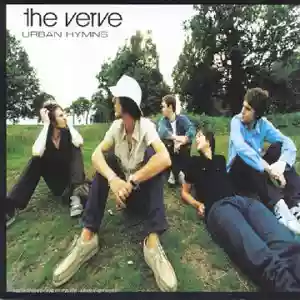
The story of ‘'The Verve’' begins in Wigan, Lancashire county, in the remote English province, in the summer of 1990 when a group of college students from Upholland with a passion for early '70s psychedelic rock came together: they are vocalist Richard Ashcroft (an intriguing hybrid of a young Mick Jagger and Patti Smith), guitarist Nick McCabe, drummer Peter Salisbury, and bassist Simon Jones. By the next year, they were already holding their first London concert, and record label scouts, always on the lookout for new talents, immediately set their eyes on them, just like the press, with Melody Maker leading the way, which began to praise them based only on their live performances. This is a critical aspect of Verve's music, a band that has done nothing in the studio but narrate and encapsulate their psychedelic and improvisational performances.
'A Storm In Heaven' marks their debut in 1993, a great year for the band. In their minds and hearts is the desire to break down the doors of perception as the Doors once tried; spinning on their turntables are the most beautiful albums of the '70s and psychedelic rock. Such a ‘splendid isolation’ that will lead them after just two albums to the heights of 'Urban Hymns'. Yet, it takes four turbulent, troubled, and creatively fruitful years before the band reaches its masterpiece, which, unfortunately, will also be their musical testament: the egocentric and problematic personalities of Ashcroft and guitarist McCabe clash one too many times, and around a year after the release of 'Urban Hymns,' the band disbands permanently.
The two had already decided to drop out once before in September of 1995, when a terse statement officially announced the group's breakup. Without McCabe, the surviving Verve members, with a new guitarist, Simon Tong, find themselves in the studio in 1996 without even knowing if it's to record a solo Ashcroft album or the Verve's new work. They record a lot of material, but things don't flow as they used to because the binding element of Verve's musical magic is missing: the ‘space guitar’ of Nick McCabe. Ashcroft drops everything, needing to earn some money, and goes to model in New York. It will be the darkest period of his life, when it seems the ancient dream of making music has vanished miserably from his hands.
At Christmas 1996, he swallows his pride and finds the strength to call McCabe back to the studio: with him, it’s a whole different music. With Nick once again involved, recalls producer Chris Potter, everyone felt more confident because he is a unique guy. He plays in a highly original way and has tons of good ideas. He completely changed many songs on the album. Nick was able to extract interesting things from feedback, things never heard before. It was difficult to control sounds and noises the way he did. If Verve’s previous albums were unique, long, insane jams probably recorded under the influence of hallucinogens, Urban Hymns does not forget this experience but prefers the song format, the classic kind, thanks to the compositional maturity Ashcroft has quickly reached, with surprising results.
The album opens with ‘'Bitter Sweet Symphony‘'. ‘You’re a slave to money then you die’: probably never has a song so prophetically and ironically told the truth. That success they searched for with years of hard work that finally arrived. A memorable hit, a perfect melody. Its driving rhythm leads the album to the top of charts around the world. This song opened many doors for the band and introduced their music to the entire planet. The track is the fitting swan song for one of the most interesting English rock groups ever. ‘'Lucky Man‘', "The Drugs Don’t Work‘' are great songs, effective reminiscences of the English school lesson a bit in the style of John Lennon and a bit of Nick Drake. ‘'Catching The Butterfly ‘' is an expertly manipulated extract of a jam originally over half an hour long: it is music that comes from nowhere, without barriers or limitations. The song was played first and then written. A process that allows freedom but is also challenging to achieve a compact sound that way. But this time it worked. In ‘'Velvet Morning Tong‘', he even plays a lap steel that makes it sound like a piece by George Harrison.
The Verve had a band capable of dreaming their music so strongly they soared above trends and passing fads to deliver to posterity a handful of songs, piercing feedbacks, ‘space’ melodies that will surely remain as some of the best and most original things played and recorded in the 90s.
In the end, "Urban Hymns" is the reconciliation of young generations raised on dance floors, with brit pop and the psychedelic vision of the 60s.
Loading comments slowly
Summary by Bot
The Verve's Urban Hymns stands as a landmark 90s album fusing psychedelic rock with Britpop. Despite internal band tensions, it delivers timeless hits like 'Bitter Sweet Symphony' and 'The Drugs Don't Work.' The album marks the peak of the band's creative journey and remains a testament to their unique musical vision.Tracklist Lyrics Videos
The Verve
The Verve were an English rock band formed around 1990 in Wigan, associated with a shoegaze/psychedelic early sound and later Britpop success. Fronted by Richard Ashcroft, with Nick McCabe’s guitar widely cited as central to their signature atmosphere, they peaked commercially with Urban Hymns before splitting in 1999 and later reuniting for Forth.17 Reviews
Other reviews
By claudio12
"BITTER SWEET SYMPHONY is probably the best hit ever made in the Britpop realm, a true anthem."
"Just one album was enough. Just one. And the Verve rightfully entered history."
By rebel1
I literally can’t find the words to describe the beauty and completeness of this solemn song.
The purity and beauty of those strings that begin the song are incredible.
By TONI E FURMINI
"Bitter Sweet Symphony" allowed Ashcroft and company to remain forever in the history of their genre and leap to the top of the world charts.
This album is very valid, certainly one of the best in the genre, and its main feature is that it easily spans between Britpop and psychedelia.
