 •
Rating:
•
Rating:
THE REVIEW
In 1993 Richard Ashcroft, frontman of the emerging English band The Verve, stated: "There is a place in history for us. It will take three albums, but we'll get there". Indeed, that's what happened. The Verve achieved success in 1997 with the splendid "Urban Hymns," their third album, which immediately propelled them into the musical Olympus. The album, which found great acclaim from both the public and critics, marked the end of the band, as the group, due to internal incompatibilities, disbanded in 1999 after the tour ended.
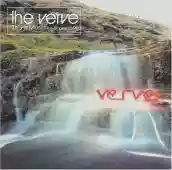
This Is Music: The Singles 92-98 is an album rich with diverse sounds, moving from tracks where the influence of Oasis is evident, to songs close to the electronic world of Radiohead. This work, like all of The Verve's work, appears complex on first listen, as the "sweet and bitter" melodies confuse the listener, who eventually becomes enchanted by the melancholic, powerful, and fragile atmospheres crafted by the English band.
The tracks, which instinctively are placed in forgetfulness, eventually emerge strongly, such as "This Is Music," where the music becomes a sort of bright beacon aiming to illuminate the everyday existence; in "History," adorned by the skillful use of wonderful strings, Ashcroft sings: "I hope you understand there's more in a smile than in a hand".
"She's A Superstar" opens like a sweet lullaby, meant to celebrate a woman who slowly permeated the air; in "On Your Own," the singer questions: "Life seemed so obscene until it's over who knows?". Alongside these tracks, which for too long have taken on the role of niche songs, the pieces from Urban Hymns appear in all their splendor: "The Drugs Don't Work," whose verse speaks for itself: "The drugs don't work, they just make you worse, but I know I'll see your face again"; "Bitter Sweet Symphony" with its irritating video; "Sonnet" and the splendid "Lucky Man," whose concise and at times minimalist lyrics manage to reconcile the soul.
The album is enriched by the presence of two previously unreleased tracks: "Monte Carlo" and "This Could Be My Moment," where the sound seems "stolen" from the Californian rock scene; moreover, Ashcroft's voice has abandoned its former sweetness to embrace more harsh and concrete atmospheres.
This fourth work, which might seem the last attempt by the now-gone group to stay afloat, turns out to be a masterpiece, not only because The Verve wrote splendid pieces destined to remain, but also because This Is Music stands as a testimony, indeed as a testament, to a "music" that was able, is able, and will continue to move, stir, and touch the deepest chords of the soul.
Loading comments slowly
Summary by Bot
This review highlights The Verve's singles collection from 1992 to 1998 as a dynamic and powerful anthology. It notes the band's progression culminating in their acclaimed 'Urban Hymns' album and internal struggles leading to their dissolution. The review praises the album's complex, bittersweet melodies and emotional depth, emphasizing songs like 'This Is Music,' 'History,' and 'Bitter Sweet Symphony.' It also appreciates the inclusion of two unreleased tracks and Ashcroft's evolving voice. Overall, the album is celebrated as a lasting musical testament.Tracklist Lyrics Videos
The Verve
The Verve were an English rock band formed around 1990 in Wigan, associated with a shoegaze/psychedelic early sound and later Britpop success. Fronted by Richard Ashcroft, with Nick McCabe’s guitar widely cited as central to their signature atmosphere, they peaked commercially with Urban Hymns before splitting in 1999 and later reuniting for Forth.17 Reviews
