 •
Rating:
•
Rating:
THE REVIEW
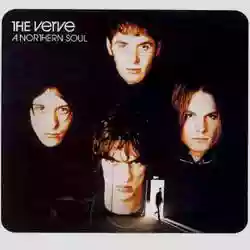
On July 3, 1995, Hut released A NORTHERN SOUL. Authors: THE VERVE. The album, the second from Richard Ashcroft's former northern soul band, is an important record as it is the true prelude to the masterpiece that would come to fruition two years later, URBAN HYMNS.
The successor to A STORM IN HEAVEN has many meanings for history, for music, and for the English group.
Indeed. In fact, a few months after the release, various issues led the Verve to a first breakup. Problems mostly related to too much drugs, too much stress, and especially the first discord between the leader Ashcroft—who always believed in music by passionately burning his own soul, aiming for and trusting in a fulfilling future—and his rival in perpetual and constant depression, that Nick McCabe who "commanded" the heart of the music and the typical Verve sound, always managing to adapt his guitar to the various changes in trend and styles across their different albums, which represented quite different genres: try for yourself, A STORM IN HEAVEN has little to nothing in common with URBAN HYMNS, even though we are (bad)mouthing about rock.
But the psychedelia of one and the brit-pop (really?) of the other distinguish them. And yet there are only 5 years between the two.
And right in the middle is A NORTHERN SOUL.
This album, which did not find glory among the mass audience (but neither did THE BENDS by RADIOHEAD, an album released around the same time, which if carefully listened to and contemplated could even trouble OK COMPUTER), is undoubtedly simpler than the first but harder than URBAN HYMNS.
The Verve seem to have moved away from pure psychedelia (present mainly in BRAINSTORM INTERLUDE, a track that without a guitar, could peek into the CHEMICAL BROTHERS) preferring the clarity of a harder, more mature rock 'n' roll, rich in a thousand nuances and sounds well supported by Ashcroft's deep voice, which becomes violent and intense in "smashing" tracks like the first single THIS IS MUSIC, or fragile and suffering in the weaker and more melancholic songs, which by the way make up the majority of the 12 tracks present.
This sense of discomfort and depression, always present in the lyrics and music of the Verve, as well as in the life of their frail singer, is tasted with insistence in ON YOUR OWN, the second single accented by a gospel falsetto from Richard at the end; it is felt in HISTORY, the most important song of the album, which, released as the third and last single with the Verve already split, achieved great commercial results; it is also experienced in NO KNOCK ON MY DOOR.
Different sensations and colors are left by each single song: LIFE'S AN OCEAN listened to with eyes closed recalls the color blue; A NEW DECADE the rebirth, the departure, the glory; STORMY CLOUDS feels like a story in slow motion. Life, death, love, and suffering are the themes addressed by an Ashcroft who seems to have abandoned the enigmatic lyrics of the early days, replacing them with philosophical and intimate thoughts. Legend even says that during the recording of this last piece the band from Wigan was under the influence of ecstasy (and to think that once it was the acids that opened the mind. Remember, Jim?).
In conclusion, ANS is an important album in the history of the Verve. It is direct—and describes various experiences of pain, ecstasy, sex... all in one album—as good old Mad Richard said. Not easy listening, but concrete, fragile yet also robust, melodic and substantial, which was probably truly understood particularly after the release of URBAN HYMNS, so much so that many alternative musicians still use it as a reference point.
And even if it didn't sell millions of copies, or didn't fully satisfy the critics, that "Northern Soul," for its part, put all the passion it felt and feels every time it enters a recording studio.
He believed in it...
Loading comments slowly
Summary by Bot
A Northern Soul marks a pivotal moment in The Verve's career, blending psychedelia and brit-pop while capturing deep emotional struggles. Despite its modest commercial success, it's seen as an essential prelude to the acclaimed Urban Hymns. The album showcases matured rock sound and intimate lyrics, reflecting the band's internal conflicts and evolving style.
The Verve
The Verve were an English rock band formed around 1990 in Wigan, associated with a shoegaze/psychedelic early sound and later Britpop success. Fronted by Richard Ashcroft, with Nick McCabe’s guitar widely cited as central to their signature atmosphere, they peaked commercially with Urban Hymns before splitting in 1999 and later reuniting for Forth.17 Reviews
