
 •
Rating:
•
Rating:
THE REVIEW
The discography of Arizona's Tubes is divided into two distinct phases: the first sees the group working at the end of the seventies for the record company A&M and is fiercely post-punk and post-glam: satirical, corrosive, polemical, spectacular, and also moderately pornographic (on stage the seven musicians are assisted by dancers, actors, strippers, costumes, and set designs). The second, after transitioning to another multinational, Capitol, and redefining strategies, sees them becoming somewhat more regulated and trying to switch to cashing in, embracing the cause, which is far less ingenious but much more fashionable AOR of the eighties, while still maintaining a great verve and a solid share of theatricality in their always energetic and quirky live shows.
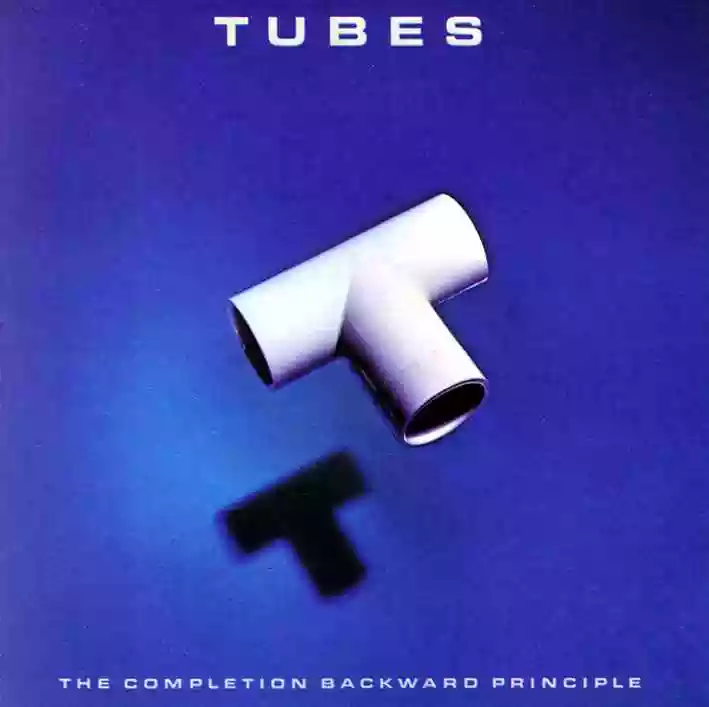
The record in question is the sixth in their career, the second of the described phase two. The group places themselves in the hands of a pop producer, David Foster, who cleans and rounds out the sounds and arrangements, making them very mainstream (for the eighties) and accessible. However, the mixing was completely botched: poor in mid-low frequencies and thus decently stifling, failing to give the new songs the gigantic groove that the Tubes had always demonstrated until then. And to think that the wilful bassist Rick Anderson and the drummer/graphic designer Praire Prince (costumes and set designs are his job, but at the same time, the list of people who have benefited from his rhythmic talent is devastating... just mentioning Jefferson Starship, Cars, Journey, Todd Rundgren, Brian Eno, Tom Waits, George Harrison, and Journey), together form a real war machine.
This band is to be considered among the best in the world in terms of stage effectiveness and spectacle, a triumph of flashy and obscene costumes, jumps and dances, movable platforms turning around the stage with the individual musicians on top (including the drums and two keyboard forts) in full action. And then the music: although bent to theatrical needs, almost like a real musical, yet it results in consistent and structured complete and fulfilled rock songs... It's impossible to describe a Tubes concert; you have to find yourself in the middle of it, we are at Zappa levels, but in four-four time and without (almost) intricate arrangements.
Very little of all this remains on record, including this album, which is despite everything brilliant and inspired. The funky/disco/rock bend, of which the rhythm & blues and the punk roots of their inspiration are stuffed and dressed, does not erase the still good compositional vein (mainly due to Billy Spooner, one of the two guitarists), the effectiveness of the lyrics, the excellent work of the two keyboardists (who essentially divide the instruments: Vince Welnick creates the bases with pianos, organs, strings, and brass, Michael Cotten fidgets expertly on synthesizers and adds the effects, whistles, gusts, drones, solos), the great grit of the frontman Fee Waybill, with a timbre very close to Roger Daltrey of The Who (American accent aside).
The work sold well in the USA thanks to its two hits: the first being the opener "Talk To You Later", a fast hard rock, half funky and half AOR, that pushes strongly towards Toto, not least because the guitarist of the latter, Steve Lukather, a close friend of Waybill, gives a hand in the composition, but especially delivers an incredible solo, certainly among his best, turning the song inside out and sending it off like a missile!
The other standout episode is the slow "Don't Want To Wait", very pompous and Broadway-style, so much so that it is sung by the author Spooner since the given Waybill does not feel it within his range. It belongs to that kind of ballad that hides quietly in the verse only to explode in its gigantic chorus, with six voices, truly lush, led by the talented Spooner with a crooner's demeanor, decidedly out of context with all the rest of Tubes' production before and after, but so be it: if one is very melodic in tastes, the track turns out to be admirable.
I've seen a lot of concerts... the memory of the Tubes' concert in Bologna still ranks at the very top of my appreciation and gratitude. Let's say among the top five, together with a varied company (I throw in Fairport Convention, Gentle Giant, Tempest, Bruce Cockburn...). They would have deserved much more than a good reputation in America and a very small following in Europe. This record does not represent them worthily, but perhaps no one is to blame, it is impossible to fit the Tubes inside a piece of plastic or an audio file, their artistic approach being too visual and multimedia.
Loading comments slowly
Summary by Bot
The Completion Backward Principle highlights The Tubes' transition into 1980s mainstream AOR, produced by David Foster. Despite some production flaws, the album showcases the band's theatrical flair and strong compositional skills. Standout tracks include the energetic 'Talk To You Later' and the lush ballad 'Don't Want To Wait.' Known for their spectacular live shows, The Tubes remain a unique and influential act whose full impact goes beyond their recorded output.Tracklist Lyrics Videos
The Tubes
The Tubes are an American rock band formed in San Francisco in 1972 by musicians originally from Phoenix. Known for satirical, theatrical stage shows led by vocalist Fee Waybill, they broke out with White Punks on Dope and later scored mainstream hits like Talk to Ya Later and She’s a Beauty. Their records have involved producers Todd Rundgren and David Foster; keyboardist Vince Welnick later joined the Grateful Dead.05 Reviews
