
 •
Rating:
•
Rating:
THE REVIEW
During the golden years of 1966-1968 for British music, the Troggs (a band hailing from the town of Andover in rural Hampshire) created a series of songs that extraordinarily anticipated, by a good decade, many of the musical trends that had yet to emerge.
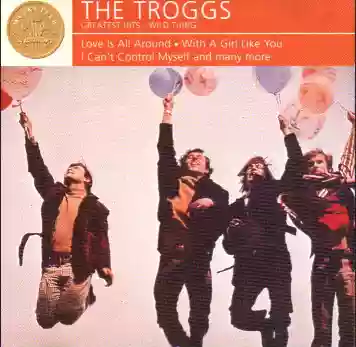
Primarily remembered for the singles that reached number one on sales charts on both sides of the Atlantic, such as the lascivious proto-punk anthem “Wild Things”, the demented hit-single “I Can’t Control Myself” or the more distinctly pop tunes like the splendid acoustic ballad “Love Is All Around” or the floral “With A Girl Like You”; but it is in the lesser-known tracks of this collection (admittedly completely devoid of any biographical information) that one finds truly astonishing surprises like the seminal hard-rock of “Little Pretty Thing”, which also winks at the burgeoning glam scene, and the sophisticated pop of “Anyway That You Want Me”, where Reg Presley’s nasal voice draws strange melodies over a musical backdrop with a strong Kinks influence (not by chance, their producer Larry Page came from Ray Davies' group's entourage); or the surf-like progression of the guitars in “Strange Movies”, in a track that pays homage to both the guru Duane Eddy and the entire iconography of the B-movies for horny teenagers that circulated in the less chic movie theaters.
But up to this point, we are in the “normality” of a very inspired and talented band… but with “Feels Like A Woman” and “I Don’t” the Troggs clearly map the path from the original garage to the more “noise” evolved form that would explode in the States with groups like The Stooges or MC5… and at the same time, they also anticipate the explosion of the punk phenomenon of the late ‘70s where “Black Bottom” sketches the model from which the Clash would start to build their work, and their version of the famous “Save The Last Dance For Me” is the primer upon which the Ramones learned how to transfigure the early rock ‘n’ roll.
"Widge You” is the amalgamation between southern and country rock of bands like The Allman Brothers Band and Eagles, up to ZZ Top, and not even a certain indie from the eighties is overlooked, so “Last Night” starts as an unusual psychedelic exercise and reaches the dilation of R.E.M. (who would honor the Troggs with a heartfelt cover of “Love Is All Around”) or the harmonic constructions of The Rain Parade and Teenage Fanclub, traceable even in the more carefree “Hot Days”.
Loading comments slowly
Summary by Bot
This review highlights The Troggs' significant contribution to 1960s British music, emphasizing their role as proto-punk innovators. It praises both their well-known hits like 'Wild Thing' and lesser-known tracks that anticipate glam, punk, and indie trends. The review points out the band's lasting influence on later artists including The Stooges, The Clash, and the Ramones. Overall, the album is celebrated for its musical variety and historical importance.Tracklist Lyrics
The Troggs
English rock band formed in Andover, Hampshire in 1964, best known for the hits "Wild Thing" and "Love Is All Around".01 Reviews
