
 •
Rating:
•
Rating: THE REVIEW
It's 1971 when the Trip, a group half English and half Italian, decide that it is time to deliver the second work of their slender but prolific discography. Although the name may not mean much to many, the album is very important: it indeed marks the birth (together with Collage by Le Orme, which is from the same year) of the so-called Italian prog, a genre neglected in the peninsula but highly appreciated throughout the rest of the cosmos.
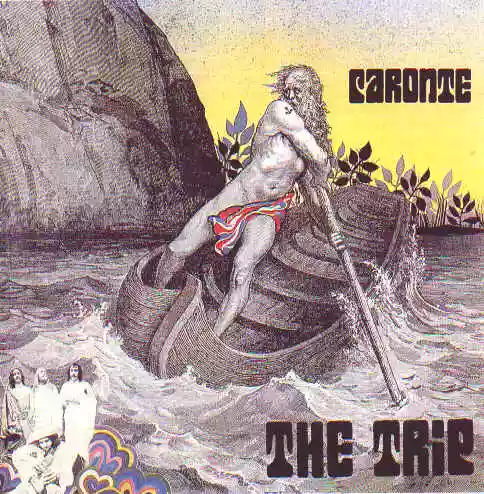
But let's talk about the album: it consists of five tracks that for about half an hour envelop in a particularly dark atmosphere, which refers us to Dantean scenes from the Comedy that serve somewhat as a leitmotif of the whole album, making it a kind of concept, if not a true concept.
The work opens with "Caronte I", an instrumental that after a sinister yet clever start, soars into a hard rock that truly makes the hairs on your pubis and the pubis itself stand up. The shocking opening gives way to the sound of cars and footsteps that introduce a calm bass riff: it's "Two Brothers" which around the third minute explodes into hard flashes with the voice of the good Wegg Andersen, the group's bassist. The other members are Joe Vescovi on keyboards, voice, and the group's brilliant mind, William Gray on guitars, and Pino Sinnone on drums.
On a hypnotic bass riff, the second track takes its leave, giving way to a ballad, "Little Janie" well constructed around the angelic voice of Joe Vescovi, immersing us in an original dreamlike atmosphere of great impact.
In the fourth track, lies the masterpiece of the album, "L'Ultima Ora/Ode a Jimi Hendrix"; in the first part of the song, an energetic rock guides us to the second part, a liturgical adagio, where Vescovi and his companions each play their instrument to the point of achieving the desired musical ejaculation.
The album closes with "Caronte II" where the same organ wail that opened the album is just a pretext for other variations on the theme.
Caronte remains an album to be rediscovered, a milestone of progressive that too many have ignored precisely because of the little importance that Italian music has given to this group. We hope this review manages to shoot it to the top of the charts, surpassing the likes of D'Alessio, Tatangelo, and Ramazzotti who have infested the Italian music scene for too long.
Loading comments slowly
Summary by Bot
The Trip's 1971 album 'Caronte' is a pioneering work of Italian progressive rock, noted for its dark atmosphere and Dante-inspired themes. Featuring five tracks, it blends hard rock energy with hypnotic and dreamlike moments. Standout songs include the instrumental 'Caronte I' and the masterpiece 'L’Ultima Ora/Ode a Jimi Hendrix.' Despite limited recognition, 'Caronte' remains a milestone deserving rediscovery.Tracklist Videos
The Trip
Anglo-Italian progressive rock group active in the early 1970s Italian scene. Key figure was keyboardist Joe Vescovi, alongside bassist/vocalist Arvid “Wegg” Andersen, guitarist William Gray, drummer Pino Sinnone, and later drummer Furio Chirico. Their albums include The Trip, Caronte, Atlantide, and Time of Change, blending psychedelia, hard rock, and jazz-rock with a distinctly Italian flair.06 Reviews
Other reviews
By Rainbow Rising
"A masterpiece to own."
"Acidic keyboards, sustained rhythms, and a guitar owing much to the late Jimi Hendrix introduce the listener to a dark and sulfurous world."
