
 •
Rating:
•
Rating:
THE REVIEW
I have always been a person of few words. And I try to spend those few on what I consider worthy. Despite this, in everyday life, it cannot be said that I am not a sociable type, and in fact, it's easy to connect with me. After all, the job I do puts me in contact with an infinite number of people, of all kinds and from all places, and the courtesies are certainly not spared. Even though they are not part of my nature. What is really complicated, however, is strengthening that bond. I am a distrustful and reflective person, and I love protecting that microcosm of affections that surrounds me and which is difficult to access.
So it is a bit the same with music. I listen to everything, I have always been a passionate researcher, but in the end, what remains inside is not much. Over time I have created my certainties, my safe harbors. And among these, the Tea Party is definitely included. I loved them from the first listen. Partly because at the beginning of their career, they excellently reworked the lessons of the masters Led Zeppelin, my greatest love in the music field. But I felt there was something more. Not only because of the instrumental abilities of the trio in question, but also because they, like myself, love research, whether it be for the perfect sound or the timeless melody.
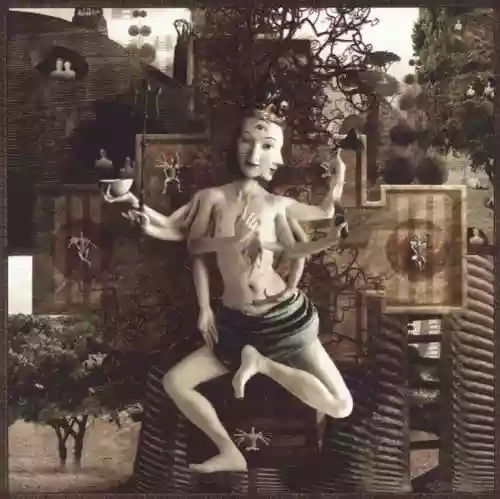
In these mantras, the Tea Party rework and shake up everything they have done before, from the electro-acoustic Splendor Solis of their early works to the industrial temptations of the later ones. The band hardens and modernizes their Moroccan roll to transform it into an all-around hard rock, but as always imbued with their typical oriental spices and even more refined arrangements, where technique makes what is actually not simple, seem easy. Where catchy is no longer a blasphemy, but becomes yet another demonstration of innate class. And indeed, the quality in this "The Interzone Mantras" reigns supreme, with a rhythm section that has an incredible groove and Jeff Martin on guitar more inspired than ever, bringing out some of the best riffs and solos of his already extensive repertoire. The ethnic instruments are more measured compared to the beginnings but are compensated by a wide use of orchestral instrumentation and a large array of guests. A triumph of violins, cellos, trumpets, and saxophones. And many more. Martin's voice has broadened its spectrum and freed itself from the spiritual bond with the shaman Jim Morrison, delving more resolutely into melodic research. But let this not deceive you, because the mood of the entire album is actually decidedly dark, more than it has been in the past, except for Transmission, their hardest and darkest work. There are many pieces to remember, especially the splendid and rocky "The Master and Margarita" and "Cathartik," but as already written the average quality is high and there are no real drops in tension.
And as William Burroughs, from whom the group took inspiration for the title, would say, "Words, colors, lights, sounds, stone, wood, bronze belong to the living artist. They belong to anyone who knows how to use them." And The Tea Party certainly knows how to make good use of their art.
Loading comments slowly
Summary by Bot
The review praises The Tea Party's album 'The Interzone Mantras' as a mature and dark hard rock work. It highlights the band's evolution from their earlier sound and their masterful blend of oriental elements with orchestral arrangements. Jeff Martin’s guitar skills and vocal range receive special acclaim. The album is noted for its consistency and high quality with standout tracks such as 'The Master and Margarita' and 'Cathartik.'Tracklist Lyrics Videos
The Tea Party
The Tea Party are a Canadian rock trio formed in 1990, known for fusing hard rock with Middle Eastern, Indian, and Celtic instrumentation. The core lineup is Jeff Martin, Stuart Chatwood, and Jeff Burrows. Notable albums include Splendor Solis (1993), The Edges of Twilight (1995), Transmission (1997), Triptych (1999), The Interzone Mantras (2001), and Seven Circles (2004). The band disbanded in 2005 and reunited in 2011, remaining active since.03 Reviews
