
 •
Rating:
•
Rating:
THE REVIEW
Do you love the blending of various cultures, both in life in general and in music specifically? Did you grow up on bread and Led Zeppelin, nurturing your rock soul over the years, while also harboring a soft spot for world music and exotic instruments?
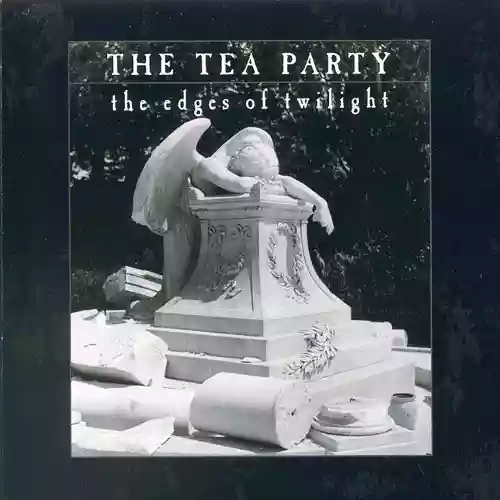
If your answer is affirmative to both questions, then you will surely be fascinated by the sonic universe of The Tea Party, another wonder coming from the cold lands of Canada. The bravest among you may have managed to finish the link above, and thus have already formed an idea of the talent of these musicians, as well as received a taste of the variety of sounds present in their second (for some, third) full-length, “The Edges of Twilight,” dated 1995. While the excellent debut “Splendor Solis” already hinted at a bright artistic future for the band, it is with this work that the Canadian power-trio reaches the pinnacle of their career.
At the edge of twilight, you will find tonal blends of multiple aromas, ranging from strong Indian and Middle Eastern influences all the way to Celtic tradition, skillfully embedded in a rock context. The hard kind, I mean. You'll feel like you're wandering aimlessly through the labyrinthine alleys of a bazaar, inhaling the fragrances of the East, only to suddenly find yourself catapulted on the side of a mountain, enveloped in its shadow. It is music of impetuous vitality that breathes through the album, a true kaleidoscope of emotions and vibrations. The creative and elaborate riffing is always at the forefront, in constant battle between acoustic seductions and electric roars, between mysticism and darkness, enveloped by rhythms that follow the mood of the elements and are often supported by a percussion fabric of tribal imprint. Over this babble of sounds rises the voice of charismatic singer and guitarist Jeff Martin, deep and theatrical like that of a shaman who invokes the moon, but at the same time can navigate the high notes with rage and power.
The moderate success that The Tea Party achieves in their homeland does not do justice to one of the most inspired and versatile bands of the nineties, which managed to reinterpret the magic of seventies hard rock in a modern key. Despite continuous accolades from music critics and testimonials of admiration from their peers, the band will not break into the international market and will dissolve in 2005.
Lastly, I forgot to mention the special guest Roy Harper, who recites a poem in the closing hidden track. Someone who undoubtedly understands music, not a fool like me.
Loading comments slowly
Summary by Bot
The Tea Party's 1995 album 'The Edges Of Twilight' masterfully blends hard rock with diverse cultural influences, including Indian, Middle Eastern, and Celtic music. The band reaches the peak of their artistic expression with charismatic vocals and intricate instrumentation. Despite critical acclaim and a dedicated Canadian fanbase, they never achieved international fame. The album showcases a rich palette of sounds, rhythms, and emotions, making it a standout in 90s rock. Special guest Roy Harper adds a poetic touch on a hidden track.
The Tea Party
The Tea Party are a Canadian rock trio formed in 1990, known for fusing hard rock with Middle Eastern, Indian, and Celtic instrumentation. The core lineup is Jeff Martin, Stuart Chatwood, and Jeff Burrows. Notable albums include Splendor Solis (1993), The Edges of Twilight (1995), Transmission (1997), Triptych (1999), The Interzone Mantras (2001), and Seven Circles (2004). The band disbanded in 2005 and reunited in 2011, remaining active since.03 Reviews
