
 •
Rating:
•
Rating:
THE REVIEW
1988. In the alternative-rock territory, everyone was talking about them: original, creative, surreal, the members of the Sugarcubes not only managed to captivate the critics, but also the ears of the public, who flocked in large numbers to the concerts. Bjork began to appear as a new sex symbol on the covers of the best music magazines, and her voice managed to shed light on the Icelandic music market. It was inevitable, therefore, that the media, riding the wave of great success, pressured the group to record the follow-up to "Life's Too Good."
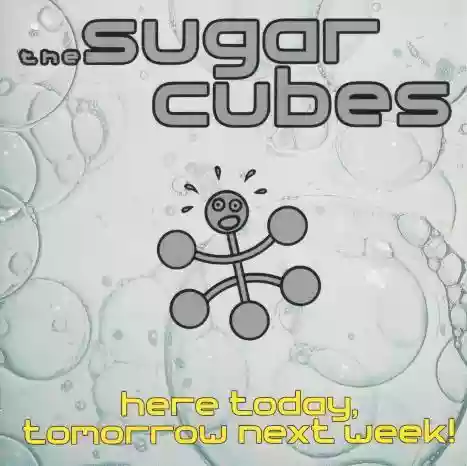
Repeatedly announced, the album was presented by the group's own members as an even more delirious album than the debut, claiming to have created something never heard before. The anticipation was exciting, and within a few months of the first album, "Here's Today, Tomorrow Next Week!" (1989) was released: it was preceded by an excellent radio impact single, a ballad attempting to hit "Birthday" again, without succeeding in the attempt but still appearing very good: "Regina" is, in fact, an example of a truly enviable and refined pop ballad in the "oh-oh" of the chorus, which would have managed to be blasted by the radio with the force of a cyclone.
So, excellent things were promised, but the album received the worst reviews ever written for a rock album, and so both the media and some fans abandoned them: the album didn't sell even a quarter of the millions of copies sold by its illustrious predecessor. Too many songs, too much rush to release a new album, too much egocentrism from Einar, who overshadows his partner's voice quite a few times. A couple of exceptions are saved: "Water" is a worthy substitute for "Birthday" in its splendid melodic line, with the bass that stutters and caresses the soul, Bjork casts a sonic spell, and even Einar appears unusually comfortable, delivering a really enjoyable cool rap. Even the beginning of "Tidal Wave" is successful with its very catchy Caribbean rhythm, its frivolous attitude, and a new unforgettable pop chorus. "Speed Is The Key" is an excellent example of rock, a sort of bass experiment where the members juggle an excellent melodic and radio line.
The rest is more or less successful, more or less necessary, and it's a pity because after a masterpiece like "Life's Too Good," something still innovative and sensational was expected. Lyrics that aim to be absurd but turn out too over-the-top, forgetting that naive component of the early lyrics. The punk revolution forgotten, in this album the Sugarcubes simply focused on pop, perhaps wanting to be irresistible to the radios, but it’s painful to say: it's a misstep.
Loading comments slowly
Summary by Bot
Released in 1989, The Sugarcubes’ second album aimed to build on the success of their debut but failed to replicate its impact. Despite moments of strong melodic and vocal performances, including singles like "Regina" and "Water," the album was seen as rushed and uneven. The band's shift towards pop and the overshadowing of Bjork’s voice led to mixed critical reception and lower sales, marking it as a misstep after their innovative first release.Tracklist Lyrics Videos
The Sugarcubes
The Sugarcubes are an Icelandic alternative rock band formed in Reykjavík in 1986, featuring Björk and Einar Örn Benediktsson. Their debut Life’s Too Good (1988) earned international acclaim, followed by Here Today, Tomorrow Next Week! (1989) and Stick Around for Joy (1992). The group disbanded in 1992 and reunited briefly in 2006.04 Reviews
