
 •
Rating:
•
Rating:
THE REVIEW
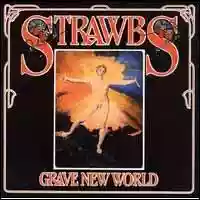
The album "Grave New World" unquestionably marks the artistic and formal peak of the Strawbs, an English band led by Dave Cousins, which originally debuted with the flautus vocis Sandy Danny on vocals and Tony Hooper on guitar; the group also featured, for the span of two albums ("Just A Collection Of Antiques And Curious", 1970, "From The Witchwood", 1971) the collaboration of the virtuoso Rick Wakeman on keyboards.
Deeply influenced by the folk revival movement of the late '60s, which erupted violently following the acoustic "betrayal" by Dylan, the Strawbs progressively distanced themselves from the folk-rock stylings, which nevertheless would always remain as a structural reference, to ultimately create an avant-garde musical experiment, one of the greatest (and most underappreciated) artistic peaks of the '70s.
"Grave New World" is therefore the final and ultimate acme of an artistic maturation born from the fusion of acoustic folk, non-noisy psychedelia (Red Crayola) but dreamy and atmospheric (Grateful Dead), sacred music, Eastern mysticism, baroque harmonies, and a clear vein of decadent aestheticism, sometimes vitalistic and pantheistic (D'Annunzio), other times contemplative and intimate (Cohen), but always supported by substantial arrangements that reflect the search for the formal perfection of melodies, ranging from liturgical choirs to electronic experimentation, from Indian ragas to Eastern sacred music.
All the tracks on the album are thus permeated by a sensitive ecstatic and religious transcendence, which at certain points (New World, Is It Today Lord, Benedictus) becomes overwhelming and extremely intense; the image is Bernini's "Ecstasy of Saint Teresa", transcendent yet deeply intertwined with the sensuality of the cosmos.
Loading comments slowly
Summary by Bot
The review highlights 'Grave New World' as the artistic and formal pinnacle of The Strawbs, a 70s English band led by Dave Cousins. It emphasizes the album's evolution from folk rock into a thoughtful fusion of folk, psychedelia, sacred music, and Eastern mysticism. The album is praised for its complex arrangements and transcendent intensity. The reviewer considers it one of the greatest yet underappreciated albums of the decade.Tracklist Lyrics Videos
02 Hey, Little Man... Thursday's Child (01:06)
06 Hey Little Man... Wednesday's Child (01:07)
07 The Flower and the Young Man (04:18)
08 Tomorrow (04:49)
09 On Growing Older (01:56)
10 Ah Me, Ah My (01:25)
11 Is It Today, Lord? (03:07)
12 The Journey's End (01:45)
13 Here It Comes (02:43)
14 I'm Going Home (03:15)
The Strawbs
English band formed around the mid-1960s led by Dave Cousins; evolved from folk roots into baroque-influenced progressive folk and worked with musicians such as Sandy Denny and Rick Wakeman.02 Reviews
