
 •
Rating:
•
Rating:
THE REVIEW
"No more heroes anymore, no more heroes anymore"
This is the cry, this is the slogan already adopted by a thousand voices screaming it to the sky. It’s 1977 and London burns with its punk anti-heroes, while punk, the movement, begins to scatter into ashes and still incandescent lava that soon would become harmless. New impulses are already on the horizon, new ways of expressing one's being and unease, and perhaps, looking at it today, that London '77 will last no longer than a snapshot. But in that photograph, for sure, are the Stranglers.
The four from Guildford, though not strictly punks, find themselves at the right place and the right time, with all the credentials to ride the fiery scene. Ugly, maybe not, but perhaps "dirty," in the maudit sense of the word, and presumably bad, for the rebellious and sometimes outrageous behavior they exhibit at concerts and especially towards the press and public order. With their debut album "Rattus Norvegicus," they introduced themselves with an almost avant-garde cultured look, certainly aggressive by vocation, but also very melodic and structured, far from formulas made of four chords and some yelling. Just think of those frenzied keyboards that paint songs with splashes of color, the almost prog constructions of the tracks, and that vibrant but discreet guitar that anticipates many new wave sounds. Some even compare them to the Doors, an admittedly reckless comparison, but acceptable insofar as it managed to divert from the image of a "seasonal" phenomenon to convey the idea of a much more complex project.
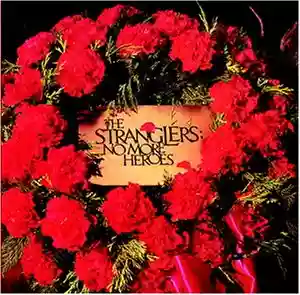
"No More Heroes," with its cover so mournful yet so alive, hits the stores a few months after the debut. It’s another revelation, an album without pauses that blends with the flow of time and interprets it once again with an original approach, but with much more strength than its predecessor. Whereas "Rattus Norvegicus" had more studio work and refinement, this is not the case for "No More Heroes," which strikes its blows with absolute spontaneity without caring about what the chronicles might say. It’s a rough, energetic, sharp album, at times irreverent if not downright incorrect ("I Feel Like a Wog", "Bring On The Nubiles"), and in essence, it seems very much like a true debut for the Stranglers, as if it was slightly delayed.
There is all the spirit of punk fueling the eleven tracks, but there is also the melody of the guitars and the electronic fantasies of the magical Dave Greenfield reminding us of the depth of their offering. Episodes like "Dagenham Dave", "Dead Ringer", "English Towns" are perfect in their immediacy but reveal a pulsating heart made of rock'n'roll vibration sometimes seasoned with strange funk sensations. Even more distant from the already heard are the hallucinations of "Peasant In The Big Shitty" and particularly "School Mam", a wooden and unsettling dance against the squalid customs of a small-minded society. And then there’s the famous festive "Something Better Change", and then there’s her, the title track, a manifesto, a punk anthem on par if not superior to "Anarky In The UK": three minutes that summarize everything punk wanted or would have liked to express, between rebellion and disenchantment, and at the same time a bridge to a near future that will be made of melody and experimentation. Chords of disarming simplicity (Elastica and many others will thank them), determined vocals, and carousels of keyboards in the background giving the whole an epic flavor, destined to last.
Therefore the Stranglers weren’t born as punks, or not exactly, but this work, with its rebellious, irreverent, provocative nature, makes them true icons of the movement. In this sense, "No More Heroes" remains an absolute milestone for anyone who wants to approach the spirit of those years. Then at the end of the '70s, punk dies, and while its ghost will nourish and continue to live in the collective memory thanks to this and a few other records, the four will have broad shoulders and ideas to spare to continue an honorable career up to our days, proving to be one of the most enduring bands in rock history. "Whatever happened to the heroes?" echoed sternly exactly thirty years ago. Well, you’ll agree now who the heroes are, who somewhere in the world, perhaps right now, are still shouting it.
Loading comments slowly
Summary by Bot
The review praises The Stranglers’ 1977 album No More Heroes as a powerful punk milestone combining raw energy, melodic innovation, and rebellious spirit. Though not traditional punks, the band captured punk’s core ethos with sharp, provocative tracks and unique instrumentation. The album stands as a defining statement of the era, influencing future waves of rock and punk music. Overall, it highlights the band’s lasting legacy and enduring relevance.Tracklist Lyrics Videos
The Stranglers
The Stranglers are a British rock band formed in 1974 in Guildford. Fusing punk aggression with baroque keyboards and melodic craft, they emerged with late-’70s classics and evolved into sleek new wave, scoring enduring hits such as Golden Brown. The group remains active.10 Reviews
