
 •
Rating:
•
Rating:
THE REVIEW
Great, truly great band the Stranglers. An unconventional band just as unconventional was their music, very Punk in musical attitude yet at the same time distant from the canonical Punk first and New Wave later; and this certainly placed them under a very particular light.
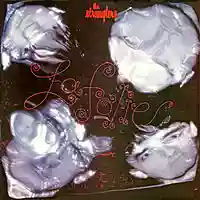
Their saga began with "Rattus Norvegicus", the blessed year of 1977. A very particular year in every sense, and this album placed in that year I think was a small revolution for contemporaries. The album in question is "La Folie", a very mature album with many more nuances compared to the old Stranglers. The abrasiveness had already been smoothed out for some time, while keeping the Stranglers spirit intact... A delightful evolution. All the albums from "Rattus" to "Feline" of 1982 deserve tremendous attention they are great albums, but I believe that the essence of the Stranglers' medal is found precisely in "Rattus" and "Feline". A band that plays and played with a cold taste. I was saying an unconventional band in the early Punk scene, given that the members had a significant musical background, sending back to sender the beliefs of those who see in Punk also the stereotype of not knowing how to play.
When I approached this band what intrigued me was the comparison to the Doors, as it is one of my favorite bands; indeed, take the Doors off the sunny Californian beaches, place them ten years later in a dead end blocked by a red brick wall on a typically British gloomy day, and you have the Stranglers. The album opens with "No Stop", a very beautiful piece and indeed very Doors-like, in which the little organ becomes the true leitmotif of the song, also leading the vocals somewhat recited midway between Jim Morrison and Lou Reed by Hugh Cornwell. There is room for several other well-crafted songs, such as the obsessive and psychedelic "Ain't Nothin' To It" or the compelling "Tramp", in which Dave Greenfield's work on the keyboards becomes very, very interesting. The title track is a very dark and introspective ballad, almost like autumnal Paris; and then we come to one of their most famous pieces, "Golden Brown". A very captivating waltz, great harpsichord work and various effects, along with Cornwell's almost jazzy guitar work. Among the bonus tracks of the various editions released over the years, there is the splendid "Strange Little Girl", a piece that seems straight out of "Strange Days" by the Doors, moving!
Perhaps the last noteworthy album along with the subsequent "Feline" leaves this beautiful legacy of this great group that certainly should be rediscovered, which still lingers into our days, perhaps enlivening some gothic little festival in Eastern Europe and perhaps piercing the heart of some dark fan lost who knows where grappling with a revival they never experienced. One of Enrico Ruggeri's favorite bands, someone who has much in common with them.
Loading comments slowly
Summary by Bot
The review celebrates The Stranglers as an unconventional punk band with a distinct musical identity. 'La Folie' is highlighted as a mature album showcasing their evolution while preserving their spirit. Comparisons to The Doors accentuate their dark and introspective style. Key tracks and instrumental work, especially keyboards, receive praise. The album's legacy is noted as influential and deserving of rediscovery.Tracklist Lyrics Videos
The Stranglers
The Stranglers are a British rock band formed in 1974 in Guildford. Fusing punk aggression with baroque keyboards and melodic craft, they emerged with late-’70s classics and evolved into sleek new wave, scoring enduring hits such as Golden Brown. The group remains active.10 Reviews
