
 •
Rating:
•
Rating:
THE REVIEW
Years '77-'78, roaring years, golden years. In the London of punk, four kids in leather jackets walk at night kicking cans and making heavy comments about the unfortunate women of the moment. Hotheads with a soft spot for real music, the Stranglers quickly revealed that in them, punk was only the attitude; because, as angry and restless as they wanted to be, despite J.J. Burnel's cute face and Dave Greenfield's "family doctor" look, once the instruments were on, many had to take their hats off from the beginning.
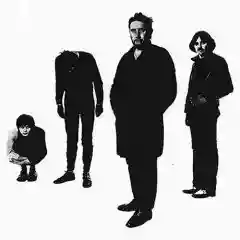
"Rattus Norvegicus" is the epochal debut, where it was immediately apparent how the immediacy of punk could go hand in hand with the melodic grafts of guitars and especially keyboards, played with an uncommon technique. The profile is completed by Burnel's bass, which sounds like a chainsaw inside a steel pipe, and the powerful voice of the hard and pure leader Hugh Cornwell. The rhythms are often relentless, as befits those who have little time to waste and throw things in your face, but it’s harmonious anger, that of the Stranglers, sometimes epic. Listen, for example, to "Sometimes", "Hanging Around", and especially "No more Heroes", an anthem that will be the sound mirror of a generation. The band's third work is this "Black and White," an album with manichean intentions from the cover, in strict black and white, and with a tracklist deliberately organized into a white side and a black side. More than a stylistic intent, for the group it’s an opportunity to take stock of themselves and play with the lights and shadows of its multifaceted identities. Until then, there had been little time to think, and the clock didn't seem to want to stop running. "Black and White" is indeed the third album in two years, but the impression is that more than wanting to burn out, these guys are genuinely having fun.
The first side, the white one, goes down in one gulp: it transitions from the blasts amid swirls of keyboards in "Tank", to the squared-up mix of "Nice'n Sleazy" a successful single; from the electronic waltz of "Outside Tokyo" to the lively hard-core of "Hey! (Rise Of The Robot)" up to the bass-drum assaults of "Sweden", a track with lyrics -and video- to say the least grotesque. It closes, maintaining the tight rhythms, with the epic "Toiler on the Sea", featuring significant guitar interventions and crazy keyboards sharing the scene. The black side is instead led by Burnel, who sings almost all the pieces, and immediately presents itself as darker and more experimental. If "Curfew" still travels on lively lines, the tones of "Threatened" and "In the Shadows" evoke nocturnal industrial suburbs, always thanks to Greenfield's imaginative tricks, a sharp and affected bass, and a dragged voice as if after a binge. Following are "Do you Wanna" and "Night and Death and Blood", which on a casual listen seem like one because they’re cleverly linked; however, while the first is still the gasp of a brawling thug, the second boasts a punch of great impact and ranks among the best on the record. The concluding "Enough time" is instead sharp and cold, closing as you would not expect, winking at Kraftwerk.
The CD reissue features other episodes from that period but not included in the project: among these is the stunning reinterpretation of Burt Bacharach's "Walk On By", enhanced by elegant organ touches and centered around a long instrumental digression where the group showcases its entire repertoire. Also noteworthy is "Old Codger", another cover with jazz musician George Melly on vocals, and an alternate version of "Sweden" re-sung, coincidentally, in Swedish.
Some curious anecdotes reported in the booklet: the album was promoted in Iceland, among great colds, binge drinking, concerts in violent venues, and continuous physical-verbal battles with pesky journalists, some of whom were victims of heavy pranks at the hands of our boys. Hence the bad boy reputation for a group that altogether was no more boisterous than many of their contemporaries. But the fortune of "Black and White" won't depend solely on the newspaper chronicles about its creators, because it thrives perfectly in its own light. Perhaps too smooth and fast on first listen, you have to give it the right times and the songs come out as cannon blasts, just to stay on theme. It's true, maybe there was ("Rattus Norvegicus") and there will be ("The Raven") even better; but there is no doubt that this record, and its designer cover, have decisively contributed to the quartet's place among music icons.
Loading comments slowly
Summary by Bot
The review highlights The Stranglers' 1978 album Black and White as a pivotal punk record mixing raw energy with melodic complexity. The album's split 'white' and 'black' sides explore contrasting moods and showcase the band's evolving sound. Despite initial rapid releases, the band balances intensity with playful experimentation. The review praises key tracks while noting the album’s lasting impact and cultural significance. It also touches on notable bonus material and memorable anecdotes about the band's rebellious nature.Tracklist Lyrics Videos
The Stranglers
The Stranglers are a British rock band formed in 1974 in Guildford. Fusing punk aggression with baroque keyboards and melodic craft, they emerged with late-’70s classics and evolved into sleek new wave, scoring enduring hits such as Golden Brown. The group remains active.10 Reviews
