
 •
Rating:
•
Rating:
THE REVIEW
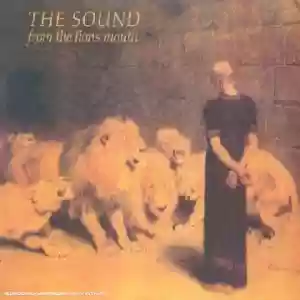
When "From the Lions Mouth" was published, I had already dropped out of school. After finishing high school, I enrolled in Mathematics because as a kid I read too much Asimov and wanted to become a psychohistorian.
Game theory and Nash's name were no longer taboo in Italian universities, so I had come to believe that with the use of mathematical methods and formulas, one could arrive at something not too dissimilar to Psychohistory. I was fascinated by the worlds Asimov described, the evolution of society and the human race, and how the mathematician, created by the writer, Hari Seldon, studied and elevated it, making it a real science. I wanted to be a psychohistorian. A psychohistorian and a dreamer. However, things didn't go as I hoped, and I left university and much of my youthful dreams without too many regrets. Those came later.
Instead, Irene was studying architecture when I met her. Now she too had left her studies and was working as a sales assistant in a clothing store downtown. The store belonged to an old aunt of hers who, besides the job, also offered her hospitality, a place to stay when Irene left Calabria. The aunt, as far as I remember, was a nice person and actually couldn't wait to hand over the store to her niece and retire to live in her beach house. Besides her aunt and two mysterious brothers who lived in Pavia, about whom I knew nothing else, Irene had no family. She had fled from Calabria and was also trying to escape her past.
Irene was very pretty, but her eyes were sad and seemed to have seen hell. She had beautiful long brown curly hair that reached past her shoulders and was ten years older than me. I had known Irene for a while, but we had a fairly formal relationship, and then I, typically, was sure she wasn't interested in me. Nobody was interested in me. One evening, I ran into her while I was having a beer or two alone at the usual place. We went on till morning, me drinking, her talking, and that's how we started hanging out.
Irene recited Ian Curtis and Baudelaire from memory and knew a lot about music. At home, she had hundreds of LPs, many of which were by bands and artists I had never listened to or only heard mentioned, and many of whose names I can't even remember today. She knew her new wave, that girl: her listening ranged from Joy Division—her favorite band, of course—to the Birthday Party, from Suicide to Tuxedomoon, to Adrian Borland's Sound and "Jeopardy," which she introduced me to and immediately struck me. When "From the Lions Mouth" came out, I gave her a copy. I used to tell her they even had a bit more edge than Joy Division, whose sound they certainly resembled—but I find the Sound played better than Curtis and his companions, no offense to old Sumner. She used to laugh, take off her boot, and throw it behind my head. In this way, yes, she reminded me a lot of my mother. Irene laughed little. She smiled, of course, and had a very sweet smile, but it didn't take a genius or a particular sensitivity to understand that something wasn't right, that it was a tired, almost heavy smile. She didn't laugh, but she loved to talk: she said I made her comfortable, and that's why she liked spending time with me. But nothing ever happened between us beyond a good friendship. I was too shy to make a move, and the ten years of difference made me think she'd reject me, or that it would end badly in any case. Knowing it would end was enough to make me give up. I hadn't even sorted it out when, one evening, I walked her home, and she told me in tears she preferred not to see me anymore. She knew I liked her, and the ten-year difference scared her. I went along with it because I couldn't do otherwise and because, somehow, I'd always known it would end like this: we kept in touch for a while, occasionally, but then everything ended. I didn't suffer too much and when I met Chiara, I almost forgot about Irene.
A few years ago, I heard about the tragic end of Adrian Borland. I believe he too played a game against his ghosts for much of his life. I don't know if he lost, and I don't really care, but he decided to end it. I believe albums like "Jeopardy" and especially "From the Lions Mouth," even if perhaps undervalued by the public and critics, are a valid testament and testimony to his compositional skills and artistic sensitivity. I haven't seen Irene since. Every time I listen to "Silent Air," I think maybe things could have been different. Sometimes I passed by the store where she worked, and without her seeing me, I watched her for a few minutes.
One day the store was closed, she had closed it. She no longer lived there. I haven't seen Irene again.
Loading comments slowly
Summary by Bot
The review intertwines a personal story with a deep appreciation of The Sound's album 'From The Lions Mouth.' The author reflects on his youth, a poignant connection to a woman named Irene, and the musical impact of Adrian Borland. Despite being underrated, the album epitomizes artistic sensitivity and emotional depth within the post-punk genre.
The Sound
The Sound were an English post-punk/new wave band led by singer, songwriter and guitarist Adrian Borland, frequently described by reviewers as unjustly underrated despite acclaimed early albums such as Jeopardy and From the Lions Mouth.11 Reviews
Other reviews
By Fidia
In “Possession” Borland’s voice seems truly possessed by that of Ian, enveloped in a dark and fascinating ambiance.
A date to remember as much as May 18, 1980, with the hope that The Sound will reach that firmament where Joy Division have stayed for almost three decades.
By Marco Orsi
The first "Jeopardy" is, without a shadow of a doubt, their best release.
The fault for this miserable disinterest is, in reality, attributable solely and exclusively to the music critics of the time.
