
 •
Rating:
•
Rating:
THE REVIEW
Black Music, as is well known, is a gigantic musical container, varied and multifaceted, always favorable to experimentation and contamination of all kinds, ready to quickly break down the series of stereotypes that, in this regard, criticism and common opinions have contributed to perpetuate over the years.
Rap, without a doubt, is the musical genre that, more than any other, has been strongly affected, in a way that for many is more than negative, by the enormous and widespread diffusion provided in recent years by the increasingly intrusive media channels (MTV, in primis...). The image of the blinged-out rapper surrounded by lap-dancers and women of easy virtue is now on everyone's lips and eyes, and many consider the music produced by these characters as a simple adolescent entertainment, suitable for a target with few demands, and strictly under-20.
However, groups like the Roots still manage, even today, to make Rap a "mature" and grown-up genre, offering sophisticated themes and sounds that, despite the notable openness and simplifications of their latest works, remain valid and, essentially, accessible to a vast and heterogeneous audience.
Originally from Philadelphia, the Roots were formed towards the end of the '80s, when drummer ?uestlove (Ahmir Thompson) met MC Black Thought (Tariq Trotter) at the High School For The Creative And Performing Arts in South Philadelphia. Finding intellectual affinities and similar passions, the two embarked on their first musical experiences, both in the studio and live, under the name Radioactivity, gaining numerous accolades in the underground scene of the Pennsylvania metropolis. The lineup expanded with the addition of bassist Hub, keyboard virtuoso Kamal, the contribution of "human beatbox" Rahzel The Godfather Of Noyze, and second MC Malik B, bringing to official life the project The Roots, which was followed by the self-produced debut "Organix" (Remedy, 1993). The critical success was immediate, and the brilliant and superb mix of live instrumentation and gritty urban poeticism dazzled Geffen Records, for whom they recorded the subsequent and magnificent "Do You Want More?!!!??! " (Geffen Records, 1995).
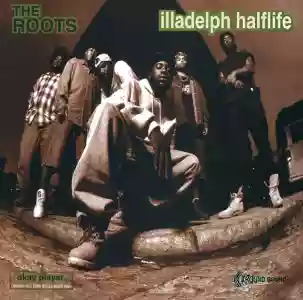
However, it took a little over a year and a half for their true consecration, which came with "Illadelph Halflife" (Geffen Records, 1996), the absolute masterpiece of the Roots, as well as the undisputed musical manifesto of the Philadelphia live band. The album, in its over 74 minutes of total length, achieves the definitive synthesis between the jazz-improvisational tendencies of their beginnings and the progressive journey towards the classic song form, resulting in an absolutely enjoyable experience from start to finish.
After the impressionistic vocal fresco of the "Intro", one is immediately catapulted into the explosive rhymes of the hypnotic "Respond/React", to then be overwhelmed by the dark and melancholic progression of the splendid "Section", where the verbal interlocks of Black Thought and Malik B seem to be able to continue indefinitely. In the short interlude "Panic!!!", it is the precise counter-times of ?uestlove's drumming that take center stage, ready to give way to the splendid "It Just Don't Stop", with its atmospheres balancing between a smoky jazz club and a street rap battle. On the same track is "Episodes", where, however, the magnificent refrain sang by the Jazzyfatnastees is added to the mix, while "Push Up Ya Lighter" veers towards subtle-underwater sounds (try it to believe it!!), enriched by the whispered verses of fellow citizen Bahamadia. The beautiful single "What They Do" continues, strong with the magnificent "smooth sound" of Raphael Saadiq's guitar, and fervent reflections on the modern state of the music industry ("The principles of true Hip-Hop have have been forsaken/it's all contractual and about money makin/pretend-to-be cats, don't seem to know their limitation/exact replication and false representation. . . "), then with the irresistible delusions of Rahzel and ?uestlove in "? Vs. Scratch", followed by the phantasmagorical sound collage of "Concerto Of The Desperado", where, among gongs, bells, falsetto vocals, and abused keyboards, our artists manage to create a disorienting fake-sampled composition, truly worthy of applause.
In "Clones", the juxtaposition of ethereal and expansive moments with more tight and hard ones stands out, the calm and always punctual rhymes of Common blend perfectly with the musical backdrop of the dark "Universe At War", and in the deep "No Alibi" one is surprised by the intense fusion of vintage-flavored Fender Rhodes and lyrics with a powerful emotional impact ("I'm seeking streets to jeeps/hours, days, to weeks/I even speak to geeks/I hold my fortune, it's sweet/I'm discreet in the streets, but that's just the way I play though/I lay low, but
Loading comments slowly
Summary by Bot
The review praises The Roots' 1996 album Illadelph Halflife as a pinnacle of mature and sophisticated hip-hop. It highlights the group’s ability to fuse jazz improvisation with classic song structure, and their intelligent lyrical themes. The album is celebrated for its rich live instrumentation and its resistance to mainstream rap clichés. Detailed track analysis underlines the album’s enduring appeal and artistic innovation.Tracklist Lyrics Videos
The Roots
The Roots are an American hip hop band from Philadelphia, formed in 1987 by Ahmir “Questlove” Thompson and Tariq “Black Thought” Trotter. Renowned for live instrumentation and adventurous fusions of jazz, soul, and funk, they became the house band for Late Night with Jimmy Fallon (2009–2014) and The Tonight Show Starring Jimmy Fallon (2014–present).07 Reviews
