
 •
Rating:
•
Rating:
THE REVIEW
The "dark period" had already begun a while ago when in 1994 the Rolling Stones released yet another album in their vast discography. I must say that in my opinion the group could have easily stopped at the end of the '70s, if only to leave a decent image of themselves, but so be it.
So we were saying: the year 1994. The change that immediately stands out is the lineup change; unfortunately (for them) the legendary Bill Wyman leaves after thirty years of distinguished service, a co-founding member of the band and the last ideal bridge (with Watts) between the incomparable Glimmer Twins and the lower ranks of the group, represented by Wood and the entire entourage. Internal conflicts had become unsustainable, and the '80s, with fake breakups and various collaborations, had left a deep mark. Wyman is then replaced by session man Darryl Jones, not officially credited as a member. Probably, the atmosphere of decadence is too intense, even to sustain a lineup change that usually brings more advantages than losses (see "Black and Blue").
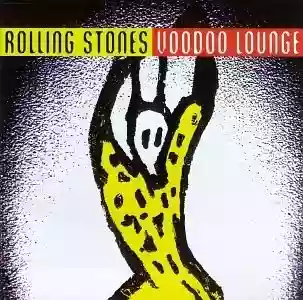
But let's not be misled by the premises: despite everything, this LP remains certainly the best work of the '90s and one of the most significant in many years. If anything, a flaw that can be associated with it is its excessive length: if it had been composed of only eight to ten songs, I would have given it four, maybe five stars. Strong points: Don Was's production, which makes the sound seem much more like the '70s than it actually is, and some really good songs. I think of, for example, the melancholic Out of Tears (the best track on the album), the vaguely exotic atmospheres of Moon is Up, and the good old rock made of riffing guitar blasts (pardon the expression) of Love is Strong, You Got Me Rockin', and Sparks Will Fly. Richards' contribution is now at a minimum (as demonstrated by the unlikely The Worst), lazy and dazed as he is. Only the album cover and title seem to recall the better times, although here we are in the '90s and certainly not in the '60s/'70s...
In short, with this, they demonstrate what has been evident to everyone for the past 30 years: a constant search for lost time. With poor results.
Loading comments slowly
Summary by Bot
The review discusses The Rolling Stones' 1994 album 'Voodoo Lounge' as the band's strongest work of the '90s despite internal conflicts and lineup changes. The production recalls their '70s sound, and standout tracks like 'Out of Tears' elevate the album. However, the length and some weaker contributions hold it back. Ultimately, it's seen as part of a long search for past glory with mixed results.Tracklist Lyrics Videos
The Rolling Stones
English rock band formed in London in 1962. Key long-term members include Mick Jagger and Keith Richards. Known for blues-influenced rock, enduring live performances and a prolific discography.81 Reviews
