
 •
Rating:
•
Rating:
THE REVIEW
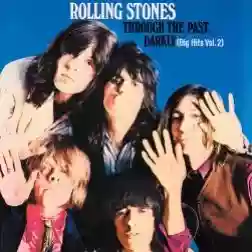
Why own this album? There are two possible answers: either you do not know the Rolling Stones, and then this could be a good starting point for a journey—one I consider fruitful—into this genre; or, as in my case, having an almost complete and encyclopedic knowledge of the "stones" (keeping in mind there's always more to learn), you listen to this collection—the second chronologically, dated 1969—with the awareness of holding in your hands a small piece of history.
The more attentive won't have missed what I'm talking about. It is indeed the album that marks the end of an era: with this, the Rolling Stones chose to suitably honor the memory of Brian Jones, a great artist who died that year in mysterious circumstances in the swimming pool of his villa. How consistent this choice is, after the Glimmer Twins had contributed not a little to his (self)exclusion, is another question; after the album came a concert—originally intended to introduce the new member Mick Taylor, since Jones had left the group some time before—which quickly turned into a live celebration of the little great blond man.
Does this collection only hold value in relation to the historical fact? Not at all. In 1969, the Stones, besides being the best and most acclaimed rock 'n' roll band on the planet (capable—by themselves—of creating an anti-Woodstock, the Altamont festival), had a natural instinct for the financial aspect of their craft. Thus, what better occasion to enrich the discography with a collection that, moreover, presents a different tracklist in America and Europe respectively? And, above all, what better occasion to include in 33 RPM two historic singles that had not yet—and never would—find a place on official albums? I am talking about Jumpin' Jack Flash and Honky Tonk Women, in their unmatchable original versions, of course; two tracks that alone—I know, it's always said this way—would be worth the entire discography of any current band. Jumpin' Jack Flash will appear, truth be told, a year later, in "Get Yer Ya-Ya's Out!", the first real live album by the Stones: but here it's a whole different story. In the studio version, the song reaches heights of unbridled wildness, with a Jagger in great shape (his is the harmonica solo, absent in the live versions) and Richards pounding confidently in the demonic sequence of three chords, so simple, so devilishly overwhelming. Great.
However, do not think that the collection is only valuable for Jumpin' Jack Flash. Some examples? Paint It, Black, to begin with. And then Let's Spend the Night Together and Street Fighting Man. Or the psychedelic gems of 1967, which must have been very dear to the late Brian, She's a Rainbow, Dandelion (also never included in any album), 2000 Light Years From Home. Not to mention the raw acidity of Mother's Little Helper and Have You Seen Your Mother Baby, Standing in the Shadow?, and the sweet LSD-tinged laziness of Ruby Tuesday.
Not exactly a work for completists, as might be the subsequent collection "Metamorphosis", dated 1975, the album excels mainly for the variety of pieces offered: from the rock of Honky Tonk Women to the dreamy psychedelia of Dandelion. History and financial foresight intertwine and coexist, and the result is more than appreciable, in the best Stones tradition.
Loading comments slowly
Summary by Bot
This review highlights 'Through The Past, Darkly (Big Hits, Vol. 2)' as both a historical milestone and a rich collection of Rolling Stones classics from 1969. It honors the memory of Brian Jones while showcasing key tracks like 'Jumpin' Jack Flash' and 'Honky Tonk Women.' The album's diverse styles—from raw rock to psychedelic gems—make it essential for both new listeners and dedicated fans.Tracklist Lyrics
The Rolling Stones
English rock band formed in London in 1962. Key long-term members include Mick Jagger and Keith Richards. Known for blues-influenced rock, enduring live performances and a prolific discography.81 Reviews
