
 •
Rating:
•
Rating:
THE REVIEW
Now considered among the best albums of the (second) greatest rock'n'roll band of all time, "Exile On Main Street" was greeted upon its release with mixed and not too enthusiastic reviews.
Its dense atmosphere, in a gelatinous and dark double album, at first listen seemed and seems to be defined as a challenging work, almost too uniform to capture us with its webs without leaving us momentarily bewildered. Bewildered because we can hardly understand the power of this music on first listen. How it manages to devour us.
Yes, it's the "usual" r'n'r-blues-country-soul that our band brought to the surface with the masterful “Beggars Banquet” (1968) and then developed in the previous works of the Mick Taylor era. But it's the substance and the way of presenting it that changes wonderfully here. The Stones have definitively completed their apprenticeship as new prophets of hard-blues, they no longer have to fear being listened to by skeptics as a surrogate of something they are not, but are striving to be. The band has truly changed, the beat and roll of their beginnings, the hallucinatory experimentations and the dreamy flower power lyrics of Brian Jones are gone forever. Here, in an exile that feels more like a landing, on the "main road", stand four giants playing in the freest and most natural way possible.
What seem to us superficially like eighteen obscure question mark songs are a serenity written in disappearing ink for the Jagger-Richards partnership. The boys are now men, splendid thirty-year-olds who seem to have learned every lesson. Now they stay in the evening to jam with friends, beers, lovers, and the scent of a distant America, that of Robert Johnson or Muddy Waters, the one that sells its soul to the devil for a bit of great music.
The Stones reduce the instrumentation to a minimum, calling only a few friends like the ubiquitous Billy Preston (who with his organ confers a credible gospel spirituality to an incredible ballad like "Shine a Light"), Bobby Keys and Jim Price on the usual horns, and Nicky Hopkins on piano. Even more venomous and sincere than the previous "Sticky Fingers," Exile after repeated listens finally begins to reveal itself in its greatness, which seems all improvised, playful, unconscious.
The tracks follow one another without wasting time, every second is important, and in just over an hour we're presented with a steaming country-blues soup from which we only need to fish. Devastating pieces like "Rip This Joint", evocative harmonicas that translate fantastic tales on the Mississippi mythology ("Ventilator Blues", "Shake Your Hips"), relaxed acoustic anti-racist anthems ("Sweet Black Angel"), hit singles with pure Richards riffs like the unforgettable "All Down The Line" and "Tumbling Dice".
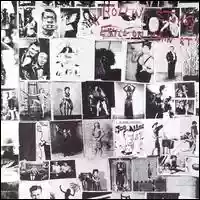
In small doses, we can find everything to love about this group, from Keith's lazy yet successful singalongs (see "Happy") to dreamy psychedelic references ("Let It Loose") amplified by Taylor's impeccable solos, essential yet indispensable in every register. Jagger, for his part, seems buried by this lo-fi explosion of life, but that's not the case: he's the red thread of this complex sonic and human puzzle (also made explicit in the cover), he's the storyteller who stands in the shadows only to reveal to us more deeply, with his typically aggressively delicate gaze, his world, what was and what it has become.
Under this tangle of hearts, melodies that already stink of timeless, our idols and the granite immortality of their music, of our music, still shine.
Loading comments slowly
Summary by Bot
Initially met with mixed reviews, Exile On Main Street is now celebrated as a dense, challenging double album showcasing The Rolling Stones' mastery of rock, blues, and soul. The band’s maturity and minimal instrumentation create a raw and authentic atmosphere. The album’s tracks flow seamlessly, revealing layers of storytelling and musical brilliance upon repeated listens. Notable guest musicians enhance the gospel and blues influences, culminating in a timeless classic.Tracklist Lyrics Videos
The Rolling Stones
English rock band formed in London in 1962. Key long-term members include Mick Jagger and Keith Richards. Known for blues-influenced rock, enduring live performances and a prolific discography.81 Reviews
Other reviews
By jackpizzello
Exile On Main Street stands as a milestone in the now forty-year-long career of the Stones.
Simply a masterpiece, one of the most significant albums in Rock history.
By j&r
The greatness of this album lies precisely in its total formal imperfection, in the frantic, disorderly, and chaotic way it came to light.
Exile on Main Street is the strongest example of total symbiotic fusion between life and music.
By currahee72
A warm, dense, raw, anarchic, and uncontrolled album.
An album seductive, nonchalant, and seminal that shows the wild and proletarian side of rock.
By woodstock
Because inside here there's rock, all of it, and I don’t care if anyone says otherwise.
Probably, even in moments like these, a record can save your life.
