
 •
Rating:
•
Rating:
THE REVIEW
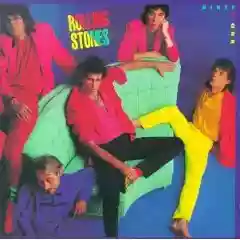
A "dirty job," which is probably the most underrated Stones album. Certainly because it came during a period of acute crisis between Jagger and Richards, and moreover, it is the successor to "Undercover," an album that did not satisfy the taste of the hardcore fans. However, in my opinion, it is a good album of robust rock-blues, also because Keith Richards finally decided to take the musical reins of the album, leaving very little space for Mick Jagger's disco and dancehall whims, who still contributes to this album with a series of massive and fitting vocal performances for the various situations.
"Dirty Work" immediately lays its cards on the table with "One Hit (To The Body)," a track in full Stones tradition with initial acoustic guitars that immediately intertwine with Richards' and Woody's electrics, which then battle throughout the piece. A compelling riff and pure rock’n’roll fighting spirit accompany the song. "Fight" is also a rather hard piece, again a fast-paced and outright rock, while the flagship track of the album, the cover "Harlem Shuffle," a song from the '60s, is much less incisive and marked, though with a catchy and "sellable" chorus. It’s the only single from the album and was the only song from this album occasionally played in concert by the Rolling Stones in upcoming tours, but unfortunately. Right after, it returns to hard and pure rock with "Hold Back," while then Keith Richards gives free rein to his never-hidden passion for reggae and dub with "Too Rude," a beautiful track that will later also be included by Keith with his X-Pensive Winos in concerts promoting his two solo albums, "Talk Is Cheap" and "Main Offender."
This is followed by two tracks that I find rather weak with "Winning Ugly" and "Back To Zero,” which personally say very little to me, while the rock-blues returns blazing with the title track "Dirty Work," where Ronnie Wood's solo guitar work is absolutely commendable and Mick Jagger's vocal performance is fully up to par, enhancing everything with an effective harmonica solo. Finally, the closing track is sung by Keith, titled "Sleep Tonight,” and is one of the most beautiful and subtle ballads recorded by the Rolling Stones, with a sad and melancholic voice that seemed put there expressly to say "goodbye." Instead, it was just a "see you later," something that should have been an epitaph on a glorious career, but instead resulted in a record that deserves reassessment, among other things, it is a heartfelt dedication to Ian Stewart, the "sixth Stone" who, during the Paris sessions of this record, suddenly left this world due to a heart attack ("thank you, Stew, for twenty-five years of boogie-woogie" is the dedication in the liner notes).
Shortly afterwards, Richards will start a brief solo discography where he will further develop what was done in this record, while Jagger will attempt with little success to continue the solo career started with "She’s the boss." Then, convinced by the poor results (only the '93 album "Wandering Spirit" being good), he will gently return to the fold.
Loading comments slowly
Summary by Bot
Dirty Work is considered one of the most underrated Rolling Stones albums, released during a crisis period between Jagger and Richards. Keith Richards assumes control with a strong rock-blues influence, limiting Jagger's disco and dancehall input. The album offers impressive performances, especially on tracks like "One Hit (To The Body)" and "Dirty Work." Dedicated to late bandmate Ian Stewart, the album foreshadows Richards' solo direction and remains a compelling part of the Stones' catalog.Tracklist Lyrics
The Rolling Stones
English rock band formed in London in 1962. Key long-term members include Mick Jagger and Keith Richards. Known for blues-influenced rock, enduring live performances and a prolific discography.81 Reviews
