
 •
Rating:
•
Rating:
THE REVIEW
I admit to having a certain envy for all those who were born in the second half of the '40s.
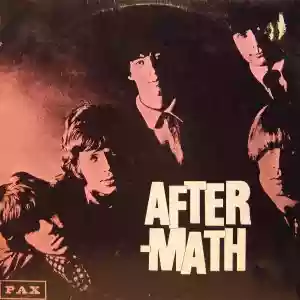
The reason? Well, simple: I would have been about twenty when masterpiece after masterpiece was being released in music stores. And a masterpiece is "Aftermath", an essential album for multiple reasons. First of all, because it definitively reveals the qualities of Jagger and Richards not only as performers but also as songwriters; then for the significant contribution that the brilliant Brian Jones provides by playing multiple instruments and defining the sound of each song. In the end, we are faced with a handful of sensational songs.
To be clearer, we are in 1966 and the Stones had already created some gems such as the timeless "Satisfaction", "Last Time" (covered by the Verve in Better Sweet Symphony), and "Heart Of Stone"; the Fab Four, on the other hand, are already at the peak of popularity, having just published the exceptional Revolver, and The Who have released two albums and have already shocked England with their "My Generation".
Returning to Aftermath, we must distinguish the English version with "Mother's Little Helper" and the American one with the famous "Paint it Black". If there is a flaw in this album, it's the absence of both in the same version. Indeed, these are two classics of the London group. The first is certainly captivating musically, but perhaps its strength lies in the lyrics: it's the story of a housewife who, tired of the life she leads, takes refuge in pills. The second actually needs no introduction: dark, hypnotic, and enchanting. The peculiarity is the sitar played by Jones. Among the highest peaks of the Stones.
But "Lady Jane" is also beautiful, where a sweet acoustic guitar supports controversial lyrics (is it dedicated to a woman or a drug?). Inexplicably not included in the "Forty Licks" collection. Notable also is "Under My Thumb" with its particular arrangement, the beat "Out Of Time", and the irreverent "Stupid Girl".
Innovative for the time were certainly the 11 minutes of "Going Home", a repeated blues featuring a primal Jagger. As for the rest, there are excellent rock-blues tracks like "Doncha Bother Me", "Think", "Flight 505" (although this last one has an intro a bit too similar to "Satisfaction") which continue a narrative already embarked upon in previous years.
This is just the beginning: the Rolling Stones in the years to come would churn out masterpiece after masterpiece until 1972, the year of "Exile On Main Street", earning the title of the greatest rock band in history.
Loading comments slowly
Summary by Bot
The review praises Aftermath as a foundational Rolling Stones album, highlighting the songwriting strengths of Jagger and Richards, and Brian Jones' multi-instrumental talents. It discusses key tracks and the differences between the UK and US versions. Noted as a milestone in 1966 rock, the album sets the stage for the Stones’ continued brilliance through 1972's Exile On Main Street. Some minor criticism is aimed at the differing track lists. Overall, it's a celebration of a rock classic.Tracklist Lyrics Videos
02 Stupid Girl (02:58)
05 Doncha Bother Me (02:43)
06 Goin' Home (11:16)
10 It's Not Easy (02:56)
11 I Am Waiting (03:12)
12 Take It or Leave It (02:48)
13 Think (03:11)
14 What to Do (02:31)
15 Paint It, Black (original 7" Mono mix) (03:46)
16 Ride on, Baby (Aftermath Outake) (02:55)
17 Sittin' on a Fence (Aftermath Outake) (03:03)
18 Long, Long While ('Paint It, Black B-Side) (03:01)
19 My Girl (Aftermath Outake) (02:40)
20 Looking Tired (Aftermath Outake) (02:14)
The Rolling Stones
English rock band formed in London in 1962. Key long-term members include Mick Jagger and Keith Richards. Known for blues-influenced rock, enduring live performances and a prolific discography.81 Reviews
Other reviews
By br17is
"Paint It Black" is imbued with an unparalleled power which decades of rock have not surpassed.
Aftermath is one of the most significant and precious albums of the Rolling Stones' discography.
