 •
Rating:
•
Rating:
THE REVIEW
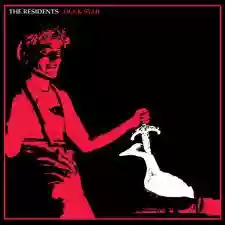
There is already a review of this (these? it's a split-disc, containing two 3-inch CDs) record, but I believe there's still much to say.
First, a bit of history. The Residents decided to release the sixteen minutes of the Duck Stab EP several years after the pieces were written. Same dynamic as their masterpiece, Not Available, kept secret for four years. Our San Francisco lads were pursuing a “theory of obscurity” to which, intuitively, one can attribute the decision to remain behind the masks they have always worn and to keep the number of concerts to a minimum (at least, in the '60s-'80s period). However, Buster & Glen was written and recorded precisely in 1978 and served as a mere appendix to that material, strictly necessary to fill an album that, in total, lasts 33 minutes.
Second, the record(s). Although they were written at a certain distance from each other, I believe I can say that DS/B&G is extremely compact, cohesive, consistent, co..., uniform, exactly. Uniform in eclecticism, in the extreme differences of register, music, and stories told.
To clarify, point by point:
1) the register swings tremendously, between bombastic, clownish jokes (“Birthday Boy”, “Bach is Dead”, “Krafty Cheese”, “Laughing Song”), basically often nonsensical nursery rhymes, and actual requiems, desperate yet abstract cries (“Weight Lifting Lulu”, “Hello Skinny”, “Blue Rosebud”). To unite these antipodal worlds, there is a permanent sense of the macabre, a constant attention to death (desired for those we hate, the indirect death of plants if the one who waters them dies: see more below) or to the dead (Bach, Elvis, a loved woman).
2) the music necessary to bring these 14 small pictures to life is that of jingles, carousel music, clear, defined, memorable (that is, immediately recognizable, like a familiar face). This choice ultimately disconcerts the listener, who empathizes with the Residents’ madness, and cannot help but partake in it, laugh at their sick gags. All the instruments are extremely filtered, or they opt for toy instruments, meowing violins, sound effects created ad hoc to produce "alien" sounds... the only ones suitable to accompany such delirious lyrics. The bass-guitar interweaving, especially in the brash, off-key crescendos, remind me a lot of Captain Beefheart's Mirror Man Sessions (get it). To the more attentive listener, I recommend paying attention to the incredible bass line of “Elvis and His Boss”.
3) the stories told are absolutely fundamental in the Residents' records, although—or precisely because—they are often ambiguous or abstruse. As already mentioned, death plays an important role, but the infinite variations given leave an unmistakable imprint on each track. Just a few examples, ranging from joke to eschatological, to allegory: the lyrics of “Krafty Cheese” go
???: “You care for plants and we care for you”
Plants: “Upward to the sun we grow”
???: “Careful plants, be careful plants.”
... lugubrious and amusing, isn’t it?
The famous (as covered by Primus) “Constantinople”, on the other hand, is subtler. Constantinople, the capital of the Eastern Roman Empire, was the first Christian city, and somehow represents faith in the afterlife, to which the narrator clings “when all the oak leaves have fallen”, essentially when death is near, and “the flock has followed the Word”. Hoping to reunite with all friends, remaining “out in the open” waiting for the end.
Finally, “Bach Is Dead” speaks to the false death of the highest music, which remains hidden, while sad melodies resonate in people’s heads (in stark contrast to the sarcastic tone of the piece).
Third—and last—thing, a definition. I would say the best insight of the previous reviewer is that the Residents are to music what the mustache is to Duchamp's Mona Lisa. In the specific case of this record, absolutely fitting. There are, therefore, some positive aspects and others less so. The album manages to amaze, and the music is surprisingly catchy: this makes it a good introduction to the Residents’ work. However, the atmospheres suffer a bit, partly due to the short format, and partly to meet discographic demands. The flashes of genius barely have time to blind you for a moment but don't settle, like a magician’s tricks, they go away one after another without stunning too much.
Loading comments slowly
Summary by Bot
This review delves into The Residents' album Duck Stab / Buster & Glen, highlighting its compact, eclectic nature and the blend of macabre and whimsical themes. Written mostly in 1978, the album reflects the band's theory of obscurity and their trademark masked anonymity. The music mixes carnival-like melodies with abstract, dark lyrics, creating a unique listening experience that surprises and amuses. Despite some limitations due to its short format, the album remains a catchy and insightful introduction to The Residents' work.Tracklist Lyrics
The Residents
The Residents are an American avant-garde/experimental music group known for anonymity (often associated with eyeball masks), a self-mythologized “Theory of Obscurity,” and deconstructive parodies of popular music and American culture through sound collage and treated voices.16 Reviews
Other reviews
By ^_^
The Residents represented the exact opposite, symphonies for mentally unbalanced individuals in existential hallucinations in the dead of night.
It is the music of ambiguity, of the grotesque, of the misstep, of despair, of remorse, of the adult mustache on the Mona Lisa.
