
 •
Rating:
•
Rating:
THE REVIEW
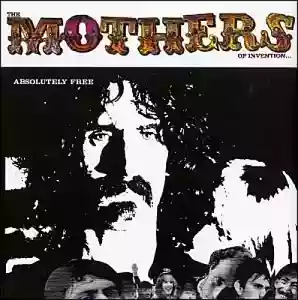
In 1967, a year after debuting with the groundbreaking “Freak Out”, the immense Frank Zappa released one of his masterpieces, almost a manifesto of total music. In less than 40 minutes, the ultimate freak, assisted by his prodigious “Mothers of Invention,” mixes all imaginable and possible sounds, instruments, styles, genres, and musical civilizations, undertaking a surreal journey through space and time, sparing no era or region of the world. That said, it must be emphasized that, despite the ostentatious encyclopedism, the parodic nature of the operation led Zappa to harshly target, with particular sarcasm, all those musical idioms belonging to American bourgeois culture: easy listening, kitsch, advertising jingles, soundtracks, vocal pop, teen idols, etc. What makes this satire of the consumer society successful in every facet is the synthesis ability with which Zappa shows he can organize such exuberant sonic material.
The opener, “Plastic People,” targets the rhetorical emphasis with which politicians of all stripes announce their slogans: in a fragmented structure, characterized by continuous pauses and restarts, the bold manners of village bands alternate with atonal phrasings and free-jazz dissonances, revealing how Zappa’s work goes beyond mere collage and connects with the avant-garde.
“The Duke of Prunes” opens with a fragrant guitar arpeggio, with Zappa launching into one of his demented croonings, doubled by a distant horn; the entry of the bass and a grating guitar brings dynamism to a piece that reaches its climax in a pathetic chorus, before unfolding into cerebral evolutions, precious anticipations of progressive music; “Amnesia Vivace” is instead a cacophonous frenzy of winds and percussions, introduced by an operatic tenor air and driven at a frenzied rhythm.
“Call Any Vegetable” draws from Mexican folk, with a grotesque call’n’response and a nagging flute accompaniment; after two verses, Zappa sketches a yodeling song, leading the piece in another direction: now it’s time for an atonal guitar and clarinet base to support a silly chant, which Zappa performs with his cavernous voice. “Young Pumpkin” is instead a driving instrumental jam of free-jazz inspiration, steeped in exotic aromas, with all instruments free to improvise and follow their own path; side A closes with “Soft-Cell Conclusion,” in which cheerful little guitars and carefree choruses give way to a plaintive voice and a blues parody complete with an offbeat harmonica.
Side B opens with “America Drinks,” a preview of the last track, with a lazy double bass and a charleston waiting for the sudden break, where a frenetic circus motif is followed by a percussion orgy. The following tracks measure the Mothers' ability to alternate tempi, styles, and discordant sounds with impressive fluidity: one finds oneself catapulted from one musical genre to another without even realizing it. And so it is that in the brief pieces “Status Back Baby,” “Uncle Bernie’s Farm,” and “Susy Creamcheese,” surf music, r’n’b, Merseybeat, chaotic voices, music box lullabies, Chinese opera breaks, hysterical rhythms, and so on alternate seamlessly.
But the sum of Zappa’s thought is found in the operetta “Brown Shoes,” 7 minutes of pure madness in which rhythm’n’blues, advertising jingles, Hollywood soundtracks, swing, doo-wop, classical jazz, swamp blues, tap dance, Christmas songs, Delta blues, noise, teen idols, kitsch, and easy listening are reviewed: all orchestrated with extended instrumentation and relying on the melodramas evoked by the union of little and big voices, perfect for mimicking opera tenors and sopranos.
The album closes with “America Drinks and Goes Home,” a detached pianobar number overlapped with cash register noises and consumer chatter: a masterpiece of concrete music, sound montage, Brechtian theater. And a very bitter apology for society then and now.
(genre: avant-rock; total music)
Loading comments slowly
Summary by Bot
Frank Zappa's 1967 album Absolutely Free is a brilliant avant-rock masterpiece blending diverse genres and musical styles with sharp satire targeting American bourgeois culture. Featuring surreal sound collages, free jazz, and progressive music elements, the album is hailed as a total music manifesto. The Mothers of Invention showcase impressive fluidity in style transitions, culminating in complex, multi-genre tracks like "Brown Shoes". The album critiques consumer society with wit and cutting musical contrasts.Tracklist Lyrics
01 Plastic People (03:42)
04 The Duke Regains His Chops (01:48)
05 Call Any Vegetables (02:19)
06 Invocation and Ritual Dance of the Young Pumpkin (07:00)
07 Soft‐Sell Conclusion (01:40)
09 Why Don’tcha Do Me Right (02:37)
11 Status Back Baby (02:53)
12 Uncle Bernie’s Farm (02:10)
13 Son of Suzy Creamcheese (01:34)
14 Brown Shoes Don’t Make It (07:30)
15 America Drinks and Goes Home (02:46)
16 Camarillo Brillo (03:59)
17 I’m the Slime (03:34)
18 Dirty Love (02:58)
19 Fifty‐Fifty (06:10)
20 Zomby Woof (05:10)
21 Dinah‐Moe Humm (06:02)
22 Montana (06:33)
The Mothers of Invention
The Mothers of Invention were an American avant-rock group formed in Los Angeles in 1964 under the leadership of Frank Zappa. Renowned for satire, studio experimentation, and fearless genre splicing, they released landmark albums including Freak Out! (1966), Absolutely Free (1967), We’re Only in It for the Money (1968), and Uncle Meat (1969).05 Reviews
