 •
Rating:
•
Rating:
THE REVIEW
"Shut up, don't cry"
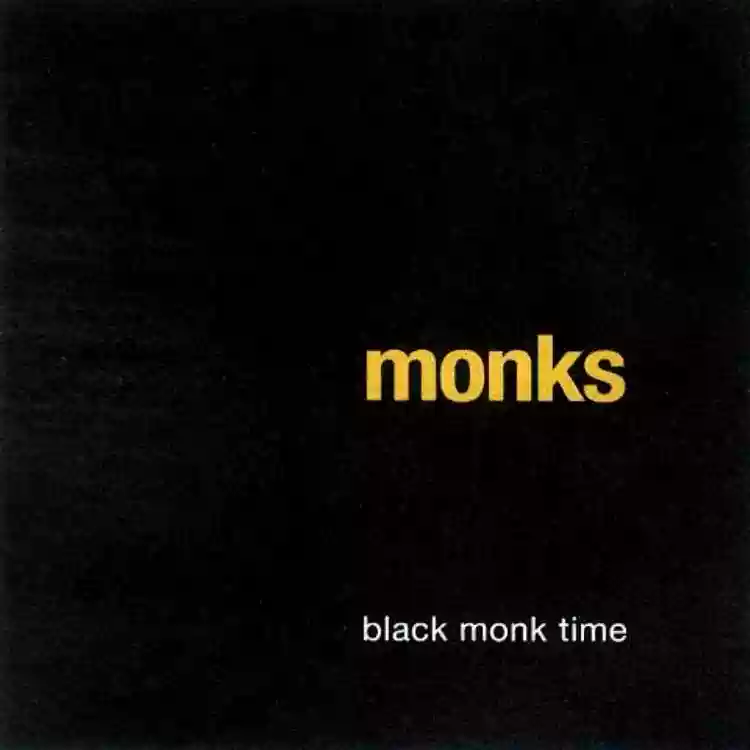
The Monks, with their only album "Black Monk Time", were a brilliant yet unknown group. We are in 1966, the year when the first great rock music albums came to light: Dylan with "Blonde on Blonde", Zappa with "Freak Out", the Stones with "Afthermath", the Beach Boys with "Pet Sound", are just some of the albums in the catalog of the year in question.
But from the Byrds to the Beatles, from Donovan to the Kinks, there is a distinct sense that the average standard of music is growing significantly.
In this context, the unknown ensemble of the Monks releases their only album: "Black Monk Time".
The Monks consist of five American servicemen stationed in Germany (Frankfurt), and since 1964, they cut their teeth by playing and reinterpreting the classic repertoire of 1950s Rock and Roll.
A particularly curious ensemble, the Monks were composed of Gary Burger (guitar and vocals), Eddie Shaw (bass and vocals), Dave Day (electrified banjo and vocals), Roger Johnston (drums and vocals), Larry Clark (electric organ and vocals).
While most authors of the time spoke of war as simple observers and distant judges, the five "monks" experienced those events firsthand, which would indelibly translate into their art.
Far from Dylan-inspired philosophies, from the romantic scenarios of the Beatles (with whom they declared themselves rivals) and the Beach Boys, from the street rowdiness of the Stones or Zappa's Freak mockery, the Monks represent, if it can be said, an existential, cynical, realist group, far from any intellectual pose, in whatever form it might take.
And so, their sound is raw, harsh, chaotic, violent, as none before them had managed to do. War, violence, death, despair simply erupt from the grooves, where the music is accompanied by simple but rarely effective lyricism.
Besides the curious presence of a rhythm electrified banjo, the Monks distinguished themselves in each of the instruments they used. Clark's organ, often dominant, seemed to be in the hands of a mad Jerry Lee Lewis, while Burger's guitar stands out for a constant and maybe for the first time rational use of Feedback. Drums and bass (electrified) constituted an inexorable, devastating, and destabilizing rhythm.
More generally, the Monks were the first band to use noise, cacophony, chaos, consciously, functionally to the music and the meaning they wanted to give it.
Their idea of music was simple and brilliant at the same time: taking a dominant theme, it was brutalized with blasts of feedback or dissonant organ, while bass and drums followed a destabilizing and alienating path. The starting point was Rock and Roll, but this quickly transformed into a deafening bacchanal.
So it is no surprise that the album, opened by the "Title Track", sets the scene with a carpet of (distorted) bass and explosive drums devastated by a burst of Clark's organ. The Vietnam War is the central theme, immediately noticeable, both in the lyrics and the schizophrenia of the singing and music.
Hardly having time to understand what has happened, we find the first great masterpiece of the album: "Shut Up" is a piece of unique brutality. All the instruments play in unison to support an organ that dictates the "melody" (if it can be defined as such). A hypothetical dialogue between the frightened soldier and the military command, which orders them to shut up and not cry ("Shut Up" indeed), manages the miracle of staging all the madness of war, through bitter and contemptuous singing, organ vertigo, and mad guitars. It continues with the supersonic and hilarious Rock and Roll of "Boys are boys and girl are choise" followed by the slow roll into chaos of Feedback and organ of "Higgle Dy, Piggle Dy".
The Monks' art perhaps culminates in "I Hate You", where bass and drums create a dance fit for hell, warm and intoxicated like the twisted love declaration of this song: "I hate you but call me". Organ and guitar do not need to be asked twice to bring to life the lava and sulfur that populate this infernal dance.
The album continues to maintain a high level, experimenting in different forms, yet always following the same script: devastating melodies with chaos and noise. Noteworthy are "Complication", the space launch of "Blast off", and the hilarious "Drunken Maria".
Often classified as proto-punk or garage rock, the Monks cannot fit any of these classifications due to the sheer uniqueness of the sound and the concept at the foundation of their art. Prophets (or monks, if you will) of chaos and the rape of the song, the Monks proposed insights never heard before, which would characterize rock music for decades.
When listened to today, it still sounds fresh and astonishing, and it's not hard to imagine the effect it could have had on listeners in 1966.
According to the writer, one of the great forgotten masterpieces of rock music.
Loading comments slowly
Summary by Bot
The Monks' sole album, Black Monk Time, released in 1966, stands as a groundbreaking and brutal expression of rock music. Formed by American servicemen in Germany, the band crafted a raw, chaotic sound filled with feedback, noise, and dark themes rooted in the Vietnam War. Their unique instrumentation and intense style prefigured punk and garage rock, offering a fresh and shocking experience even decades later. This album remains a forgotten masterpiece worthy of recognition.Tracklist Lyrics Videos
The Monks
Formed by five American servicemen stationed in Germany, The Monks recorded the 1966 album Black Monk Time. Members included Gary Burger, Eddie Shaw, Dave Day, Roger Johnston and Larry Clark. Their sound is noted for raw, chaotic energy, organ and electric banjo and is often cited as proto-punk/garage.02 Reviews
Other reviews
By bogusman
The explanation could be found if, in 1966, a time machine had existed through which the five psychopaths could have seen a Cramps concert in 1980 and a Devo one in 1977.
Their disturbed and pitch-black version of garage sound is just what you need.
