
 •
Rating:
•
Rating:
THE REVIEW
I wonder what the fans of the Sisters of Mercy thought after the departure of two fundamental members such as the band's co-founder alongside Eldritch, Wayne Hussey, and bassist Graig Adams.
"First and Last and Always," the sisters' debut work, had indelibly marked the gothic music movement of the time with its load of deep and dark romanticism. An album that managed to unite the gloomy melody of the sound created by Hussey, Marx, and Adams with the anguished and captivating voice of the black angel. After the separation from the common mother and after losing a strenuous and fought legal dispute against the former friend Andrew over who would continue to use the name Sisters of Mercy, the two rebels had no choice but to form a new group in which to pour the load of inspiration that overflowed them and that was by no means exhausted after the release of "First and Last and Always."
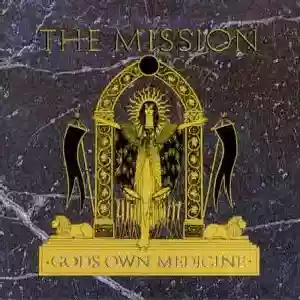
The band took the name The Mission and released its debut album "Gods Own Medicine" in 1986. It was an immediate success, also riding the wave of performing as a support group on the tour following the release of “Love” by Astbury and Duffy's Cult. Needless to say, it is a stunning album with inevitable points of contact with "First and Last and Always," but also profound divergences.
Hussey's voice is harmonious and less cavernous than Eldritch's, and moreover, "Gods Own Medicine" stands out for a more positive sound compared to "First," much less claustrophobic, due to its less dark pop and rock influences. The heavy toll the band pays to the Sisters of their first opus can be noticed in the listening of the opener “Wasteland,” where the echoes of “Marian” (in my opinion, the unreachable peak of all gothic rock) are more than evident.
But, beyond this inevitable influence, "Gods Own Medicine" is a creature that shines with its own light and tracks like the instrumental and symphonic “Garden of Delight (hereafter),” the danceable gothic pop of the single “Stay With Me,” the death rock of “Blood Brother” (you and me, we are blood brothers...), the psychedelic charm of “Let Sleeping Dogs Die,” the decadent ballad “Dance on Glass,” the pop rock pomposity of “And the Dance Goes On” and “Severina,” the concluding romantic ritual of “Island in a Stream,” are songs of absolute musical value.
For all genre lovers, in conclusion, this work must not be missed for a band that marked the gothic rock of the eighties and had the merit, together obviously with the Sisters of Mercy of the incomparable Andrew Eldritch, of bringing darkwave out of the musical and image stereotypes that had previously been created and bringing it to commercial success.
Loading comments slowly
Summary by Bot
The review highlights The Mission's debut album Gods Own Medicine as a significant gothic rock work following the split from Sisters of Mercy. It praises the album's less dark but equally compelling sound, blending dark pop and rock influences. Key tracks showcase diversity from symphonic instrumentals to gothic dance pop. The album is deemed essential for genre enthusiasts and notable for helping darkwave reach broader commercial success.
The Mission
English gothic rock band formed in 1986 by Wayne Hussey and Craig Adams after leaving The Sisters of Mercy; influential in the 1980s goth/darkwave scene.02 Reviews
