
 •
Rating:
•
Rating:
THE REVIEW
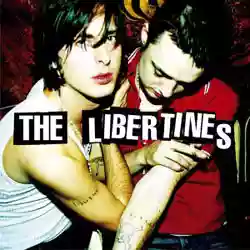
The Libertines aspire to legend. This can be inferred from the great clamor that this band has been stirring in England for at least two years and from the endless series of controversies, personal dramas, temporary splits, and metropolitan gossip that have framed the troubled history of this group that is reviving that "cursed" aura of the rock 'n' roll of yesteryear. Then what's been constructed in this long and captivating soap opera is another matter, but the fact remains that in this sad moment for the music scene, the Libertines of Carl Barat and Pete Doherty are the only name keeping the flag of the glorious past of British music flying high. This second album, self-titled, is released in a climate of absolute disorder within the band: Doherty is, as is known, temporarily out of the quartet as he is engaged in (trying to) detoxify (he was also in Thailand but fled after a few days, defeated by his notorious addiction to crack, cocaine, and heroin) and after having quite serious legal problems (he is awaiting trial for being stopped with a knife deemed illegal and is in a dispute with a famous London groupie for the recognition of a child).
The band gives the impression, as often happened in the last 15-16 months, of being adrift, but the "last-minute" concerts organized in England are regularly sold out, the sales of this new album are going great, and the "myth" of this formation, which has decisively supplanted the so-called "rivals" in what is stupidly considered the "new rock" scene (Strokes, Vines, Hives etc.), continues to grow. After all the scandals, the gossip, the crises, and the reconciliations (a real déjà vu that has lasted in the U.K. for at least 40 years, from the Beatles to the Rolling Stones, passing through the Who, Bowie, the Sex Pistols, the Smiths, and Oasis), the time has come for music: to be true legends, the Libertines need songs destined to enter the collective memory, evergreens that would definitively differentiate them from all the other bands increasingly "one-hit wonders" that rage in the charts.
The material is abundant: in the Libertines, one can truly feel all the influences that great English groups have exercised in the history of pop, and the compositional quality of Barat and Doherty is undeniable. In them, there is the sixties playfulness of the early Beatles, the wild decadence of the Rolling Stones and David Bowie, the punk mockery of the Sex Pistols, the anger of the Clash, the melancholy of the Smiths, and the proletarian strength of the early Oasis. Doherty, in particular, seems almost a cross between Kurt Cobain, Sid Vicious, and Syd Barrett, and in a way, he has already penned some "little classics" in the band's repertoire, like "Time For Heroes" and "Up The Bracket". Even though probably the true cult single of the Libertines remains the fantastic "Don't Look Back Into The Sun" (produced by that sly fox Bernard Butler), in this new album there are certainly no lack of battle horses. However, something is still missing to enter history, and this album perhaps finds its flaw precisely in this, considering also that the group's future is, despite everything, still hanging by a thread. The production by Mick Jones seems to signify a hypothetical passing of the baton between the Clash and the Libertines, but the former exploded in a particular moment that England was going through, and I have many doubts that it's possible to recreate the same explosive effect that the legendary band of "London Calling" had: certainly, the sound owes a lot to that glorious era.
"Can't Stand Me Now", the first track and first single released, is just one of the pieces in which Doherty and Barat duet on their own torments and destiny (a bit like Jones' coded message in "Should I Stay Or Should I Go"), and it retraces a little what made the aforementioned "Don't Look Back Into The Sun" memorable. "Last Post On The Bugle" is another driven, dirty, and rough piece where Doherty's voice seems to fight with the instruments, as if wanting to express the singer's turbulent personality: mistakes in execution and a schizophrenic pace instead manage to give a sense of perfection, something the Libertines achieve superbly despite the forced carelessness that pervades almost every track. In general, though, the songs are more thought-out than their debut, no longer just "good the first time", but they seem much more labored. "Don't Be Shy" seems like a typical number from "Rubber Soul" era Beatles, while "The Man Who Would Be King" delivers smoky nightclub vibes, and Doherty avoids indulging in his typical exasperated screams. "Music When The Lights Go Out" is the highest moment of the album: a melancholic acoustic ballad in the manner of the Kinks' "Waterloo Sunset" that undergoes a sudden acceleration after the chorus. "Narcissist" is 2 minutes and 10 seconds of the band paying homage to the garage of the Stooges and MC5; "The Ha Ha Wall" starts like a sort of soundcheck and evolves into a pop rock that, in some respects, recalls the lighter Buzzcocks (it resolves into a sort of improvised session); "Arbeit Macht Frei" is a madness recorded live; "Campaign Of Hate" seems to echo Wire’s "I Am The Fly" but without necessarily thinking of plagiarism (indeed, it is probably one of the best songs in their entire repertoire); as for "What Katie Did," what can I say? They really seem like Lennon and McCartney at 20!!! The album continues with the Clash-like "Tomblands" which draws strength from those classic vocal harmonies of the band of Strummer and Jones for a track with very epic and fatalistic tones. The songs last very little, "The Saga" even 1 and 53!! Here instead Smiths' "London" and the Hives come to mind. "Road To Ruin" is another intense moment in which Doherty takes center stage, overshadowing his companion Barat, who remains rather in the background in this album; the closing is with "What Became Of The Likely Lads," destined to be a great classic of the band and subtly autobiographical, with an intriguing intertwining that simultaneously makes you think of a mix between Pulp, the Smiths, the Clash, and the unruly style of Jon Spencer.
It may not be a masterpiece destined to endure through the years, but it comes very close: this album is a gem that I highly recommend. As mentioned, the song of a lifetime is missing, but it will come. Life is long, and I hope it is for that little big genius of Pete Doherty as well.
Loading comments slowly
Summary by Bot
The Libertines’ self-titled album captures the raw spirit of British rock amidst band chaos and personal struggles. The review highlights strong songwriting influenced by iconic British bands, energetic production by Mick Jones, and standout tracks that carry the band's mythos forward. Despite missing a definitive classic hit, the album nearly reaches masterpiece status and keeps the band’s legacy alive. The review recommends this album to fans and rock enthusiasts eagerly following the band’s turbulent journey.Tracklist Lyrics Videos
The Libertines
The Libertines are an English rock band strongly associated with early-2000s British indie rock, frequently described in these reviews through the turbulent partnership of Pete Doherty and Carl Barât and a raw, direct punk/garage rock sound.13 Reviews
Other reviews
By northernsky
"'The Libertines' is a powerful affair, qualitatively very good, very consistent, with very few minor episodes and some unforgettable gems."
"Without Pete Doherty, the Libertines have no future. With him, they could truly be the band that will save rock 'n' roll in the 21st century."
By The Punisher
Step right up, ladies and gentlemen, to the Festival of the Already Heard, the Copycat Fair, the Sore Ears Celebration...
All already heard, all already said, a little Clash, a little Green Day or early Pogues... what a brilliant idea from our guys!!
