
 •
Rating:
•
Rating:
THE REVIEW
Ray Davies is one of the greatest minstrels that rock'n'roll can boast of, dedicated to a rock-blues writing in his early career that then transformed into an excellent storyteller through his concept albums, where the classic bass-drums-guitar formula is gradually enriched by a second guitar (this time acoustic), a brass section, and occasionally the use of the piano. Analyzing the figure of the musician, we are faced with an apparent contradiction: on one hand, the strong conservatism that characterizes the core of his works, and on the other hand, the progressivism that these same works bring with them, whether it's one of the first (if not the very first) hard rock riffs in history with the famous "You Really Got Me" or the innovation brought with the creation of the first concept album alongside the triumphant "Tommy" by the Who.
The Kinks' concepts are strongly anchored in reality, often centered on the old society and bygone times. With the brilliance that characterized the previous "Kinks Are The Village Green Preservation Society" and "Arthur," the leader of the English band conceived in 1970 an album centered on the sad reality of show business, which our band (already on the scene for seven years) had already had the chance to confront.
The album focuses on the figure of a boy who leaves home to seek fortune in the world of music: he soon discovers that the road is difficult and full of pitfalls, the record companies hire him only to throw him into the hands of greedy managers while not believing in his potential, just to test the chances of his music's success, only to declare themselves friends and discoverers of talents at the time of success. There is a great turnover of money behind his music, that profits even those who do not know his melodies. In fact, the one who enjoys his success least is the musician himself. "Powerman" is the emblematic figure of this world, the record executive, a man without scruples or principles willing to do anything to achieve the god of money. But success, just like the development of civilization, doesn't coincide with happiness; man doesn't realize he isn't different from animals living in a cage, closed in his short-sightedness and progress, and the protagonist frees himself from everything that is suffocating him to embrace his freedom once more.
Driven by the single "Lola" (which tells of an encounter with a transvestite, and is replayed in an alternate instrumental version in the subsequent "Percy"), the work alternates sweet ballads ("Get Back In Line", "Denmark Street", "A Long Way From Home") with almost hard rock episodes like "Top Of The Pops", "Rats", and "Powerman", and offers a song that seems taken from the "Arthur" sessions, "This Time Tomorrow" which seems to echo "Young And Innocent Days". Among the episodes not mentioned, "The Contenders" opens the dances with a soft arpeggio before turning into a rapid rock'n'roll, "Strangers" this time written by Dave Davies, the cabaret-like "The Moneygoround", the amusing "Apeman", and the concluding "Got To Be Free", which reprises the acoustic motif of the album's beginning, thus giving it a cyclical sense of completeness.
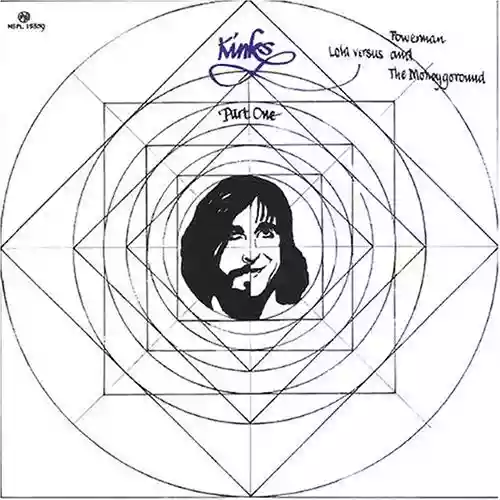
Slightly inferior to its predecessor "Arthur," "Lola Versus Powerman And The Moneygoround Part One" proves to be another gem in the Kinks' discography, which becomes even more precious if listened to while taking a look at the lyrics, and along with the subsequent "Muswell Hillbillies," it will be the highest point reached by the London band in the 70's.
Enjoy listening.
Loading comments slowly
Summary by Bot
The Kinks' 'Lola Versus Powerman And The Moneygoround Part One' showcases Ray Davies' exceptional storytelling through a mix of rock and blues enriched with varied instrumentation. The album offers a sharp critique of the music industry's pitfalls, portraying the struggles of a musician exploited by managers and record companies. Driven by the hit single 'Lola,' it balances hard rock energy with reflective ballads. Although slightly inferior to 'Arthur,' it remains a key milestone in The Kinks' 1970s catalog, praised for its lyrical depth and musical innovation.Tracklist Lyrics Videos
The Kinks
The Kinks were an English rock band formed in London in the early 1960s, closely associated with the British Invasion. Their songwriting is strongly identified with Ray Davies’ character-driven narratives and social observation, alongside Dave Davies’ guitar-driven early sound.15 Reviews
