
 •
Rating:
•
Rating:
THE REVIEW
"Everybody's a dreamer, and everybody's a star
And everybody's in showbiz, it doesn't matter who you are"
A film. For some time, the idea of an ambitious project had been increasingly filling the mind of Ray Davies, the creative leader of the Kinks: the making of a film about the band’s life on the road. They would film everything: from hotel dinners to travel, culminating in footage of their shows. A handful of new songs, composed specifically for the occasion, would tell the whole story in music.
When Ray presented himself at the beginning of '72 to the managers of RCA, the new record label the group had signed with just a year prior, he never expected to receive a blunt refusal: the executives were pushing instead for new compositions to put on a new LP to launch on the market. The previous "Muswell Hillbillies," the first album recorded for the new label, although critically acclaimed, had not been successful commercially, alarming the company that, at the time of hiring the group (who had delivered a long series of successful works), was convinced they had made the deal of the century.
Ray, however, did not completely abandon the project, focusing solely on the musical part of the work: thus "Everybody's In Showbiz" was born, released in September of the same year. The work is actually a double album, half recorded in the studio and half live, depicting different aspects of life on tour. The first album, in fact, tells of its darker side, from the stress of moving to the various concert stops to loneliness, through the monotony of the days (it is curious to note that as many as three songs on the album talk about food, another often overlooked aspect of touring). The second LP, subtitled "Everybody's A Star," marks a sharp contrast with the first part of the work, highlighting the more fun and rewarding side for a group: playing live. Thus, a mix of the two concerts recorded in New York for the occasion is presented on the album, with the addition of two bonus tracks in the remastered version.
The studio album starts quietly with the first tracks, then takes off with "Hot Potatoes" and doesn’t stop anymore. Musically, new influences appear in the Kinks' compositions: alongside the unmistakable pop rock typical of the English band, we find strong country tints that characterize the entire work, giving the songs a cheerful and dynamic character, with the exception of the two splendid ballads present here. This is the case with the sad "Sitting In My Hotel", worthy of the best Davies, and the dreamy "Celluloid Heroes," the true gem of the work. The group wanted the song to feature as the lead-off single of the album, but it was rejected by the radios because it was too long, so the choice fell on the amusing nursery rhyme of "Supersonic Rocket Ship," which achieved a fair success by reaching the sixteenth position among the best-selling singles of the period.
On the other hand, the second LP captures the energy that accompanied the shows of the band led by the Davies brothers, highlighting a different sound as well. While the first LP embraces more pop and country melodies, in the second part "Everybody's In Showbiz" turns out to be more rock and (partly) blues with a few jazz nuances, also due to the addition of a brass trio to the original lineup, which breathes new life into the repertoire's tracks. Particularly affected is Dave Davies' guitar, accompanied by a small personal crisis, which this time doesn’t scratch as in the past. As evidence of a certain change of direction, the setlist includes three particularly ironic traditional pieces among the eleven tracks, such as "Banana Boat Song", "Baby Face", and "Mr. Wonderful," highlighting the showman skills of the leader. The rest of the proposal draws heavily from "Muswell Hillbillies," represented by five songs among which stands out a "Alcohol" humorously performed by Ray, and the two albums immediately preceding it, with "Top Of The Pops," here in an almost hard rock version, "Brainwashed," less impactful than the original, and "Lola," sung by the audience and placed at the end.
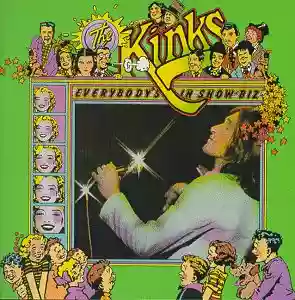
Accompanied by a cover that well represents the pressure that surrounded the group at the time (featuring, among other citations, the figures of Stan Laurel, Oliver Hardy, and Marilyn Monroe), "Everybody's In Showbiz" is an album unjustly excluded from the list of the band’s classics.
The good Ray and his band are ready to make you change your mind...
Loading comments slowly
Summary by Bot
Everybody's In Showbiz by The Kinks is a unique double album capturing the drama and excitement of life on tour. Combining a studio LP full of country-tinged pop rock and introspective ballads with a live record showcasing the band's energetic performances, the album offers a comprehensive snapshot of the band in 1972. Despite initial label resistance and commercial worries, the album stands as an underappreciated classic featuring highlights like 'Celluloid Heroes' and 'Supersonic Rocket Ship.'Tracklist Lyrics Videos
The Kinks
The Kinks were an English rock band formed in London in the early 1960s, closely associated with the British Invasion. Their songwriting is strongly identified with Ray Davies’ character-driven narratives and social observation, alongside Dave Davies’ guitar-driven early sound.15 Reviews
