
 •
Rating:
•
Rating:
THE REVIEW
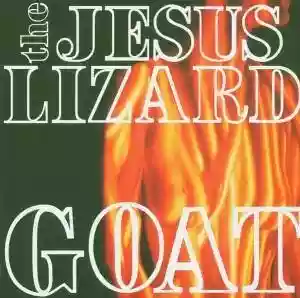
With "Goat," the Jesus Lizard reach the peak of their art. "Head+Pure" was a concentration of atrocities and brilliant ideas, but perhaps it had the flaw of a too rudimentary production (compensated, however, by its stunning originality); "Liar," their third work, on the other hand, was overly polished but lost immediacy, and despite being undoubtedly the most cohesive work in terms of sound (alongside "Down," I add), there are few truly memorable episodes, "Gladiator" above all. "Goat" represented the right compromise between the wild component and sound quality, and compared to its predecessor "Head+Pure," it is decidedly more musical (not melodic), mainly thanks to the work of that genius Duane Denison.
The album consists of 9 tracks compressed into just half an hour, emblematic is the renunciation of instrumentals like "Happy Bunny Goes Fluff Fluff" and "Pastoral" in the name of delivering as clear a message as possible. And this message begins with one of the most classic delusions: "Then comes Dudley" has the characteristics that made Yow and company famous (a niche fame, of course...). But there is something strange, the sound is indeed violent, but more refined. The singing is indeed neurotic and brutal, but less in the foreground. But above all, the guitar has changed. Now Denison is the master of the scene, the protagonist of anti-virtuoso virtuosity. The more he tries to destroy his guitar giving it incredibly sloppy tones, the more his stature as an artist of the instrument increases.
The first track is the unequivocal symbol of this. Bass and drums create an atmosphere of suffocation, while the voice, but especially the guitar, express precisely the terror of that suffocation. "Mouth Breather" returns to the serial killer scenarios of "Head," where the guitar riff creates a sense of threat, which inevitably self-detonates in a finale of blood and urine ("I leave my home, I leave it for a couple weeks, I leave my home, I leave it in the care of a friend, and in my basement I found rainin' piss, and in my kitchen I found my friend deceased").
Following are two masterpieces, "Nub," another brilliant demonstration of Denison's genius, capable of concentrating a series of knockout blows in a relatively short song, but especially "Seasick," where the Jesus Lizard return to their beloved theme of suffocation, this time not only figuratively. Yow plays the part of the desperate boatman, desperate because he can't swim and aware that he's about to die. His performance is truly something breathtaking, so realistic and sincere is his "Yellin'." Personally, I've never heard anything similar on an interpretive level. While "Monkey Trick" and "Karpis" reaffirm that the quality is at its peak, musically speaking, with carnivals of dissonance, finesse, and beatings, the track "South Mouth" follows where the punk influence is more evident in the lyrics. However, the quintessence of their art is painted, or vomited, if you will, in the frenzy of "Lady Shoes." Denison's guitar once again creates an initial climate of catastrophe, which manifests itself in a violently Redneck boogie, where Yow literally "collects," rapidly threading together episodes of such repugnance and depravity that would pale an autopsy technician and drive a saint mad. One wonders if it's just an act or if what the good Yow sings is truly part of his emotional baggage, as it seems so spontaneous, and this question makes their music even more fascinating precisely because it’s intolerable. The finale of "Rodeo in Joliet" is incredibly heavy and almost nostalgic, and once again deeply rooted in the southern and redneck imagery. One wonders if their take is a critique of this kind of society or rather its glorification.
With "Goat," the Jesus Lizard stylistically detach from any reference, minting a style of their own which has been achieved by very few, bringing to mind Morphine, Sonic Youth, and Fugazi, just to stay within the same historical frame. Precisely with Fugazi, the Jesus Lizard take on the burden of post-hardcore, and paradoxically they are its exact opposite, stylistically and conceptually. We could compare Jesus Lizard and Fugazi to a hammer and a blade, respectively. Both lethal but different in form. Fugazi theorized a reaction to the nihilism of youth at the time, ultimately professing a philosophy of hope and hard work. "Repeater" is probably the most important work of the '90s in this sense.
At the base of the Jesus Lizard, however, was the total disintegration of the principle of humanity and struggle. Their music was merely an attempt to extremize all the filth they saw around them, and we can say with certainty that they succeeded in making American society even more hellish.
Loading comments slowly
Summary by Bot
The review praises The Jesus Lizard's Goat as the band's artistic peak, perfectly balancing raw intensity and refined sound. Duane Denison's innovative guitar work and David Yow's brutal yet sincere vocals create a unique atmosphere of emotional and sonic depth. The album's thematic focus on societal decay and human disintegration adds a powerful edge, setting it apart in the post-hardcore genre. Compared to their prior works, Goat is more musical and focused, delivering a clear and intense message across nine impactful tracks.
The Jesus Lizard
The Jesus Lizard are an American noise rock/post-hardcore band strongly associated with the Chicago scene. The classic lineup is vocalist David Yow, guitarist Duane Denison, bassist David Wm. Sims, and drummer Mac McNeilly. Their catalog is widely discussed for its abrasive sound, Denison’s distinctive guitar work, and Yow’s extreme vocal and stage performance.13 Reviews
