
 •
Rating:
•
Rating:
THE REVIEW
There was a moment at the beginning of the Nineties when the direction of American rock music seemed inexorably aimed at a return to its roots, never as desired as after the synthetic hangover of a few years prior. Yes, I know, that little word that starts with "gr" and ends with "unge" immediately comes to mind, but fortunately, that was not the only thing, quite the opposite! Other interesting groups emerged, tied even more, if possible, to the aforementioned (and in many respects exaggerated) purism of the six-string. The Blue Rodeo, the Counting Crows, the great Walkabouts, and later people like the Wallflowers embraced those very elements of late '80s independent rock (gosh, how many names were there in Minneapolis in those years? Replacements, Husker Du, Soul Asylum...).
And it was precisely from Minneapolis that our Jayhawks hailed, guided by the crystalline harmonies of Mark Olson and Gary Louris, emulators of certain illustrious folk-country-rock, with CSNY and Flying Burrito Bros above all. The first albums are interesting, music that naturally pays homage to the masters but in its wandering seeks space in the chaos of those years. It is with "Hollywood Town Hall" in '92 that they hit the jackpot (the cover of which curiously reminded both the famous "sofa" of CSN and certain long-haired folks we know well), propelled by wonderful songs like the initial tandem Waiting for the Sun - Crowded in the Wings. Within a few years, the group managed the most difficult step, giving shape to their intuitions within a finally recognizable and certainly original sound.
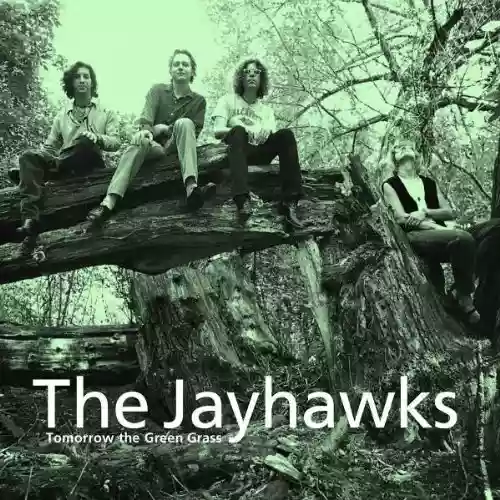
The following album had to be then the one of confirmation and - if possible - of new momentum. And that's how, once under pressure, they bring out the best of their repertoire: a batch of highly inspired songs, supported by the usual impeccable guitar work and the usual vocal interplay. Let's say that, if "Hollywood..." was their "American" record, "Tomorrow the Green Grass" is as much their "English" and even more "Beatlesque" album: it's impossible not to hear the echo of the FabFour in the sixth harmony of Blue, and in the melodic and harmonic structures of I'd Run Away (another nice single) and Mrs William Guitar. Olson & co.'s strength was precisely this: by completely abdicating the instrumental fury that characterized the other half of the rock of the era, they turned to songs that appeared simple and impactful, ultimately adorned by the beautiful vocal interplays and - I repeat, because it is not a given - by clean and perfectly executed sounds, with acoustics and electrics happily dialoguing in an atmosphere of complete harmony. There are continuous homages to tradition: no keyboards or synths, no intricate scores. Just bass, drums, guitars, and piano, sometimes Hammond, and above all, a lot of heart. Let's also add a few touches of strings (Over My Shoulder), and we have the recipe for the masterpiece. The so-called state of grace, in short.
The stylistic and instrumental variety of this album, in short, contrasted with the homogeneity and warmth conveyed by its predecessor three years earlier. The Jayhawks succeeded in the fateful "step forward," not just to the side, embracing a much greater amount of influences and suggestions, always filtering them through their lens. It would soon turn out to be their last act: a few months later, Mark Olson's departure, and Gary Louris would be tasked with reforming the group with new stylistic coordinates. But that's another story. What's left is that fantastic album, the result of a partnership that inevitably recalled great names of the past. And also the result, in hindsight, of an unrepeatable season. Soon forgotten, but that never ceases to move me.
Loading comments slowly
Summary by Bot
The Jayhawks' 'Tomorrow the Green Grass' marks a pivotal moment in early 90s American rock, embracing roots music with rich harmonies and Beatlesque melodies. Building on their earlier success, the album fuses folk, country, and rock in a clean, heartfelt sound free from synthetic effects. It showcases impeccable guitar work, vocal interplay, and strong songwriting that elevated the band’s originality. Despite it being their last album with Mark Olson, it remains a timeless and inspiring work.Tracklist Lyrics Videos
The Jayhawks
American alternative country/rock band formed in Minneapolis, led early on by Mark Olson and Gary Louris and noted for rich vocal harmonies and country-rock songwriting.02 Reviews
