
 •
Rating:
•
Rating:
THE REVIEW
In the first half of the '80s, it was said of Robert Smith and the members of Siouxsie's group - namely The Banshees - that they produced records at the same pace that normal people go to the bathroom. This colorful statement was due to the fact that Smith, Severin, Budgie, and Siouxsie themselves had started churning out side projects with uncommon frenzy, leveraging the great knowledge of the English music scene at the time and especially their growing popularity. Nothing wrong with that, considering that their various projects managed to bring to the market some albums above average, interesting both from a purely musical standpoint and for the trends of the time. In particular, in 1983, bassist Steve Severin and Robert Smith worked together under the name The Glove, at a time when The Cure itself was in a temporary lineup deficit and just emerging from a significant identity crisis. Smith, in that turbulent period, would accompany Siouxsie's tour as a guitarist, staying almost two years as an official substitute: thus, the cohesion of ideas and feelings with Severin was such that producing a record together was probably the result of a natural process.
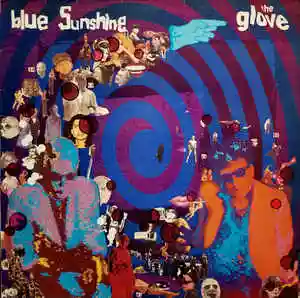
Blue Sunshine fits into that stream of ideas already influencing The Cure's production, with a blend of electronic sounds, drum machines, and guitars well expressed in tracks like Upstair's Room and Let's Go To Bed. Vaguely inspired by the Beatles' Yellow Submarine vision (from which the duo's name and blue glove logo come) in a state of hallucinatory alteration and various other low-grade films themselves inspired by the world of drugs, Blue Sunshine features a more original and at times more bizarre series of musical settings than Smith's group standards. There is a vibrant and glamorous psychedelic connotation very little related to '60s sounds and if anything contaminated by the growing use of electronic instruments from the nascent '80s.
To collaborate on the album's creation, The Glove enlisted drummer Andy Anderson (who later joined The Cure for the album The Top) and amateur vocalist Landray, who sang most of the album's songs. Additionally, for the string section of the beautiful track Mr. Alphabet Says, The Venomettes, a quartet of violinists and cellists with promising charm but never reaching fame, were brought in. This band of musicians produced ten tracks set on a concept track, interspersed and connected by subdued inserts (as if coming from a radio) of further musical elaborations and voices. Despite sounding rather fresh and dynamic, the Blue Sunshine tracks remain permeated with a sense of anguish; and, over time, the listening reveals certain underlying meanings seemingly hidden by Landray's lively and playful voice and Robert Smith's guitar riffs. Songs like Looking-Glass-Girl, Orgy, and Mr. Alphabet Says narrate the impressions and suggestions the two main authors derived from events like a death toll of glue sniffers and other poorly cut substances at a party, as well as from their own nocturnal use/absorption of acids.
Thus, the melancholic and dramatic aspects of the work emerge between the lines, between the psychedelic verses and the cover decorations, in the long instrumental suite of A Blues In Drag, an enchanting piece made of electric piano and violins that has little to do with The Cure's and Siouxsie's discography of the period. And then among the Arabic notes and ritual recitatives of the final piece, where the tension becomes tangible and every trace of visionary carefree disappears.
Blue Sunshine is not an epochal album, but it has become a cult record among niche new wave enthusiasts. Not without reason, since it revisited an important page of urban culture without market constraints and interpreted new pop trends with extreme freedom of choice. Certainly: Robert Smith's stylistic imprint is very noticeable, but blended with the rest, it emerges in a completely different way compared to the dark plots of Pornography, for example, or the sparse melodies of Seventeen Seconds. And Blue Sunshine has everything but the will to conform to the existentialist logic of the dark genre.
Loading comments slowly
Summary by Bot
Blue Sunshine by The Glove is a 1983 collaborative album by Robert Smith and Steve Severin, blending psychedelic and electronic elements with a fresh yet anguished atmosphere. Its music reflects hallucinatory and drug-inspired themes, with contributions from notable musicians of the era. Though not a landmark release, it holds cult status and showcases a distinct stylistic direction different from The Cure's darker works. The album's eclectic sound and conceptual unity make it a unique artifact of the '80s UK alternative scene.Tracklist Lyrics Videos
Other reviews
By Mariaelena
It is disturbing and anguishing, but it is so calibrated and captivating that, once listened to and listened to again and again, it highlights this parenthesis of experience desired by Robert and Steve.
An infernal cauldron in the most total oblivion, the true hell, or Dantean purgatory.
