
 •
Rating:
•
Rating: THE REVIEW
The Germs, from Los Angeles, were perhaps the first masters of hardcore.
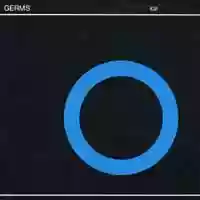
Their first and only L.P., released in 1979, represented a watershed moment in the history of extreme rock: on one hand, it took ten years of sonic detonations to their extreme consequences, from the garage-rock of the Stooges and MC5 to the punk of the Ramones and Sex Pistols, passing through the hard-glam of various NY Dolls and Dictators; on the other, it marked a starting point for the extremist development that rock underwent in the following decade.
In 1979, the Germs were probably the most extreme rock band on the planet, alongside the English Motorhead. Their music relied on some simple yet effective elements: Derby Crash's rotten and disgusted voice (an exacerbation of Johnny Rotten), Pat Smear's abrasive and out-of-tune guitar, Don Bolles' obsessive drumming, and above all, the bass of Lorna Doom, true musical pivot of the band. With her powerful, versatile, dynamic, dizzying lines, Doom radically changed the way of playing the bass in an extreme context, giving the instrument a function that was no longer just rhythmic but also melodic: she was probably the first great female bassist, of immense influence on the hardcore of the subsequent decades.
While it is true that in some respects the Germs remain a punk group, as demonstrated by the epileptic chants of “Communist eyes” and “Lexicon devil”, you cannot deny that tracks like “What we do is secret”, “American leather” and “The slave” already belong to another era. They are brief, terse, incendiary tracks, which occasionally open towards slightly more complex harmonic constructs (“Richie Dagger’s crime”, “Strange notes”, “Dragon lady”) or downcast melodies that make their way through the chaos of guitars and cymbals (“Our way”), perhaps drawing from the old garage-rock (“The other newest one”). The masterpieces of the album, however, are the tracks from which emerge most eloquently the sense of tragedy (the troubled “Land of treason”), of frustration (“Manimal”, which starts at a dragging rhythm then launches into a textbook progression), of masochism (“We must bleed”, perhaps the first grunge track in history) and of decadence (the 10-minute closing of “Shut Down”, a blues from the underbelly, with Smear’s guitar launching into free-form improvisations that had not little influence on the great Gregg Ginn) that constitute the essence of the Germs' art.
Behind the sonic ferocity, one perceives a bitter and disillusioned aftertaste, which makes the album, in a certain sense, the “definitive” work of the 70s, the terminal point of a descending parable that led to the end of every utopia. In conclusion, “GI” remains one of the most important albums in the history of rock, both because it represents a decisive moment in its evolution and for the dramatic effectiveness with which it renders in music a landscape (the “urban wasteland” of Los Angeles) and its moods, as only X (from another perspective and in other terms) would have known how to do in those years.
Loading comments slowly
Summary by Bot
The Germs’ only LP, (GI), released in 1979, is a pivotal album in hardcore punk history. It blends raw punk aggression with innovative melodic bass lines by Lorna Doom, and conveys themes of tragedy and disillusionment. The album marks an important sonic evolution in extreme rock that influenced many genres and artists to come.Tracklist Lyrics Videos
The Germs
The Germs are an American punk band from Los Angeles formed in 1977 by Darby Crash and Pat Smear, with Lorna Doom and Don Bolles. Their sole studio album, (GI) (1979), produced by Joan Jett, became a cornerstone of hardcore punk. The band disbanded after Crash’s death in 1980 and reunited 2005–2009 with Shane West on vocals.06 Reviews
Other reviews
By claudio carpentieri
Just over thirty-eight ruthless minutes of well-conceived music, capable of dragging you into a reckless and autobiographical whirlwind of angry and desperate feelings.
The flame that ignites the irreverent spirit of the band takes shape through tracks that, despite their brevity, manage to concentrate and flaunt an innate aversion to an ordinary existence.
By luludia
"Ah, this is one of the greatest hardcore punk records of all time."
"The devil of words and the devil of music transform shit into gold for a moment. However, that moment is too short."
