
 •
Rating:
•
Rating:
THE REVIEW
Many fans are still waiting for a new "Mandylion," a return to the atmospheric doom of the past, to show all the bands that draw inspiration from their masterpiece even today, the ultimate superiority of the masters.
But this remains and will remain a simple wish of nostalgic listeners; the watchword in The Gathering's discography (undoubtedly one of the greatest musical realities circulating today and active for almost twenty years) has always been evolution, so much so that today we can no longer label the Dutch quintet's offerings in any way, so many are the territories it explores. How many bands boast a compositional approach that transcends any restriction imposed by the necessities of classification? Unfortunately, today there are very few left. They are authors of art for refined palates, it's clear, but they can still satisfy everyone: from progressive enthusiasts to psychedelic rock fans, from gothic lovers to those who adore Radiohead and Muse; but I am sure that even jazz, electronic, and the most sophisticated pop enthusiasts will find something to their taste in their latest releases. It takes courage to carry forward this line of thought, this open-minded attitude, and the beautiful Anneke Van Giersbergen and her band have shown they have it in unlimited quantities, releasing in recent years numerous albums, masterpieces after masterpieces, each different from the previous one.
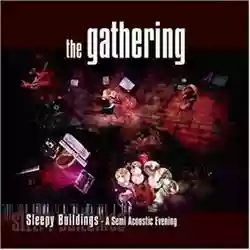
In 2004, the decision was made to immortalize the live dimension of a tour suspended between the intimacy of an acoustic concert and the psychedelia brought by the almost minimal use of electronic components, with the fantastic "Sleepy buildings - A semi-acoustic evening" (perhaps the most beautiful record in my collection). Recorded during the two dates held in 2003 at the Lux Theatre in Nijmegen, the Netherlands, the album contains over an hour of refined reinterpretations of songs taken here and there from the band's entire discography (even the first two albums "Always" and "Almost a dance," in which Anneke was not yet present, were not excluded), with the exception of "Souvenirs," published only a year earlier by Psychonaut Records. Behind this penalizing choice lies the record label of the past, Century Media (with this album the Dutch band will definitively end relations with the label, increasingly prone to musical interference and major label behavior). In any case, nothing can impair the absolute quality of this product, witness to a sound dimension so congenial to these musicians that it elevates them to the status of deities of contemporary music.
The magnificent sound excursion of the disc begins with "Locked away," all supported by the acoustic guitar (on this occasion wielded by Anneke herself) and made almost unsettling by the piano touches at the end. Among the most successful episodes, I dare to mention the second and third tracks, namely "Amity" and "Saturnine," enchanting and full of greater pathos than what enlivened them in "If_Then_Else" (thanks to the minimalism that envelops them everything becomes more direct, touching, intense). "The mirror waters," suspended between jazz, psychedelic rock, and ethereal gothic, seems to be taken from one of their latest albums, yet it belongs to a glorious and distant past. The sounds become spatial and futuristic with "Red is a slow colour," and then a simple yet joyful piano riff introduces us to the new track that gives the album its title, all built around the lively notes of the ivory keys and yet another superb performance by Anneke. The electric guitar bursts into "Travel," a long composition echoing Pink Floyd, taken from the controversial "How to measure a planet," only to give way to the melancholy of "Shrink" and "In motion part II," respectively taken from "Nighttime Birds" and "Mandylion." A new version of the old "Stonegarden" follows, where a compositional approach still linked to metallic standards is clearly heard, but meticulously revisited in an acoustic and minimal key.
"My electricity" is delicate and envelops the limbs, the soul's strings vibrate, eyes tear. But here comes "Eleanor," one of the most famous and appreciated songs by fans, which perhaps is the only one to lose bite compared to the original (this version is more subdued and less evocative, but a superb piano arrangement, not present in the one recorded for "Mandylion," deserves mention). "Marooned," a track this time supported by bass and drums, very minimal but with an unquestionably effective impact, once again suspends us between liquid settings and prog reminiscences. To close in beauty, there's "Like fountains," the quintessential gothic moment of the platter. Its moving resignation and that disarming veil of sadness that enshrouds it will remain forever imprinted, like an indelible mark, in the listener's memory.
Each of the fifteen songs on the setlist enhances the effusive keyboard arrangements, the piano's delicacy, the acoustic guitar's euphony, the enveloping warmth of the rhythmic section, as well as Anneke's wonderful voice, impeccable on a technical level, author of thrilling variations and intimate moments where everything becomes rarefied and impalpable, of moments of intensity that gracefully pervade the heart, move the soul. A constant thrill, an emotional sincerity that distinguishes them from mere musicians and last-minute artists. And the admirable and perpetual silence of the audience during the performance is no more than the most disarming demonstration of how The Gathering can immobilize the listener's body to set in motion the soul's engine, free to travel toward infinity. Keats famously stated: "A thing of beauty is a joy forever". Well, if he had listened to this masterpiece, he surely would have had one more reason to believe it.
Loading comments slowly
Summary by Bot
The Gathering's live album 'Sleepy Buildings - A Semi Acoustic Evening' captures a refined and intimate reinterpretation of their diverse discography. Showcasing Anneke Van Giersbergen's impeccable vocals and a blend of progressive, psychedelic, and gothic influences, the album is praised for its emotional impact and musical evolution. Fans appreciate the minimalistic yet powerful arrangements that elevate older tracks and emphasize the band's artistic bravery. This recording remains a standout masterpiece in their nearly two-decade career.Tracklist Lyrics
The Gathering
The Gathering are a Dutch band often described in the reviews as defined by constant evolution: from early doom/death and atmospheric doom/gothic metal to later psychedelic, electronic-leaning rock frequently labeled by the band as “trip rock.”13 Reviews
