
 •
Rating:
•
Rating:
THE REVIEW
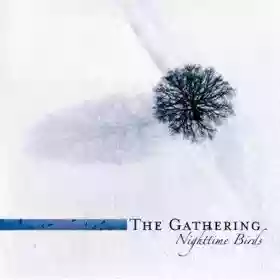
A worthy successor to the (justly) acclaimed "Mandylion," this "Nighttime Birds" develops and expands its structures, adding to the occasional doom gloominess of the first with much more airy and ethereal melodic lines strongly indebted to the Seventies' psychedelia (already perceived beforehand, especially in some tracks). The album does not reach the depth of "Mandylion," which at the time was striking, especially for the surprise and fresh air it brought, but it certainly stands a little below it, gradually becoming appreciated and bringing with it, with each listen, slight flurries of snow (evoked by the masterful cover) and a general dreamy and chilly atmosphere, warmed only by the warmth of Anneke's splendid voice, possibly even more mature, powerful and crystalline.
The sense of balance, harmony, perfection in execution, and the skillful dosage of different melodic elements make this work a small gem, seemingly made to be listened to during those moments of reflection or when one needs for a moment that gentle sadness, a necessary element of stasis yet also of transition in our moods.
Difficult to list the most beautiful and significant tracks. The opening "On Most Surfaces" is striking, love at first listen. It starts immediately, slightly oriental, evolving quickly into a short but persistent arpeggio in the memory and then continues with marvelous electric walls between doom and gothic. Anneke welcomes the listener with her wonderful trills, a pure and angelic hand that seems to drag you out of a fiery magma in which you sink. The chorus is poetic and evocative, as is the break, at the peak of the song's intensity.
"Confusion" appears much more reflective and set to lower and melancholic tones, thanks in part to a present and extremely constructive bass that weaves rich rhythmic textures on which a melancholic guitar riff and a now more suffering and subdued singing climb. The second part of the song increases the tempo, with six strings now more airy and dreamy, projected in a leap towards nothing which then inevitably falls back into the marvelous torpor of the entire track.
"The May Song" captivates immediately with its seventies keyboards and atmosphere more distant from doom and closer to a refined and elegant gothic (although it seems somewhat forced to channel this song into any genre). Worth noting is again the singer, here engaged in an impressive rise and fall of tones, highlighting the elasticity and plasticity of her vocal cords. In my opinion, the best metal singer ever.
Very dark and dreamy is "The Earth Is My Witness," a track endowed with absolutely shadowy pathos and devastating cadence, heavily indebted to the slow and bone-crushing sounds found in "Mandylion," with an absolutely impressive chorus enriched by sublime keyboards.
"Third Chance" stands out from all the rest. The track is a frenzied and vaguely gothic ride that focuses heavily on the high level of involvement aroused by the chorus. One would think it's a breaking track, based on a strangely "lively" structure, certainly not typical for the Gathering heard so far, yet captivating enough.
"Kevin's Telescope" is the track that most recalls the previous work in terms of melodic and dreamy part. A soft and delicate keyboard carpet accompanies us through the entire song, a cloudy nighttime sky with some clear patches from which the stars peep through, yet occasionally streaked by flashes, electric discharges, visual messengers of a distant storm growing ever closer, of which we tangibly sense the tension accumulating in the air.
The title track is absolutely the most atmospheric piece, sweetly melancholic, wintery, and icy present on the album. Anneke's voice seems to come from afar, telling us of ancestral stories set in cold Nordic nights where the placid sea patiently breaks the ice that winter gradually forms, and a gentle breeze moves the frozen branches of the trees, from which flocks of dark birds rise in the sky, performing swoops in the starry sky, carried by the wind. The atmosphere is almost unreal, static, and metaphysical, full of incredible calm yet tinged with a very subtle and acute melancholy.
The journey can be said to conclude with the intense piano-vocal ballad "Shrink." This structure has been attempted by many in the metal field, often only copying a single molecule of the emotional universe one experiences in this track, through the powerful and evocative voice of the singer.
With this album, the group seems to open up to new paths, far from the initial doom-gothic yet no less evocative. It is true that with a singer of such stature, they can truly produce anything, but the experimentation is not blind (or exclusively mainstream), it follows a melancholic and psychedelic vein that from here on will be the band's trademark, excluding it from any genre and categorizing it into the pantheon of those "practically perfect" bands.
Loading comments slowly
Summary by Bot
Nighttime Birds by The Gathering is a worthy successor to Mandylion, blending doom-gothic roots with ethereal, psychedelic 70s-inspired melodies. Anneke van Giersbergen's powerful and crystalline vocals shine throughout, adding warmth to the often chilly and dreamy atmosphere. The album balances harmony and emotional depth, with standout tracks like 'On Most Surfaces' and the title track creating poignant listening experiences. This work marks a mature, evocative evolution in the band's sound.Tracklist Lyrics Videos
The Gathering
The Gathering are a Dutch band often described in the reviews as defined by constant evolution: from early doom/death and atmospheric doom/gothic metal to later psychedelic, electronic-leaning rock frequently labeled by the band as “trip rock.”13 Reviews
Other reviews
By aniel
Anneke's wonderful voice immediately strikes you with its expressiveness and sweetness.
"Nighttime Birds" is a pearl in the musical landscape of refined and remarkable beauty.
