
 •
Rating:
•
Rating:
THE REVIEW
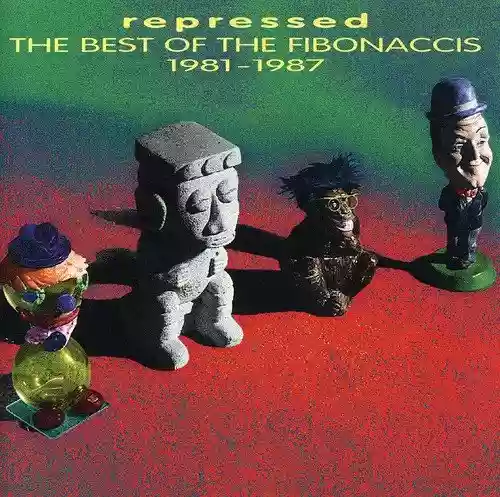
In the early '80s in Los Angeles' underground music scene, eclecticism was the norm. If this group is phenomenally confirmed as freakish among all "phenomena," we can indeed state that there's something about them that draws people to unusual destinations that were not on the map.
The freedom is complete as one ventures into avant-garde rock musical paths that do not pluck any consoling strings within us but instead light up the bulb of "who goes there," stimulating a desire to translate these musical sinuosity, accepting the challenge because there's a smell of a hidden, cynical fun burning, playing on the edge of the precipice with a big smile on its face.
And it is precisely this "bittersweet" flavor that attracts to a burlesque circus where the wandering contortionism of our psyche plays the trapeze artist, the juggler, the tamer, the clown. And the gaiety is unleashed, involving other chakras too, so that the impersonal reading is blissful in its lack of confrontation, ergo solitude. The floating remains nonetheless in the changing density of the fluid in which we are immersed, where the ensemble nourishes us with the ardor of a cold flame that keeps us focused on the grotesque musicals that logically intertwine, intriguing our gnosis about where this will all end up, not just mathematically speaking.
If one senses a Byzantine mockery, it could be because a couple of the group members (John Dentino, Joseph Berardi) evoke Italian origins, and the other members, Ron Stringer and Tom Corey, endorse the estranging theater, further destabilized by the oddity of Magie Song. And thus, Rota, Theodorakis, and Morricone intersect in the recesses of the compositions like highway tongues connecting the vast surface of Los Angeles, suggesting a diversion that makes you sweat cold given the unreceived destination.
How can one not yearn for the ambiguous, misleading beauty of the singer (Magie Song herself), who, with her harmonic gargles, in addition to her enigmatic vamp outfits, paves the way for a comedy that has yet to be contemplated.
And so, this niche beyond the eccentric exists, traveling parallel to us, and the gelatin barrier distorts understanding but draws entry into this vaseline that lubricates elite oddities that do not seek proselytism but welcome with open arms and bid farewell with open arms. The choice is yours...
Loading comments slowly
Summary by Bot
The Fibonaccis' compilation album showcases the band’s avant-garde and eclectic approach to 1980s LA underground rock. Their music is described as challenging, theatrical, and infused with a bittersweet, cynical humor. The lead singer's enigmatic presence and the band's Italian cultural echoes add to the unique, complex experience. This collection invites listeners into an unusual but captivating musical journey.Tracklist
01 Romp of the Meiji Sychophants (02:27)
02 Rice Song (02:42)
03 Somnambulist (03:01)
04 Some Men (02:42)
05 March to Heaven (03:23)
06 The Snap (03:51)
07 Anti-Oedipus (04:54)
08 The Genius (02:48)
09 Old Mean Ed Gein (03:22)
10 Psycho (01:45)
11 Ordinary Women (02:24)
12 Maculae (02:31)
13 Narcissist (03:25)
14 Terrorvision (03:31)
15 Tiny Pizzas (01:53)
16 Leroy (02:52)
17 The Thread (03:07)
18 Had It With Girls (04:03)
19 Sergio Leone (02:10)
20 Manifesto (01:54)
21 Medicine Waltz (02:57)
22 Lisbon (03:46)
23 Dancing With the Bears (03:50)
24 Stay Home (02:32)
25 Tumor (03:29)
26 Purple Haze (03:58)
The Fibonaccis
Los Angeles-based art-rock/new wave group active in the early 1980s. Members named in the review: John Dentino, Joseph Berardi, Ron Stringer, Tom Corey, Magie Song.01 Reviews
