
 •
Rating:
•
Rating:
THE REVIEW
The band of Mark E. Smith is undoubtedly to be counted among the most courageous, original, and relevant realities of the late seventies English post-punk scene. Alongside Wire and Pop Group, it indeed reached the pinnacle expression of the genre, challenging the song form and daring, with intuition and improbable contaminations, new structural/executive solutions to foster that search which led rock of the following decade to change its appearance once again. To renew, to survive.
This means that from that moment on, anyone retracing those paths would draw from the production of these incredible formations; in the case of the group (more or less) reviewed here, it suffices to think of how even the Pavement - a band emblematic of a further metamorphosis occurring in view of the nineties, in which the influence of Smith (and company) is tangible - paid homage to them.
And precisely "The Classical" might perhaps summarize, with much synthesis and much emphasis, the spirit of the multifaceted formation of the Fall: a catchy chorus for a track that could have been of disarming simplicity, had it not been paced by a schizophrenic singing and played in an eccentric manner, with tribalism à la "Sympathy for the Devil" and guitar riffs that anticipate the primordial lo-fi of Beat Happening and the "consecratory" one of Pavement.
The significance of this work, regardless of the aforementioned qualities that, besides recognizing the band, also identify its content, probably lies in its heterogeneity and the inconceivable quality of so much at stake. It seems almost unthinkable that the kraut of "I am Damo Suzuki", a clear testimony of the canian influence metabolized from the previous decade, and the impeccable "Paint Work" can share the grooves with the new wave of "Barmy", which is nothing but the little song, the "pop" track according to Mark E. Smith.
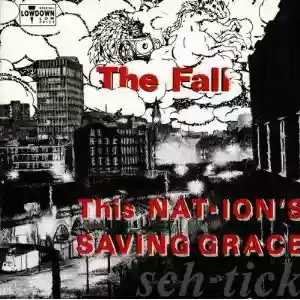
But beyond praise and comparisons (Wire and The Pop Group, ndr), it should be clarified that this "This Nation's Saving Grace" is far from the impeccable avant-garde peaks reached by the aforementioned popolare collective of Mark Stewart (in "Y"), but it is also true that the edginess of Smith's genius did not aspire to that type of research and, on the contrary, raised his spontaneous proposals on foundations of a more classic and less destructive nature. Just to try to frame the exact artistic context, even though both are conventionally referred to as post-punk. But one thing is certain, in fact two: a) no one else sounds (or sounded?) like this; b) we will not have albums like this anymore.
Loading comments slowly
Summary by Bot
This Nation’s Saving Grace by The Fall is recognized as a courageous and original post-punk album. Mark E. Smith’s band pushed boundaries with innovative song structures and eclectic styles, influencing future bands like Pavement. The album’s mix of krautrock elements, lo-fi riffs, and pop sensibilities showcase its wide-ranging appeal. Though differing from the avant-garde of contemporaries, The Fall’s unique sound remains unmatched. The album’s enduring impact highlights its genius and irreproducibility.Tracklist Lyrics Videos
The Fall
The Fall were an English post-punk band formed in 1976, strongly identified with vocalist and main lyricist Mark E. Smith, known for constant line-up changes and a repetitive, abrasive, minimalist sound.15 Reviews
