
 •
Rating:
•
Rating:
THE REVIEW
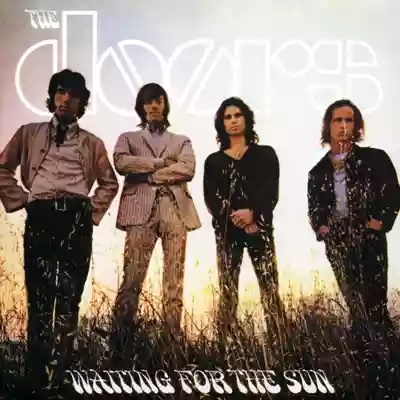
The third album by The Doors is an entirely different record than what it was originally supposed to be. In 1968, the four of them showed up in the recording studio ready to reaffirm their brilliance established by the previous two masterpieces, aiming for the next step forward. The belief that they could create a new epic chapter was dashed by time constraints due to the exhausting tour they came from, as well as a songwriting repertoire that had been significantly drained to provide material for the previous two albums. Not forgetting that they were practically unable to rehearse the arrangements and develop the songs live, as was their custom. For these and other more contractual reasons, they were unable to produce a Side A containing both atmospheric and chart-topping tracks, in their style, and a Side B occupied solely by the long, expansive "Celebration Of The Lizard"—a musical poem composed of various sections (dating back to their early days) that was meant to give the album its title.
Meanwhile, the assassinations of Martin Luther King and Robert Kennedy (April 4 and June 6, 1968) and the student movements were turning what had been, until then, at most Strange Days into tense times. Despite the unsettling atmosphere, the new album's title became "Waiting For The Sun." Indeed, the title track itself wasn't included (but was later recovered on "Morrison Hotel" in '70). Thus, they chose to use a couple of their songs from 1965, both written by Morrison: the melancholic "Summer's Almost Gone" and what would be their second and last chart-topping single (after Krieger's "Light My Fire"): "Hello I Love You." Already from these two tracks, it's immediately clear where this new work intends to go. The titles, the lyrics, the pop sensibilities exude an incredible lightheartedness, sometimes giving way to a veil of sadness, but it is the flip side of the dominant theme, which is Love and the couple's relationship. If a summer is ending, then comes the "Wintertime Love" to revisit the same question. The latter is composed by Krieger, as is the flowing "Yes The River Knows"—the water theme in antithesis to the above-mentioned Krieger's '67 hit's fire—and the flamenco of "Spanish Caravan," a hint that Morrison's compositional vein was not at its peak at that time. To show that The Doors were still alive and aware of what was happening in the world, there's "The Unknown Soldier," which due to its anti-war themes (but against war in general, not only the Vietnam War; Morrison, incidentally, was the son of a military man) was strongly boycotted by American radio stations and never reached a significant chart position. Live, the unknown soldier song was theatrically represented, with Densmore's drum roll preceding Krieger's rifle/guitar shot and Jim Morrison being struck down. Another deviation from the romantic song is proposed by the third track of the list, "Not To Touch The Earth"—which is essentially a part recovered from "Celebration Of The Lizard"—but here the atmosphere becomes estranged through visions and images of travelers moving en masse away from civilization, feelings of unease, and a pervasive pessimism also steeped in the musical tension. Otherwise, only the violent "Five to One" seems to stray, albeit slightly, from what seems almost like a concept album on heart palpitations caused by falling in love with you.
Despite themselves, The Doors found themselves with this controversial product in their discography, which was, in any case, not bad, marking a change that would make them swerve towards a search for new sounds in the next album ("The Soft Parade"), adjusting their aim with a more coherent late '60s blues — a return to simplicity after the years of lysergic experimentation—of the last two albums ("Morrison Hotel", "L.A. Woman"). "Waiting For The Sun" was still rewarded with two gold records and one platinum record, and in the remastered version of the CD, the complete work of the Lizard is included—just like on "Absolutely Live" in '70—offering a charm that fans like me can't help but appreciate.
Loading comments slowly
Summary by Bot
The Doors' third album, 'Waiting for the Sun,' reflects challenges like time constraints and depleted songwriting, diverging from initial plans. It balances lighthearted love themes with darker, anti-war sentiments during tense 1968 cultural moments. Despite controversy, the album achieved commercial success and hinted at stylistic shifts in the band's future work. The remastered edition includes the complete 'Celebration of the Lizard,' adding depth for fans.
The Doors
American rock band formed in Los Angeles in 1965. Core members: Jim Morrison (vocals), Ray Manzarek (keyboards), Robby Krieger (guitar), John Densmore (drums). Known for a distinctive organ-led sound, theatrical live shows and landmark albums (The Doors, Strange Days, L.A. Woman).64 Reviews
Other reviews
By joe strummer
The psychedelic runs through the entire album, even though it is not the principal genre of the album, it influences the group in many songs.
Ultimately, Waiting For The Sun is an excellent album, not a masterpiece and certainly inferior to the first two.
By TelevisionTHMan
"Waiting for the Sun is the only Doors album to reach number one on the charts."
The album contains songs with very strong lyrics, like The Unknown Soldier, but compared to the first two it is more "soft."
