
 •
Rating:
•
Rating:
THE REVIEW
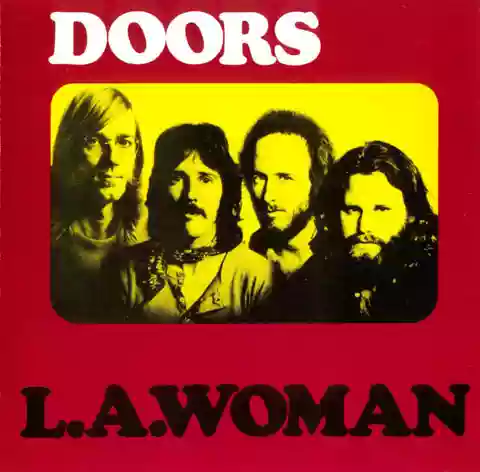
Talking about this work, like any final piece, is never too easy. I would like to do it without resorting to the usual sentimental words and déjà-vus associated with a poetic figure never sufficiently defined (too often a victim of bad interpretations), like that of Jim Morrison.
To minimally account for the tracks contained in this work, one must transcend them, consider them in a dark room, attend to them in an immobile silence. There is the dark night in these tracks, a gloomy night of the '70s, the true sound, the analog sensations. There's the scent of chilling winter nights, of hallucinations and delusions, but in certain parts, also the scent of summer, unsettling sensuality, strips of skin between thin silks, light garments, sweet breasts to meet with moist lips. Evenings and nights left to our adolescence, or perhaps internalized and hidden in moments of forgotten childhood.
There is sickness in this work: the sickness lived, experienced from within, the sensation of being sick and out of place. There are dirty emotions in this vinyl, the darkest sides of the individual that, like in an exorcism, are dismissed and rarefied in a coherent and ordered artistic fresco. L.A. Woman carries away the painful perversions of the '900s, taking them to the cemetery of civilization, leading them with its steady and repetitive rhythms to its ossuary, with verses others define as cursed, but which I feel are only prophetic. Jim Morrison, an intellectual with a deep hypnotic voice, amidst the wave of optimism and enthusiasm that shook the back of the Hippie movement (with its utopias, its hallucinations, its summer of love), already sensed the advent of the downfall, total, definitive, and unavoidable of modern civilization. In those verses lent to blazing rock, to a macabre blues, he already foresaw the next disaster, the indolent end; firstly, his own.
A record that, far from the usual paramnesias, from trite words, far from the usual shamanic adjectives, leads us to the essence of music from an era and to a timeless poetics: a nighttime ride with headlights off, through the autumn rain of Love Her Madly, in the dark blues of Car Hiss By My Window, in the curse of L'America (originally composed for filmmaker Michelangelo Antonioni), passing through the psychedelic drifts of The Changeling and the austere afternoon of Hyacinth House until crossing into the endless, tormented storms of Riders On The Storm, a gloomy reflection of a sick and dark place, without alternatives.
This L.A. Woman, in 1970, followed the bitter disappointments of Morrison Hotel and suddenly let the now dry vein reopen, let new blood flow and, with it, that pulsating creativity that characterized the band's early works. Although a few embers lacked extinguishment, Jim Morrison's crisis was now an open view of the abyss. The last days in the romantic comfort of Paris, searching for a cultural milieu that could ease the pains, served only to postpone the final closing of the "doors" of Morrison's house, the sultry night of July 2, 1971. A few days before, Morrison had given his last eloquent statement to the press: "For me, it was never about a performance [?]. It was a matter of life and death, an attempt to communicate, to involve many people in the private world of thought". Abandoned by his family, discouraged by the world, he was buried in the Parisian cemetery of Père Lachaise, near Balzac, Baudelaire, and Proust. On his grave, destined to become one of the great rock places, looms the only possible epitaph: "James Douglas Morrison - Poet, Singer, Composer".
Manzarek (keyboards, organ, piano), Krieger (guitars), and Densmore (drums), not satisfied with the latest alluring epitaph of L.A. Woman, attempted - and may the stars forgive them - other less fortunate recordings. The absence of the deep, hypnotic voice of a prophet unmistakably revealed the limits of good musicians with a heavy legacy and no more soul.
Loading comments slowly
Summary by Bot
L.A. Woman stands as a haunting, timeless record that captures the dark, bruised essence of the 1970s rock scene. Jim Morrison’s poetic voice and prophetic lyrics guide the listener through moods of sensuality, sickness, and bleak reflection. The album transcends clichés, offering a deep artistic and emotional experience. After Morrison’s death, the band struggled to continue but this album remains their creative pinnacle.Tracklist Lyrics Videos
The Doors
American rock band formed in Los Angeles in 1965. Core members: Jim Morrison (vocals), Ray Manzarek (keyboards), Robby Krieger (guitar), John Densmore (drums). Known for a distinctive organ-led sound, theatrical live shows and landmark albums (The Doors, Strange Days, L.A. Woman).64 Reviews
Other reviews
By the clash
Jim, the master of those doors, says, near his death, that he is a “changeling,” one who transforms often, with many faces.
His real stories, witnesses of a life always on the edge, of an uncomprehended poetic spirit and interpreter of a human condition longing for life, transgression but also sad and contradictory, riding the storm… riding the storm…
By AR (Anonima Recensori)
"Morrison’s voice is sharper and heavier than a cleaver, in short, a composition made by a drunken madman and a not-so-better-off Louis Armstrong."
"'Riders On The Storm' begins: electric piano, precise drumming from a true jazz master drummer, and that guitar that seems to enter quietly without wanting to disturb, the prophetic voice of Jim Morrison, all in a magical, hallucinatory, and dreamy atmosphere."
By nikko89
The last breath of the shaman of pain, the last tremor...
Riders on the storm... a timeless piece carved in the stone of memory as if graffiti of blood.
By groucho84
The Doors could not have crafted a better epilogue for their extraordinary career.
‘Riders on the Storm’ is an absolute milestone in the history not only of this group, but of all rock.
By Alevox
"I'm so down, it almost feels beautiful."
"Jim Morrison, a dog without a stick, an actor borrowed and consumed by his own act, burnt like an asteroid in the rock panorama of the late sixties."
