
 •
Rating:
•
Rating:
THE REVIEW
Hailing from New Jersey, the Dillinger Escape Plan blend new hardcore, jazz, and progressive metal.
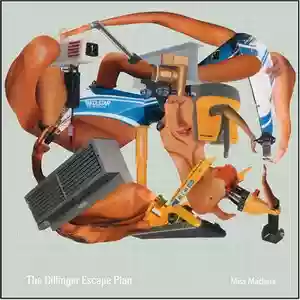
This is also evident in their latest "Miss Machine" from 2004. As in previous albums (actually, only one of their previous works, 'Calculating Infinity,' can be defined as an "album," because the others are EPs with few songs), the frequency of rhythm changes or even genre changes is striking, with an almost Dantesque experimentalism but also with a sonic violence that challenges even the most resilient eardrum.
A true masterpiece of technique and originality, consisting of 11 tracks with a duration of 40 minutes. It opens with "Panasonic Youth," without hesitation, devoid of an intro, and immediately singer Greg Puciato pushes his vocal cords to the limit, but with excellent control technique, while the others create an atmosphere of anxiety, with jazz echoes in the last seconds. "Sunshine The Werewolf" picks up the style of the previous one, but here the American quintet restrains their fury a bit, without completely suppressing it. Right afterward, there's "Highway Robbery," where the rhythm is more uniform and Greg showcases excellent screaming, previously more hidden by growl; the dark atmosphere that characterizes the first two fades a bit. But it reignites, accompanied by devastating power, in "Van Damsel," the album's jewel.
In "Phone Home," they even attempt to dabble in industrial, without fully succeeding, but with an excellent final result. With force begins "We Are The Storm": the rhythm changes really often, and at one point it stops being hardcore to continue as jazz (with tones worthy of a beautiful dream) and re-explodes for the grand finale.
Just to take a break from all this aggressiveness, they insert a short track, "Crutch Field Tongs," featuring only machine-like noises in rhythm, but still keeping the atmosphere dark. "Setting Fire To Sleeping Giants," with a always uniform rhythm, is the track where growl is more absent; here too, however, there's a genre change, always in favor of calm jazz, for a few seconds. It is followed by "Baby's First Coffin," from the film "Underworld," another devastating piece, and certainly a light in the almost dark soundtrack of the film. "Unretrofied" is a piece tending towards nu-metal, one of the best of the genre, featuring just some jazz echoes; in the chorus, Greg shows he can also sing, with a pleasant timbre. We are closing: here is "The Perfect Design," almost 4 minutes, where in the last seconds, the fury just left behind extinguishes (with much style).
A powerful, innovative album, difficult to grasp at first impact, but which becomes appreciated over time.
Loading comments slowly
Summary by Bot
The Dillinger Escape Plan's 2004 album Miss Machine is a technical and innovative blend of hardcore, jazz, and progressive metal. Known for frequent rhythm and genre changes, the album challenges listeners with sonic intensity and experimentalism. Tracks showcase strong vocal performances by Greg Puciato and dynamic shifts in mood and style. Though difficult at first, the album rewards patient listeners with its originality and power.
The Dillinger Escape Plan
The Dillinger Escape Plan were an American extreme music band from New Jersey, widely associated with mathcore and known for technical, chaotic songs and intense live performances. Their catalog is frequently described as a collision of hardcore/metal with jazz, electronics, and industrial elements. Their final studio album, Dissociation, was presented as the closing chapter of the band.14 Reviews
Other reviews
By Tomato Express Cake
They burst in as if it were nothing into the calm we had in our heads, and what strikes the most about this album is that they manage to maintain that impact throughout the entire CD.
Dillinger have set their sights on one goal: no more limits, no modular structures, destroy the canons of hardcore and show that even a band from our damned genre can stand beside and surpass any Dream Theater in terms of technique.
