
 •
Rating:
•
Rating:
THE REVIEW
1979, Ladies and Gentlemen...How do? This is how the Damned reopen the scene.
In the UK, the first to release a punk single (New Rose), the first to release a punk album (Damned Damned Damned), first to break up and also first to return. After the controversial Music for Pleasure of 1977, the Damned exploded. The punk ferment swept through virtually every band. The group lost the creative support of Brian James and every single member ended up populating improbable line-ups. All of this happened in less than a year, because the Damned, already towards the end of 1978, returned under a fake name (Doomed) with their old friend Lemmy on bass. A few incendiary dates and some demo tracks with Lemmy rekindled the spark between Vanian, Sensible, and Scabies. Meanwhile, the bass duties would soon go to Algy Ward (ex-Saints), a real street bully brought on board for two simple reasons: he would learn all the songs from the first albums in no time, but most importantly, he was always the one buying drinks. This switch would be fundamental since Captain Sensible would move to guitar, his primary instrument, put aside in the initial line-up only for Brian James' sake.
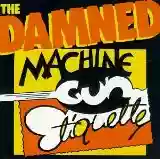
The album takes shape through two simple guidelines: Anarchy and Chaos. Machine Gun Etiquette is in fact a patchwork of songs reworked and opportunistically lifted from various interim experiences, with new compositional input no longer under the unique aegis of Brian James. Captain Sensible also introduced, thanks to his time with the King, the organ, which from this point would become a trademark for the new phase of the Damned.
The new classics
The tracklist of the first edition opens with Love Song, a perfect bass intro, clearly influenced by Lemmy and masterfully replayed by Ward. The song is a punk love letter to a train station, another passion of Sensible’s. Compared with all punk output in 1979, this track put the Damned back on the map and became their first single to enter the UK singles Top 50, reaching number twenty and thus guaranteeing TV appearances on Top of The Pops. Not bad for a band considered all but dead.
The heavier sound compared to the past is confirmed with the second track, Machine Gun Etiquette, a clear response to the rumors and speculation, especially in the specialist press, about their definitive disappearance.
I remember what you said (second time around)
Don't you wish that we were dead (second time around)
No more getting pushed around (second time around)
Not that we've gone underground (second time around)
Now its time for you to see (second time around)
What the Love Song did for me (second time around)
Really famous stinking rich (second time around)
Straight up there without a hitch (second time around)
I remember what you said (second time around)
Don't you wish that we were dead (second time around)
No more getting pushed around (second time around)
Back to haunt you with our sound (second time around)
Machine Gun Etiquette (the album), however, is a real container of tracks that would become new classics. I just can't be happy today, with its unique Stranglers-like organ and psych-pop style, is built on an earlier version from the King and is clearly Sensible-influenced. This song also opens a new chapter for Vanian. His voice seems to have matured, and the crooner instincts from the first two albums now find free rein in melodic structures no longer bound to punk clichés. In this, the Damned confirm themselves as masters—a frontband of the movement without becoming its stereotype.
Melody Lee is the third track. A long classical piano intro, a rocket-like start, and lyrics inspired by the stories of Bunty comics. For years, this was a band anthem, shouted with: "Who was Melody Lee?" The recycling continues with the track Anti-Pope. Written years before by Captain Sensible’s brother and, again, already a King track. Relentless rhythm with Scabies as the true “Moon del Punk”, textbook low-end from Algy Ward, and a psychedelic Sensible. Side A ends with These hands, a Barrett-style track centered on Vanian’s increasingly vampiric persona. A hysterical laugh in the background is stopped by the scream: "STOP LAUGHING!"
The legend
Side B starts as seriously as can be: Plan 9 Channel 7. There’s little to joke about here—a gothic incursion co-written by Dave Vanian and his wife (Laurie Vanian, dark Queen of punk). This track would also serve as the foundation for the first video clip from the album. The lyrics reference Plan 9 from the Outer Space by Ed Wood, a clear sign of Dave Vanian’s passion for 50s B-movies. Taking themselves seriously has never been the Damned’s thing, and the next track flips the mood completely. Noise Noise Noise is a hymn to messing around, to noise, to not taking things too seriously.
We say noise is for heroes (heroes)
Leave the music for zeros (zeros)
Noise Noise Noise is for heroes (heroes)
Two tracks before the legend. First, a searing cover of Looking at You by the MC5, with yet another superb instrumental performance by Ward/Scabies/Sensible, proving that punk—and the Damned—have never been just three chords. Sensible follows Scabies and, after having celebrated the "Moon del Punk", rightly earns the title "Hendrix del Punk". Pure chaos in the live versions. Next comes Liar, which at first listen might seem like filler, but actually hides a stellar bassline. A track that, if found in another band’s discography, would be a standout track. That’s because to close out, the Damned put together a legendary two-part mini-suite.
Smash it Up (Pt 1&2) is a masterpiece, opened by a long Sensible guitar intro—dedicated to the late great friend Marc Bolan—and then making way for:
We've been crying now for much too long
And now we're gonna dance to a different song
I'm gonna scream and shout til my dying breath
I'm gonna smash it up til there's nothing left
Oh oh smash it up, smash it up, smash it up Oh oh smash it up, smash it up, smash it up
People call me villain oh its such a shame
Maybe its my clothes must be to blame
I don't even care if I look a mess
Don't want to be a sucker like all the rest
This song will forever be their high point, the star of the album’s second music video, and covered in later years by several bands (Offspring for the Batman Forever soundtrack). Smash it Up is the closing anthem of punk and rails against formalism, hippie culture, major musical events. So anarchic it was boycotted by BBC1, and yet still managed to reach number 35 in the UK singles chart.
In November 1979, that blessed year for music, the first wave of punk closes for good.
Everything that comes after will never be the same again.
Loading comments slowly
Summary by Bot
The review covers The Damned's Machine Gun Etiquette, highlighting its strong punk roots and pivotal role in the genre. It notes the album's musical versatility and solid songwriting. The review acknowledges the band's bold evolution and its impact on punk music. The album receives a generally favorable evaluation, emphasizing its enduring relevance.Tracklist Lyrics Videos
The Damned
The Damned are an English band formed in London in 1976. They issued the first UK punk single (New Rose) and the first UK punk album (Damned Damned Damned), then evolved through post‑punk and gothic rock while anchored by vocalist Dave Vanian and Captain Sensible.09 Reviews
Other reviews
By Falloppio
No one expected one of the most appreciated Punk albums on the planet.
Despite its softer appearance, the ’77 Punk energy is there. At the same time, there is an indescribable bit of darkness present.
