
 •
Rating:
•
Rating:
THE REVIEW
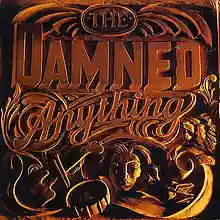
"Anything", the seventh album by the Damned, dated 1986, represents the classic case of a fleeting moment; "Eloise" was the culprit, the theatrical stentorian gothic of "Phantasmagoria" was the culprit, and so the English band found itself in a middle ground, at a great crossroads: to remain in the cult dimension that had belonged to them until that point or to take a big leap towards true fame. After all, Dave Vanian lacked nothing to become a truly universally recognized rock icon: voice, charisma, talent, and an unmistakable look which has even been clumsily imitated recently by someone. His name could very well have been almost as well-known as that of David Bowie, but history decided otherwise: what exactly went wrong? The Damned, rightly realizing they had already reached their peak in that particular genre, wanted to develop a sound closer to psychedelic rock, while the record label (MCA) wanted an album in the name of continuity to strengthen the momentum created by "Phantasmagoria". Same old tale in the book: disagreements, pressures, hurried record release and the final result was "Anything", a compromise that satisfied no one.
Despite some moderately successful singles, the album was a failure and received terrible reviews; now, it is true that "Anything" is not "Phantasmagoria", but it did not deserve such a fate because overall it is a good album, containing excellent noteworthy and in-depth moments. There are some weak points like "The Portrait", a gothic-romantic piano sonata likely from sessions of the previous album, but here it is glaringly out of context, the crude pop-rock filled with horns in "Psychomania", overly dull and commercial, and the title track "Anything", which attempts to blend punk rock reminiscences with a psychedelic organ à la Ray Manzarek, a good single but lacking the charisma of an "Is It A Dream" or "Shadow Of Love", probably more effective as a live-act than on record. However, aside from these imperfections, the rest of the album operates at high levels, the Vanian-Jugg-Merrick-Rat Scabies quartet confirms great style and creativity, well supported by the skillful care of sound and arrangement entrusted to producer Jon Kelly. The desired psychedelic turn is expressed in a beautiful re-reading in almost arena-rock style of Love's "Alone Again Or", a great demonstration of ability from all the band members and an exotic and captivating sound, especially in the duo of "In Dulce Decorum"-"Gigolo"; the latter, after a delightful satirical-fairytale intro dominated by hypnotic keyboards and mocking laughter in the background (which perhaps deserved to be credited as an autonomous musical entity) proposes a very Byrdsian rock in the unmistakable sound of the guitars and a pleasant alternation between the voices of Dave Vanian and Roman Jugg, while "In Dulce Decorum", for me the highest point of the album, is infused with an arabesque atmosphere full of drama and tension, enriched by perfect vocal harmonies and a visionary and anti-militaristic lyric. The richness of the sound particularly highlights the excellent production of the record, and the mere presence of this song is enough to silence all the specious and "ideological" criticisms aimed at this unfortunate album.
"Anything" manages to surprise even in its gothic episodes, which prove to be significantly darker and more existential than those from the théâtre grotesque of "Phantasmagoria": "Restless", a sparse, powerful, and spectral litany, supported by a formidable Rat Scabies on drums, is the perfect example, while extraordinary is the atmosphere created by the combination of Bryn Merrick's bass and Roman Jugg's keyboards in the decadent "The Girl Goes Down", as well as the orchestral drama of a cadenced march laden with spleen like "Tightrope Walk". Removed the three dead branches I've already mentioned, this album reveals itself as excellent, almost like Killing Joke's "Outside The Gate", a courageous record proposing elements of discontinuity with the already in itself elusive and constantly changing style of the Damned. Had the band been given the time and freedom to work more calmly, perhaps things would have turned out differently. The Damned probably weren't cut out for the mainstream, but at least they would have avoided the crisis and subsequent breakdown of a perfect formation capable of great compositional alchemy. The album's too ambivalent personality and the fillers hinder a full four-star rating (although I'm happy to round it up), but the songs taken individually would even be worth five.
Loading comments slowly
Summary by Bot
The Damned's 1986 album 'Anything' captures a critical crossroads as the band experimented with psychedelic rock under tight record label pressures. Although initially met with poor reviews and commercial disappointment, the album contains standout tracks and moments of creativity that reveal a rich and evolving sound. Some songs feel out of place, but the skilled band performance and production shine through. This album illustrates both the challenges and the artistic boldness of The Damned during a transitional period.
The Damned
The Damned are an English band formed in London in 1976. They issued the first UK punk single (New Rose) and the first UK punk album (Damned Damned Damned), then evolved through post‑punk and gothic rock while anchored by vocalist Dave Vanian and Captain Sensible.09 Reviews
