
 •
Rating:
•
Rating: THE REVIEW
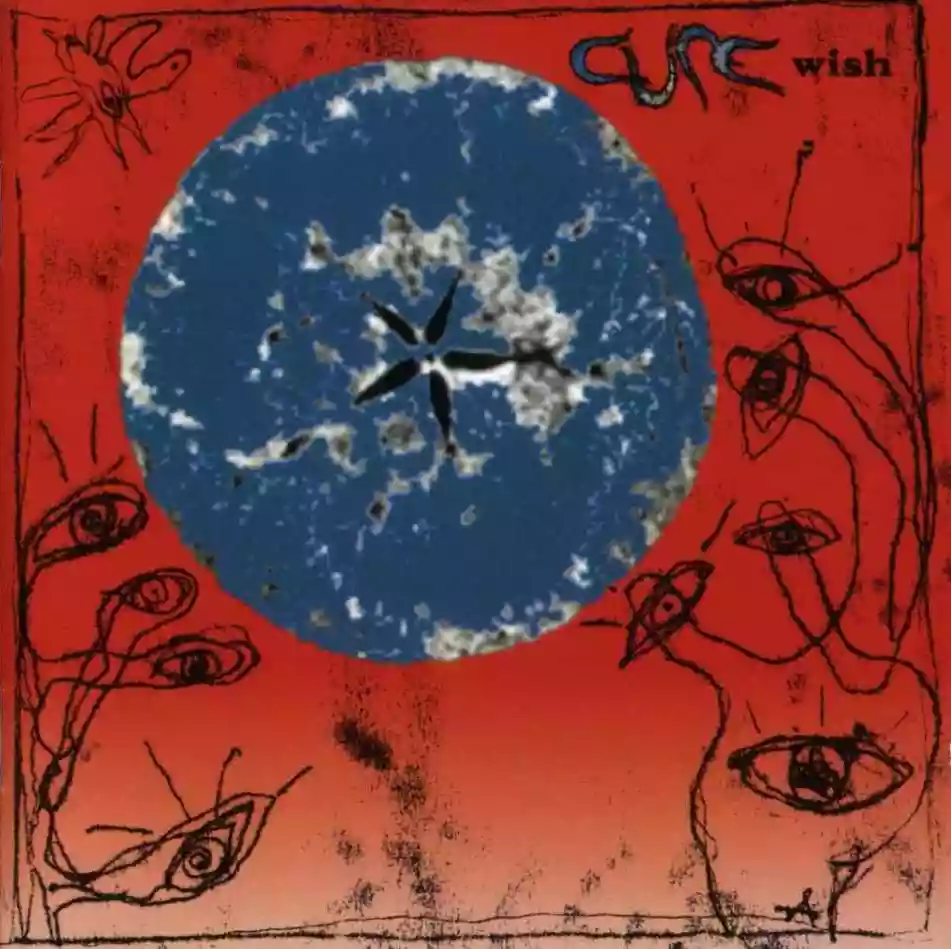
"Wish" is certainly the last substantial work by Robert Smith's group.
The subsequent albums, apart from the decent "Bloodflowers" (which I find ridiculous to compare to masterpieces like "Faith" and "Pornography" by placing it in a questionable trilogy), are truly lackluster works, missing the driving force of "The Cure": emotion, thrill, and engagement.
In this sense, "Wish" is the last album that visibly engages emotionally. "Wish" represents a compendium of stoic despair, regret, dreams, and flights of fancy, dizzying falls. Musically, it is slightly different from its predecessors, with a heavy use of guitars almost akin to Sonic Youth and a reduction of the layers of keyboards that filled "Disintegration." Yet, on the whole, the sound remains founded on Smith's piercing riffs, although here they are more stretched and effect-laden, with obsessive rhythm and singing like a condemned man.
The album is almost a concept on love, analyzing all the feelings one can experience in a relationship, especially the tormented ones. But this is normal, as the caption at the bottom of the album booklet explains: our sweetest songs are about the saddest stories. The beginning with "Open" almost explains the cause of the lyrics that will follow in the rest of the album: alcohol dependence, Smith's historical problem, which allows moments of incredible elation but also leads to painful plunges into the desperate abyss of consciousness. "High" is born from Smith's most morbid fantasies, an obsessive and idealized desire for someone, perhaps the most physical dream of "The Cure," as emphasized by the video clip.
"Apart" echoes the age-old problem of incommunicability between lovers, an almost masochistic game that condemns them to seek and desire each other without success, until the inevitable collapse. "From the Edge of the Deep Green Sea" is very possibly the most intense track along with "A Letter to Elise", a haunting and obsessive melody crumbles the listener's heart in a crescendo of implosive intensity. The theme is the desire to stop time, but above all, the fear: fear of losing the treasure obtained after years of tears.
The incredible strength of this group is having managed to epicize moments that each of us has lived, at least in part. The listener identifies with Smith's ordeal, feels their own fragility as heroism, and with "The Cure"'s music, one often runs the "sweet" risk of falling into a cold vortex of fatalism. Three songs apparently airy and more positive follow. Apparently. "Wendy Time" with an almost goofy sound hides all the squalor of classic murderous games and barbs that people execute to wound and be wounded. "Doing the Unstuck" represents a blurred dream. The right time has come to abandon all sufferings and dive into the most sincere love. Unfortunately, it's too late, now it is merely chimerical. "Friday I'm in Love" is the classic killer single by "The Cure." The lyrics are dreamy and manage to make love epic in the most everyday gestures, explaining how it can elicit multiple sensations, often contradictory and temporary. "Trust", as the title states, is based on the request for trust and once again centers on incommunicability. "A Letter to Elise" is the album's most inspired text. Smith reaches one of the peaks of his career here, gently pushing the letter's recipient away. The celestial and melancholic music seems created from nothing specifically to accompany the lyrics, so fitting and explicit in its poetic nature.
"Cut" is the most guitar-driven and experimental piece; here, echoes of Sonic Youth can be heard, and the theme, as easily inferred, is the shock of a clean break with the past and with the beloved. "To Wish Impossible Things" represents the funeral of a dream, the abandonment of every desire in favor of crushing realism, the retrospective consideration of behavior that now appears almost childish and naive in its candor. This track marks Smith's decisive maturation and indeed coincides with the artistic drying up that will follow, as "The Cure"'s music is centered on an infantilism, no matter how deep, a characteristic fatalism of adolescence. "End" is the culmination of this stoic resignation. To persevere or to surrender take on the same meaning, the soul is imprisoned in a limbo of apathy.
The disappointments have so dried up the heart that there is no longer the strength to desire. Wish, indeed.
Loading comments slowly
Summary by Bot
Wish is recognized as The Cure's last emotionally compelling album, blending themes of love, despair, and regret. The music features heavy guitars reminiscent of Sonic Youth, paired with Robert Smith's signature riffs and poetic lyrics. Songs like 'Friday I'm in Love' and 'A Letter to Elise' stand out for their intensity and emotional depth. The album explores complex feelings within relationships, portraying both hope and inevitable sorrow. Overall, Wish remains a significant work in The Cure's discography.
The Cure
The Cure are an English rock band formed in Crawley and led by singer-songwriter Robert Smith. Since the late 1970s they have moved between post-punk, gothic atmospheres and pop-oriented experiments, producing widely admired albums such as Disintegration and Pornography.89 Reviews
Other reviews
By m
"Screaming your heart out is the best way to learn to sing."
"Wishes are as bitter as the stars that stutter them to our faces."
By Mariaelena
‘Apart’ is the piercing pain of a thorn in the bleeding heart, a gaze seeking help, upwards, to God.
This album is rage, struggle, energy, the clash between man and woman, it is everything that is within us.
By braveheart
An extraordinarily moody album in which one can easily shift from wild euphoria to deep melancholy.
To Wish Impossible Things is very beautiful too, with my favorite lyrics from the album, reflecting regret and lost hopes.
